Oman Nearly Erases Its First-Half Deficit as Gas Revenue Grows Faster Than Oil
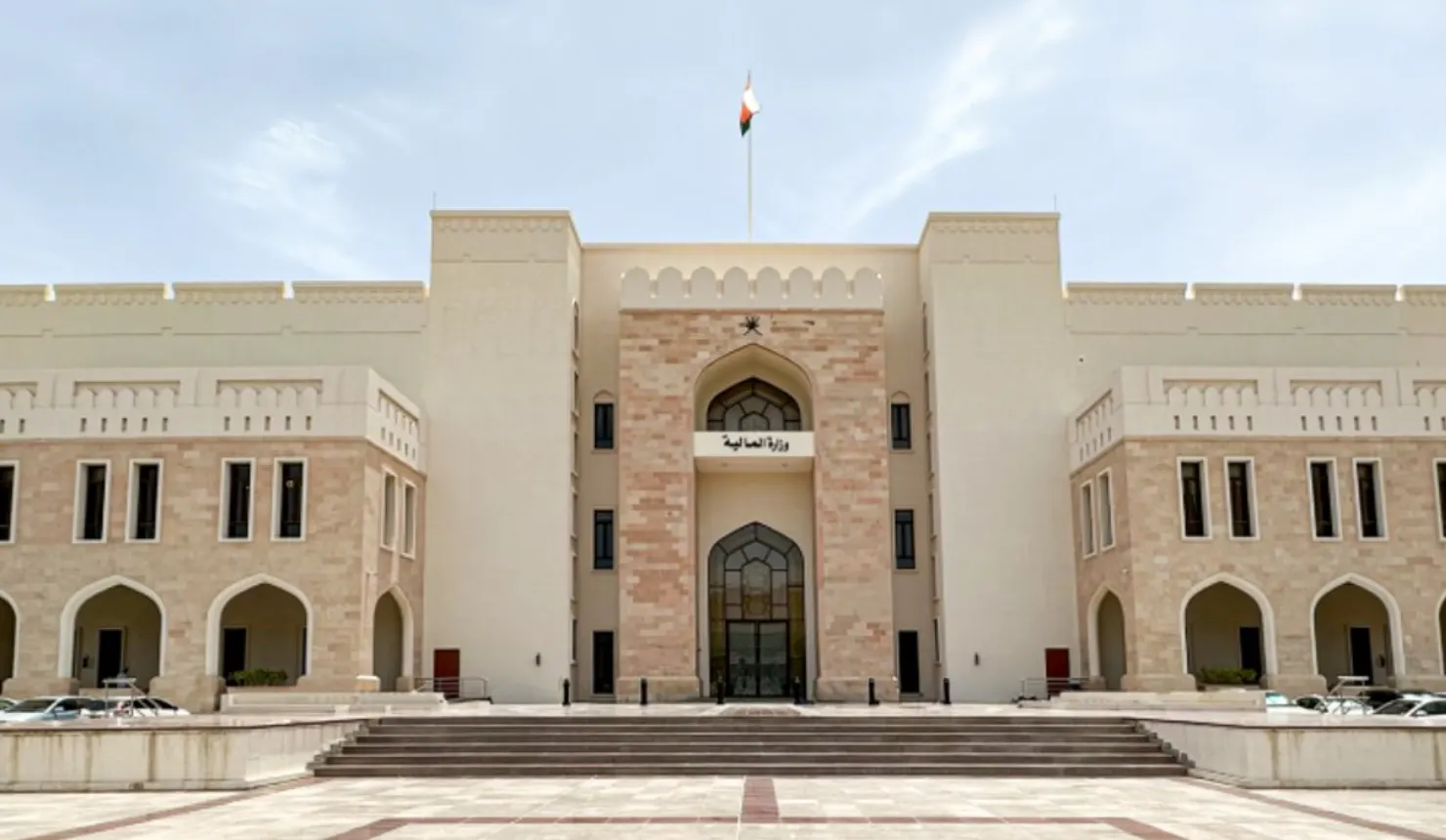
Oman closed the first half of 2026 with a budget deficit of 17 million rials, down from 259 million a year earlier, as total public revenue rose 13 percent to 6,602 million rials against spending of 6,619 million.
The Ministry of Finance published the figures in its fiscal performance bulletin for the second quarter. The bulletin is titled for the quarter, but its tables are cumulative for January to June, and the two readings differ materially. On our subtraction from the first-quarter bulletin, the second quarter alone produced revenue of 3,617 million rials against spending of 3,609 million, a surplus of 8 million. That derivation is ours, not a published figure.
Net oil revenue reached 3,332 million rials, 10 percent above the 3,018 million of a year earlier, on an average realised price of 74 dollars a barrel and average production of 1,074 thousand barrels a day.
Gas, not oil, was the fastest-growing line
The headline attributes the improvement to oil, and oil did contribute the largest absolute increase at 314 million rials. It was not the fastest-growing component. Net gas revenue rose 32 percent to 1,164 million rials from 884 million, an increase of 280 million on a base little more than a quarter the size of oil’s.
Current revenue, the non-hydrocarbon line covering taxes, fees and investment income, rose 6 percent to 2,045 million rials. Capital revenue and loan repayments contributed 61 million against 9 million.
| Revenue, million rials | H1 2025 | H1 2026 |
|---|---|---|
| Net oil | 3,018 | 3,332 |
| Net gas | 884 | 1,164 |
| Current revenue | 1,928 | 2,045 |
| Capital revenue and repayments | 9 | 61 |
| Total public revenue | 5,839 | 6,602 |
Hydrocarbons therefore supplied 4,496 million rials of the 6,602 million total, or 68.1 percent, against 66.8 percent a year earlier, our calculation from the published lines. The non-hydrocarbon share slipped even as its absolute value rose, because hydrocarbon revenue grew faster.
Spending grew too, and development spending grew fastest
Total public spending rose 9 percent to 6,619 million rials. Current expenditure, the largest block, rose 6 percent to 4,369 million. Development expenditure rose 16 percent to 798 million. Contributions and other expenses fell to 1,132 million from 1,161 million. Payments under settlement, which cover obligations carried from earlier periods, rose to 320 million from 130 million.
| Spending, million rials | H1 2025 | H1 2026 |
|---|---|---|
| Current expenditure | 4,118 | 4,369 |
| Development expenditure | 688 | 798 |
| Contributions and other | 1,161 | 1,132 |
| Payments under settlement | 130 | 320 |
| Total public spending | 6,098 | 6,619 |
The composition is worth noting. Development spending rising faster than current spending is the pattern a government pursuing diversification would want, and it is running ahead of the overall spending growth rate. Payments under settlement more than doubling is the line that flatters neither reading, since it represents catching up on prior obligations rather than new activity.
The price assumption is doing much of the work
Oman’s 2026 budget was built on 60 dollars a barrel, with estimated revenue of 11,447 million rials, spending of 11,977 million and a planned full-year deficit of 530 million. The realised average of 74 dollars in the first half sits 14 dollars above that assumption.
That gap materially strengthened first-half revenue, but it does not on its own explain the near-balanced position, and the 530 million figure is a full-year comparator rather than a first-half one. Production, gas receipts, non-hydrocarbon revenue and the timing of expenditure all contributed. What the gap does define is the vulnerability. A position this close to balance at 74 dollars is not the same as one reached at 60 dollars, and the budget does not assume the higher price will hold.
Public debt was 14.16 billion rials at the end of June, against 14.12 billion a year earlier, essentially flat. At the fixed peg of 2.6008 dollars to the rial, that is about 36.8 billion dollars.
Why it matters:
A deficit of 17 million rials on revenue of 6,602 million is a rounding difference, and reaching it required no fiscal consolidation in the ordinary sense. Spending grew 9 percent. What closed the gap was revenue growing 13 percent, and revenue grew because hydrocarbon prices and volumes were favourable rather than because the non-hydrocarbon base expanded to fill the space.
Gas is potentially the more consequential line beyond the current year. Revenue rose 32 percent to 1,164 million rials, but the first-half bulletin does not separate the effects of pricing, volumes and contractual changes, so the increase cannot yet be called structural. Sustained growth across subsequent quarters would be the evidence that it represents a broader addition to the hydrocarbon revenue base rather than a favourable price period. Oil still supplies roughly half of total revenue, so the exposure has not been removed either way.
The deficit near zero should also be read against the price that produced it. At the budgeted 60 dollars the same spending path would have produced a materially different outcome, and the second half will test whether the realised price stays above the assumption.
Outlook:
The markers are the third-quarter bulletin, the realised price against the 60 dollar assumption, and whether development spending holds its 16 percent growth rate into the second half. Gas revenue is the line to watch for whether the first-half increase reflects new capacity rather than pricing. Public debt has been flat for a year, which gives room but also means the near balance has not yet been used to reduce the stock.
Sources: Ministry of Finance of Oman, Fiscal Performance Bulletin for the second quarter of 2026, covering January to June, and the first quarter 2026 bulletin for the quarterly derivation; Guide to the State’s General Budget 2026 for the budget assumptions; Central Bank of Oman for the fixed peg. Second-quarter standalone figures, hydrocarbon shares and the price gap are calculated by The Edge Research Team from the published lines.