Kuwait Banks’ Paid-Up Import Financing Falls 17.6 Percent in First Half as Second-Quarter Activity Drops
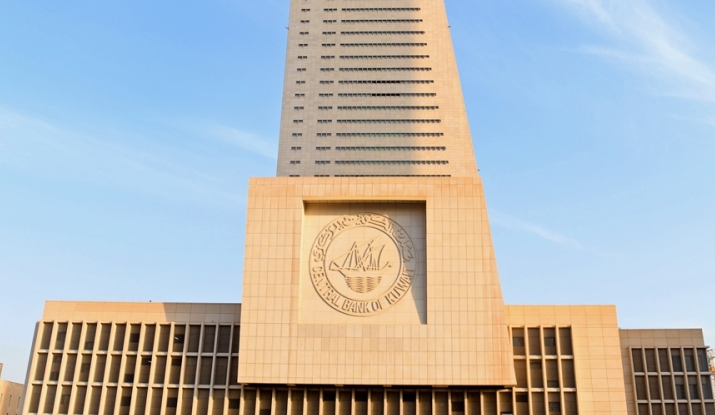
Paid-up financing and settlement of Kuwaiti imports through local banks fell to 3,593.9 million dinars in the first half of 2026, down 17.6 percent from 4,361.7 million a year earlier, on Central Bank of Kuwait monthly data.
The decline was concentrated in the second quarter. Financing totalled 2,419.5 million dinars in January to March, then fell to 1,174.4 million in April to June, a drop of 51.5 percent between the quarters. Against the second quarter of 2025, when the figure was 2,185.9 million, the latest three months were 46.3 percent lower.
The quarterly pattern therefore matters more than the six-month headline. It also requires a qualification that the headline cannot carry on its own: this series measures paid-up bank financing and settlement of Kuwaiti imports. It does not measure the customs value of goods entering the country.
What the series actually covers
Central Bank Table 19 is titled Local Banks: Financing Kuwaiti Imports, Paid-Up, According to Type and Currency, and is reported at the local activity level, covering all Kuwaiti banks and the branches of foreign banks licensed to operate in Kuwait. It records import payments through documentary letters of credit, bills for collection and other payment orders, in millions of dinars.
The word paid-up in the title, and the behaviour of the monthly values, indicate a flow during each month rather than a balance outstanding at month end. That reading is ours. The Central Bank does not attach a note stating it, so we set it out as an interpretation rather than as published guidance.
The Central Bank publishes monthly values only. Every half-year total, quarterly total and percentage in this article is our calculation from those monthly figures.
That distinction carries weight. A fall in this series cannot be converted into a 17.6 percent fall in Kuwait’s physical merchandise imports.
The dollar’s share rose as the total fell
Dollar-denominated transactions totalled 2,919.1 million dinars in the first half, 81.2 percent of all paid-up import financing, against 79.5 percent in the same period of 2025. The dollar’s share increased while the total contracted.
| Currency | H1 2026, million dinars | Share |
|---|---|---|
| US dollar | 2,919.1 | 81.2% |
| Other currencies | 344.7 | 9.6% |
| Euro | 140.5 | 3.9% |
| UAE dirham | 82.3 | 2.3% |
| Saudi riyal | 73.3 | 2.0% |
| Pound sterling | 13.7 | 0.4% |
| Japanese yen | 13.6 | 0.4% |
| Swiss franc | 6.7 | 0.2% |
A share above 80 percent shows how far import settlement remains tied to the dollar even though the goods themselves originate across a far wider range of trading partners. The currency in which trade is invoiced and settled does not have to correspond to the country the goods come from, and in Kuwait’s case it largely does not.
Payment orders remain the dominant channel
The structure of financing stayed concentrated in payment orders rather than traditional documentary instruments. Other payment orders accounted for 2,398.9 million dinars, or 66.8 percent of first-half financing. Documentary letters of credit accounted for 1,094.1 million, or 30.4 percent. Bills for collection came to 101.1 million, or 2.8 percent.
| Financing method | H1 2026, million dinars | Share |
|---|---|---|
| Other payment orders | 2,398.9 | 66.8% |
| Documentary letters of credit | 1,094.1 | 30.4% |
| Bills for collection | 101.1 | 2.8% |
Components may not sum precisely to the total because of rounding in the monthly series.
These channels behave differently. Letters of credit give the bank a formal role in guaranteeing payment between importer and exporter. Bills for collection involve the bank handling documentation and collection without that guarantee. Other payment orders cover a wider range of settlement arrangements, and now carry two thirds of the total.
The contraction was not uniform across instruments
The year-on-year fall landed unevenly, on our calculation from the monthly series. Documentary letters of credit declined only modestly, from 1,159.8 million dinars in the first half of 2025 to 1,094.1 million, a fall of 5.7 percent. Bills for collection fell much harder, from 188.8 million to 101.1 million, down 46.4 percent. Other payment orders fell from 3,013.2 million to 2,398.9 million, down 20.4 percent.
The headline therefore reflects not only how much financing took place but how import payments are being settled. Documentary credits holding up better than the other two channels could point to differences in transaction type, counterparty or the degree of payment security being sought. The published data do not go far enough to establish the commercial reason.
Why it matters:
The fall is a useful reading on the financial side of Kuwait’s trade flows, and a poor proxy for domestic demand. Import-financing volumes can move differently from merchandise imports for several ordinary reasons. Companies change payment methods. Importers move between letters of credit and direct payment arrangements. Payments shift between months or quarters while the underlying shipment does not. Firms finance imports from existing cash, from facilities held abroad, or through arrangements the domestic paid-up series does not capture the same way. Currency movements alter the dinar-equivalent value.
What the 17.6 percent establishes is that considerably less import-related settlement passed through the measured local-bank channels. It does not establish that Kuwait imported 17.6 percent fewer goods. The distinction is not pedantry: the entire contraction appeared in the second quarter, after a first quarter that was 11.2 percent higher than the same period of 2025. A swing of that shape inside six months is consistent with settlement timing and payment-method effects, which is precisely why the series needs to be read against official merchandise-import data before any conclusion is drawn about physical import demand.
Outlook:
Three readings will settle what the first half meant. The Central Bank’s July to September series comes first. A rebound would suggest much of the second-quarter fall reflected timing and settlement patterns rather than a durable change. Official merchandise trade data comes second, and comparing customs values against these financing flows will show whether the financial decline was matched by fewer goods arriving. The financing mix comes third. If documentary credits stay comparatively resilient while other payment orders remain weak, the data are describing a change in how importers settle rather than a fall in what they buy.
Sources: Central Bank of Kuwait, Table 19, Local Banks: Financing Kuwaiti Imports, Paid-Up, According to Type and Currency, monthly statistical releases through June 2026, with the June 2025 release for the year-earlier base. The Central Bank publishes monthly values only; all half-year and quarterly totals, shares and percentage changes are calculated by The Edge Research Team from those monthly figures.