Egypt and China Back 500 Million Dollar Tire Project as Suez Zone Enters Third Phase
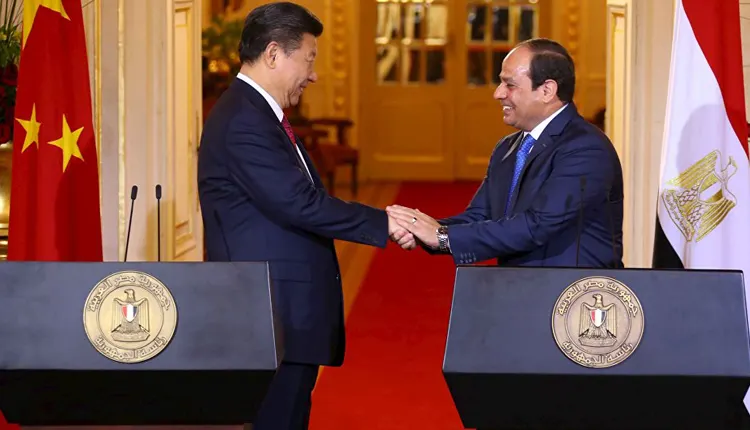
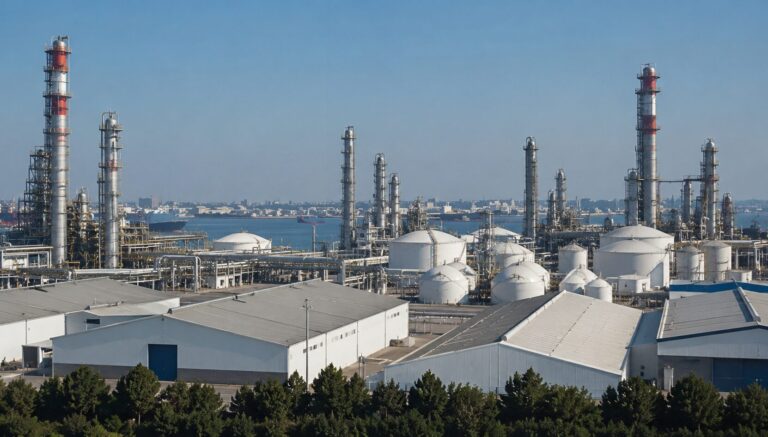
Egypt and China agreed to launch a third expansion phase of their industrial zone in the Suez Canal Economic Zone and pledged to expand the use of local currencies in bilateral trade and investment during President Xi Jinping’s state visit to Cairo, Egypt’s State Information Service said. Separately, China’s ZC Rubber Group signed a preliminary 500 million dollar agreement to study a tire manufacturing complex, Reuters reported, leaving the project subject to a later investment decision.
A Third Phase for the Suez Canal Economic Zone
President Abdel Fattah El Sisi announced the launch of a third phase of expansion for the Egyptian Chinese industrial zone inside the Suez Canal Economic Zone, covering renewable energy, automotive manufacturing, textiles and chemical fibers, according to his own remarks published by the State Information Service during talks with Xi Jinping. The tire complex agreement, described by Reuters as a step toward a possible future construction agreement rather than a completed investment commitment, was announced separately from the leaders’ own agenda.
Local Currency Settlement
The two governments agreed in a joint communique to promote the use of local currencies in trade and investment and to encourage greater settlement of commercial and investment transactions in local currencies. The pledge appears in the communique’s own text, which also referenced mutual support for developing the Suez Canal Economic Zone. Egypt’s own readout of the visit described its outcome as the signing of an agreement and a number of memoranda of understanding, without specifying an exact count, adding that further cooperation documents were also signed between Egyptian and Chinese entities on the sidelines of the visit.
A Widening Deficit but a Narrowing Gap in Relative Terms
Egypt’s trade with China has shifted sharply in the year running up to the visit, according to the Central Agency for Public Mobilization and Statistics.
| Measure | H1 2025 | H1 2026 | Change |
|---|---|---|---|
| Exports to China | $280.5M | $840.8M | +199.8% |
| Imports from China | $9.1B | $10.4B | +14.3% |
| Combined trade | $9.3B | $11.3B | +21.5% |
Figures as published by the agency. The combined trade row does not sum exactly from the export and import rows above it, reflecting the agency’s own rounding of each series.
On our calculation, using these same export and import figures, Egypt’s trade deficit with China widened from approximately 8.8 billion dollars in the first half of 2025 to approximately 9.6 billion dollars in the first half of 2026, an increase of roughly 740 million dollars in absolute terms. At the same time, Egypt’s exports covered only 3.1 percent of its imports from China in the first half of 2025; a year later, on our calculation, that coverage ratio had more than doubled to 8.1 percent. The dollar gap between what Egypt sells to China and what it buys from China therefore continued to widen even as the export side of the relationship grew from a much smaller base.
Why it matters: For Egypt, deepening ties with its largest source of imports comes as the government seeks foreign industrial investment to support job creation, even as its bilateral deficit with China continues to widen in dollar terms. The Suez zone’s third expansion phase and the local currency pledge point toward deeper industrial integration between the two economies, though the tire complex agreement’s preliminary, study stage status means it has not yet become a firm investment commitment.
Outlook: Neither government has published a completion timeline for the Suez Canal Economic Zone’s third expansion phase, and the ZC Rubber agreement remains at the study stage, with no date given for a final investment decision.
Sources: Egypt’s State Information Service, Reuters, Central Agency for Public Mobilization and Statistics.