Global Rate Risks Shift Higher as the Fed and Bank of Japan Move Into Focus After the ECB Hike

A renewed inflation shock is pushing interest rate risks higher across major advanced economies, but the shift is not a synchronised tightening cycle. The European Central Bank has already raised rates, markets heavily favour a Federal Reserve increase this week and economists overwhelmingly expect the Bank of Japan to tighten, while the Bank of England and the Bank of Canada remain on hold for now.
The common factor is increasingly familiar. Central banks cannot control global energy prices, but they can try to prevent a prolonged energy shock from spreading into wages, expectations and the broader price system. The result is an upward shift in inflation and interest rate risk, but with markedly different policy responses.
The Federal Reserve is the immediate test
The Federal Open Market Committee meets on 15 and 16 September with its target range still at 3.50 to 3.75 percent. Its July decision to hold was already unusually divided: the vote was 9 to 3, with Beth Hammack, Neel Kashkari and Lorie Logan preferring a quarter point increase.
Since then, the inflation case for tightening has strengthened. United States consumer prices rose 0.4 percent in August, while the 12 month rate held at 3.4 percent. Core inflation rose 0.3 percent on the month and eased to 2.4 percent over the year. Gasoline climbed 3.9 percent and accounted for more than a third of the monthly headline increase.
But the report was not purely an energy story. The firmer monthly core reading, after 0.2 percent in July, reinforced the argument that the Federal Reserve cannot simply look through the headline shock. The Edge covered the inflation release separately on Friday.
Market pricing shifted sharply after the report. By Friday, interest rate futures implied about an 85 percent probability of a quarter point increase at the September meeting, compared with roughly 70 percent before the consumer price release.
That puts the decision directly against the standard Chairman Kevin Warsh set at Jackson Hole. Warsh said the predominant focus should currently be prices and argued that policymakers must be confident underlying inflation is moving toward 2 percent clearly and at sufficient speed, and that otherwise more work is required. The question is therefore less whether the Federal Reserve must validate a particular futures probability than whether the incoming evidence remains consistent with the reaction function its chairman has publicly described.
Japan is the clearest second tightening candidate
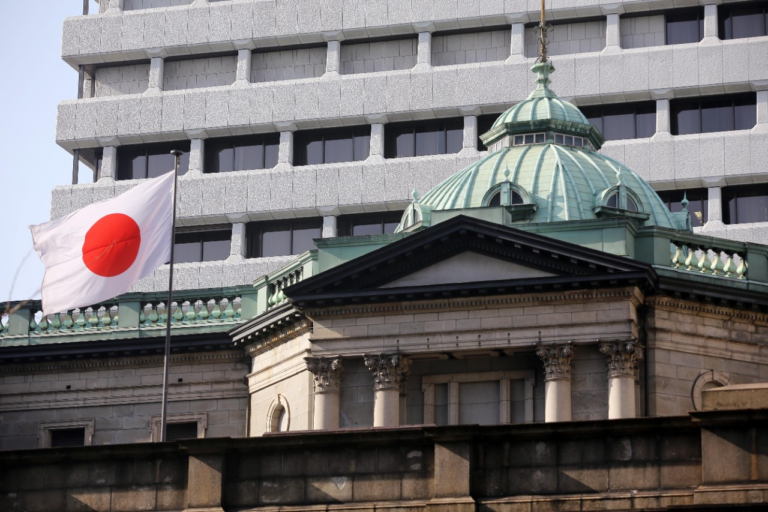
The Bank of Japan enters its meeting on 17 and 18 September with its short term policy rate at 1.0 percent, the level established in June.
A Reuters poll conducted from 1 to 8 September found 66 of 68 economists, or 97 percent, expecting the bank to lift the rate to 1.25 percent on 18 September, up sharply from 57 percent in the previous poll.
That would put Japan and, if markets are correct, the United States alongside the euro area in tightening policy within the same broad period, although for different domestic reasons. Japan’s case combines broadening domestic price pressures and yen weakness with the global inflation backdrop, making its reaction function different from either the Federal Reserve’s or the European Central Bank’s.
Britain and Canada show why this is not a synchronised cycle
The Bank of England is the clearest counterexample to describing the current episode simply as a wave of rate increases. Bank Rate stands at 3.75 percent. At the July meeting, 6 Monetary Policy Committee members voted to hold while 3 preferred an increase to 4.00 percent. The bank said the appropriate policy stance would depend on the scale and duration of the energy shock and on how it propagates through the economy.
All 65 economists in a Reuters poll conducted from 4 to 8 September expected the bank to leave rates unchanged on 17 September. Most also expected Bank Rate to remain unchanged through the rest of 2026. The distinction is significant: the inflation shock has shifted the distribution of risks higher without making an immediate rate increase the preferred response everywhere.
Canada is making the same distinction. The Bank of Canada held its policy rate at 2.25 percent on 2 September. It said inflation had been hovering around 3 percent mainly because of persistently higher gasoline prices, while inflation excluding gasoline was 2.2 percent and measures of core inflation remained close to 2 percent in July.
The bank nevertheless said upside inflation risks had increased and warned that the longer high oil prices and elevated refinery margins persist, the greater the risk that higher energy costs spill into other goods and services. For now, it said there has been little evidence of such broader transmission.
That is essentially the same policy problem confronting the European Central Bank, the Federal Reserve and the Bank of England: whether to react primarily to the first round energy shock or to the probability that persistence eventually creates broader domestic inflation. The answers differ because the underlying economies differ.
The global shift is in the balance of risks
The European Central Bank’s 25 basis point increase on 10 September is the clearest completed move. Its deposit rate will rise to 2.50 percent on 16 September, and the bank now expects inflation to remain well above its 2 percent target for an extended period.
The Federal Reserve and the Bank of Japan may add two more increases this week. The Bank of England is expected to wait, while Canada has already chosen to wait but has explicitly left itself room to respond if inflation risks worsen.
That does not constitute synchronised tightening in the strict sense. It does mark a change in the global monetary backdrop. Earlier in the cycle, the central question was how quickly central banks could reduce restrictive policy as inflation eased. The energy shock has pushed the question in the opposite direction: how much additional restraint, if any, is needed to stop temporary imported inflation from becoming persistent domestic inflation.
Why it matters: The significance is not that several central banks are moving in the same direction, because they are not. It is that the same shock is producing opposite decisions in economies facing the same arithmetic, and the split falls on judgement rather than on data. The Federal Reserve, the Bank of England and the Bank of Canada are all looking at an energy driven headline rate with contained core measures underneath, and reaching different conclusions about whether to act now or wait for evidence of propagation. For borrowers and for markets pricing terminal rates, that means the relevant uncertainty has moved from the path of inflation to the tolerance of each committee, which is far harder to forecast from the data alone.
Outlook: The Federal Reserve decision on 16 September is the immediate pivot because the meeting is accompanied by a new Summary of Economic Projections. The Bank of England follows on 17 September and the Bank of Japan concludes its meeting on 18 September. The broader signal will matter more than any single decision: whether policymakers increasingly judge the present inflation shock as something that can still be looked through, or one whose persistence now requires additional monetary restraint.
Sources: Federal Reserve, Bureau of Labor Statistics, Bank of Japan, Bank of England, Bank of Canada, European Central Bank, Reuters.