Lagarde Says Inflation Shock Will Last Longer as Wage Pass-Through Stays Limited
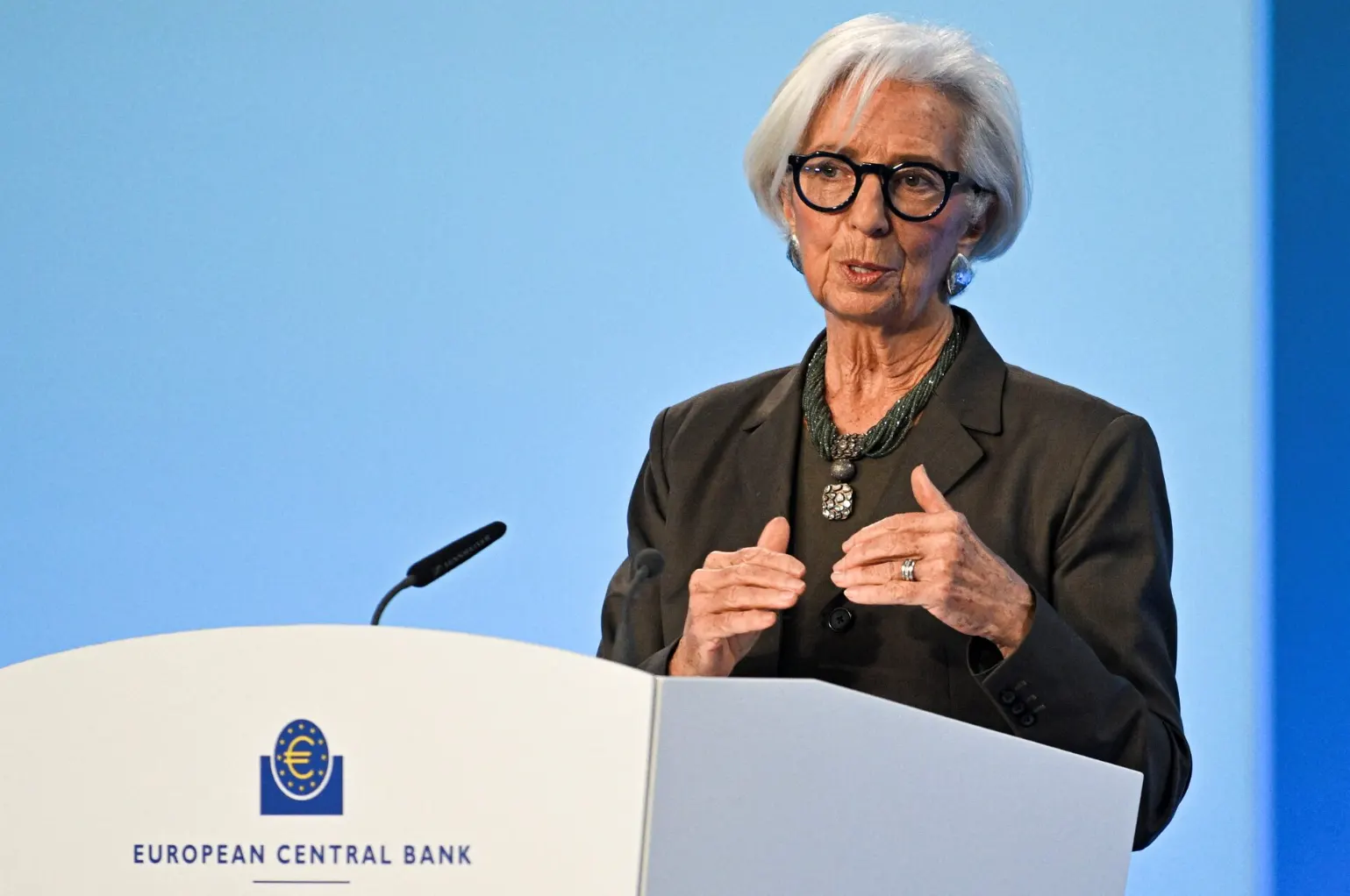
European Central Bank President Christine Lagarde said the inflation shock facing the euro area is likely to last longer than previously expected, reinforcing the persistence risk behind last week’s rate increase even as wages and underlying inflation still show limited evidence that the energy shock has become broadly embedded in domestic prices.
In an interview with Ouest-France on Saturday, Lagarde said euro area inflation remains well above the European Central Bank’s 2 percent target and that the economy has been hit by a major shock likely to persist longer than initially expected. The message confirms rather than changes the policy case the Governing Council set out two days earlier, when it raised its three key interest rates by 25 basis points.
The important distinction is between duration and propagation. The energy shock is lasting longer. The evidence that it has spread decisively into wages and the broader price basket remains much more limited.
Energy is keeping the headline rate high
Euro area inflation rose to 3.3 percent in August from 2.9 percent in July, with energy inflation accelerating to 14.3 percent from 10.3 percent. Inflation excluding energy and food edged down to 2.4 percent from 2.5 percent, while services inflation slowed to 3.0 percent from 3.3 percent.
That split matters for monetary policy. Higher energy costs can lift headline inflation immediately. The larger risk for the European Central Bank is that a prolonged shock eventually changes wage demands, the pricing behaviour of companies and inflation expectations.
That evidence is not there yet in full. The bank said wages show no material response to the energy shock at this stage. Compensation per employee grew 3.3 percent over the year in the second quarter, down from 3.5 percent in the first, while growth in unit labour costs slowed to 2.6 percent from 3.5 percent.
Its wage tracker points to only a modest rise in negotiated wage growth, to 2.7 percent in the first half of 2027, while most measures of longer term inflation expectations remain around 2 percent. That leaves the bank dealing with a risk of second round effects rather than an established wage and price cycle.
The longer the shock lasts, the greater the propagation risk
Duration changes the calculation. The European Central Bank has warned that the longer energy prices remain high, the greater the probability that they drive broader inflation through indirect and second round effects.
Its baseline now keeps headline inflation well above target into the first half of 2027, with inflation expected to return to around 2 percent only toward the end of that year. Higher energy costs are expected to feed gradually into core and food inflation even as the direct contribution from energy eventually fades.
The September staff projections put headline inflation at an average 3.0 percent in 2026, 2.5 percent in 2027 and 2.1 percent in 2028. The 2026 forecast is unchanged from June, while 2027 and 2028 were revised higher. Inflation excluding energy and food is projected at 2.5 percent this year, 2.6 percent next year and 2.3 percent in 2028.
The persistence problem is therefore visible in the forecast even without a current wage and price spiral.
Economic resilience gives the bank more room
The other side of the September decision is that the euro area has absorbed the shock better than previously expected.
Staff raised the growth forecast to 0.9 percent for 2026 from 0.8 percent previously and to 1.4 percent for 2027 from 1.2 percent, while leaving 2028 at 1.5 percent. The projections say second quarter growth surprised on the upside and that the economy has proved more resilient to the energy and uncertainty shocks than anticipated.
The inflation surprise has been different. Recent food and other non energy price developments were softer than previously projected, even as the bank concluded that the overall inflation shock is likely to last longer because of the persistence of elevated energy costs. The distinction is important: inflation has not simply surprised higher across the board; its composition and expected duration have changed.
A weaker economy would increase the cost of tightening against a supply driven inflation shock. Greater resilience gives the bank more room to act against the risk that imported energy inflation becomes persistent domestic inflation.
It has already raised the deposit facility rate to 2.50 percent, the main refinancing rate to 2.65 percent and the marginal lending rate to 2.90 percent, effective 16 September. It remains explicitly data dependent and has not committed itself to another increase.
The next question is no longer the first round energy hit
For the European Central Bank, the first round shock is already visible in the inflation data. The policy question now is whether its duration begins to change the behaviour of households, workers and companies.
For now, easing core inflation, slower services inflation, contained wage transmission and anchored longer term expectations argue against describing the euro area as being in a generalised second inflation wave. But the longer energy prices remain elevated, the narrower the margin for that conclusion becomes.
That is why the latest warning matters. The shock has not yet spread throughout the domestic price system, but it is lasting long enough for the probability of that spread to become a central part of the bank’s reaction function.
Why it matters: The European Central Bank has raised rates into a shock it now expects to outlast its own earlier assumption, and it has done so while its own evidence says that shock has not yet reached wages. That is a harder position to defend than a conventional tightening cycle, because the case rests on the probability of propagation rather than on propagation already observed. For the euro area the practical consequence is that the September increase is unlikely to settle the argument: the data that would settle it, negotiated wages, services inflation and expectations, will not arrive for months. And because the projections keep headline inflation above target into the first half of 2027, the burden of proof has moved onto whoever argues the shock can still be looked through.
Outlook: The key indicators from here are not headline energy inflation alone but core prices, services inflation, negotiated wages and inflation expectations. If those begin moving higher together, the European Central Bank would have clearer evidence that a prolonged external shock is becoming domestic inflation. If they remain contained, policymakers retain more room to pause after the September increase.
Sources: European Central Bank, Ouest-France.