Trump Asks for 1 Percent Rates as 16 of 18 Fed Participants Project a Higher Rate Than the One Just Set
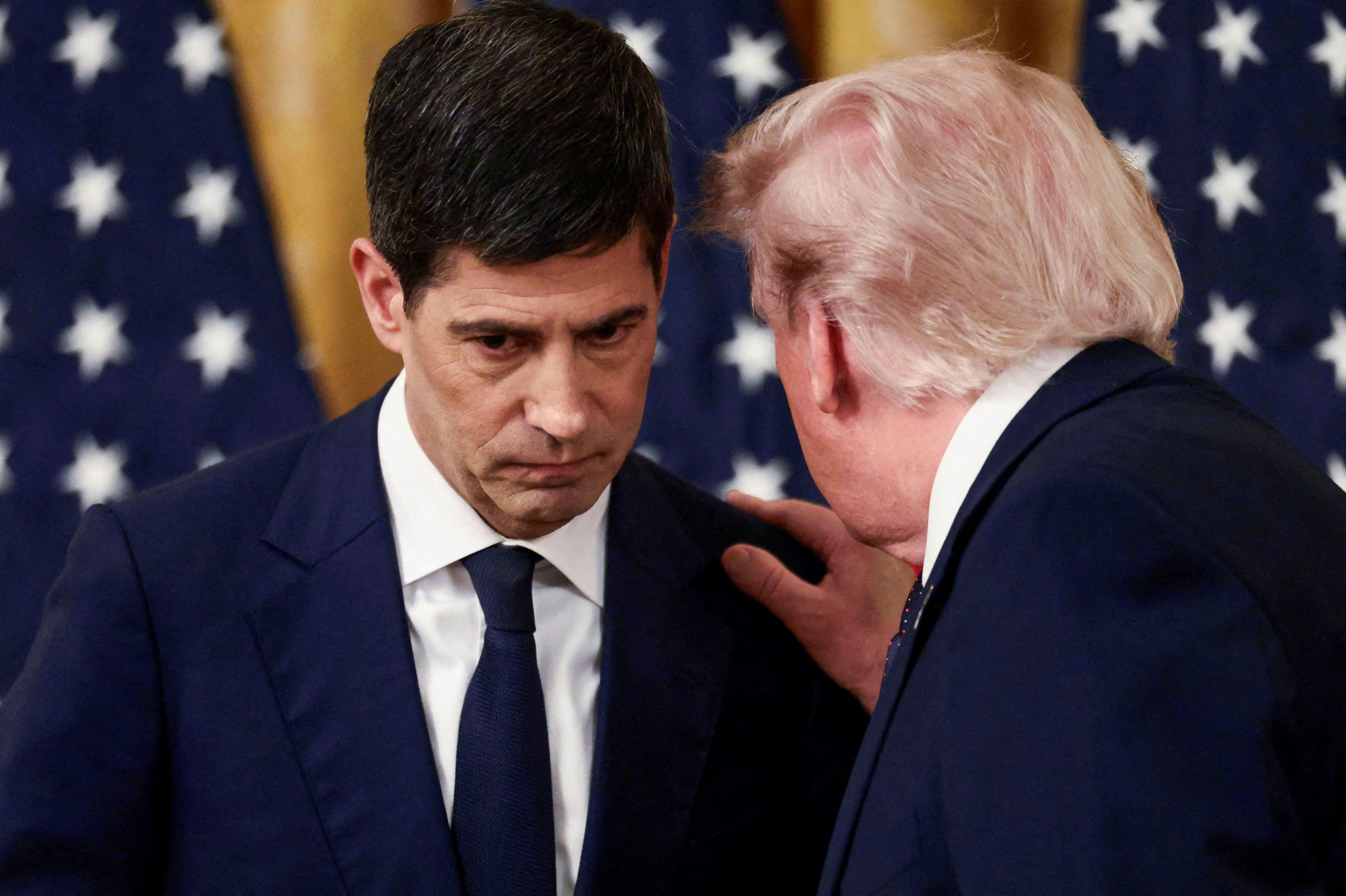
President Donald Trump called on the Federal Reserve to cut interest rates to 1 percent or less on Wednesday, hours after the central bank raised its target range by a quarter of a percentage point to 3.75 to 4 percent. In a Truth Social post quoted by CNBC, the president wrote that rates should be 1 percent or less because the United States is, in his words, the best credit in the world, adding: “We are ‘carrying’ almost every country in the World, and that cannot go on any longer” and, in capitals in the original, “LOWER THE INTEREST RATES FOR THE UNITED STATES OF AMERICA, AND FAST!” Asked later on Wednesday whether he still has confidence in the chairman, the president told reporters “I do”, per the network’s report.
The White House response came through spokesman Kush Desai, who told Fox News, per the network’s report: “Today’s rather unfortunate decision by the Federal Reserve to hike interest rates was not, from the administration’s point of view, backed by a particularly compelling economic case”. Desai said the president “absolutely” still believes in the independence of the Fed, per the same report.
What 1 percent would require
| Measure | Level | Distance to 1% |
|---|---|---|
| New target range midpoint | 3.875% | 287.5bp |
| Median participant, end 2026 | 4.125% | 312.5bp |
| FOMC median, longer run | 3.2% | 220bp |
Federal Reserve target range and Summary of Economic Projections, 16 September 2026. The distance column is our subtraction. The Committee publishes the end 2026 median rounded to 4.1 percent; the underlying dot plot places the median participant at 4.125 percent, which is the figure used here.
From the midpoint of the range set on Wednesday, 1 percent is 287.5 basis points away, which is 11 and a half quarter point cuts, on our calculation. Measured against the median participant assessment for the end of 2026 it is 312.5 basis points away, and that assessment points upward rather than down: the published median was 3.8 percent in June and is 4.1 percent now. Against the longer run median of 3.2 percent, the rate participants think appropriate once the cycle is complete, 1 percent sits 220 basis points below.
A second comparison sets the request against the Committee’s own inflation view rather than its rate view. The median projection for headline PCE inflation in 2026 is 3.7 percent. A policy rate of 1 percent alongside that projection would sit about 2.7 percentage points beneath it, on our calculation. That is an indicative gap between a point in time policy rate and a calendar year inflation projection, not a formal measure of the real policy rate.
16 of 18 participants are above the new midpoint
The dot plot published with Wednesday’s decision is more specific than the rounded median suggests. Of the 18 participants who submitted an assessment for the end of 2026, 12 placed the appropriate midpoint at 4.125 percent, 4 placed it at 4.375 percent, and 2 placed it at 3.875 percent, which is a hold at the range just set.
That is 16 of 18 above the midpoint the Committee established on Wednesday, on our reading of the Fed’s own table. The median participant at 4.125 percent sits exactly 25 basis points above it, which is one further quarter point move. These are individual assessments of appropriate policy rather than a commitment by the Committee, but the distribution is one sided.
The Chair was the President’s own choice
The Committee is led by Kevin Warsh, whom the President selected, and Wednesday’s decision was unanimous at 12 to 0. That leaves no dissenting participant for either side of the argument to point to.
The disagreement itself is about which mandate binds. The administration’s stated position, per its spokesman’s remarks to Fox News as carried by the network, is that the inflation still in the economy is driven by an energy supply shock that interest rates do not touch, and that higher rates will only stymie the economic progress it credits to the president. The Committee’s stated position is in its own statement: inflation remains elevated, and the increase “will support a timelier return to the Committee’s 2 percent goal”.
Why it matters: the Federal Reserve sets the price of dollars, and a large part of the world borrows in them, which is why a public dispute over the direction of United States policy rates is not a domestic argument. For Gulf states whose currencies are pegged to the dollar, Fed decisions pass through to local rates almost mechanically, so whether the Committee is moving up or down is a question about their own borrowing costs. What the record shows is a Committee that voted unanimously, that revised its own year end rate median up from 3.8 percent in June to 4.1 percent, whose dot plot puts 16 of 18 participants above the rate just set, and whose Chair was appointed by the President now objecting to the decision. Markets price the decision, not the objection.
Outlook: the median participant sits exactly 25 basis points above the midpoint of the range just set, on our calculation, which is one further quarter point increase at either the 27 to 28 October meeting or the 8 to 9 December meeting. October carries no projections round, which makes December the more natural date for a move that needs explaining. The figure that would change that path is the 3.7 percent headline PCE median for 2026, since the Committee tied Wednesday’s action explicitly to the pace of return to 2 percent.
Correction, 17 September 2026: the quotations from the Truth Social post, the White House spokesman and the Federal Reserve statement have been restored to the verbatim text of the network’s English report and the Fed’s own statement, and typographical errors have been corrected.
Sources: Federal Reserve, CNBC, The Edge.