Banque du Caire Plans a 30 Percent EGX Float After First-Half Profit Rises 15 Percent
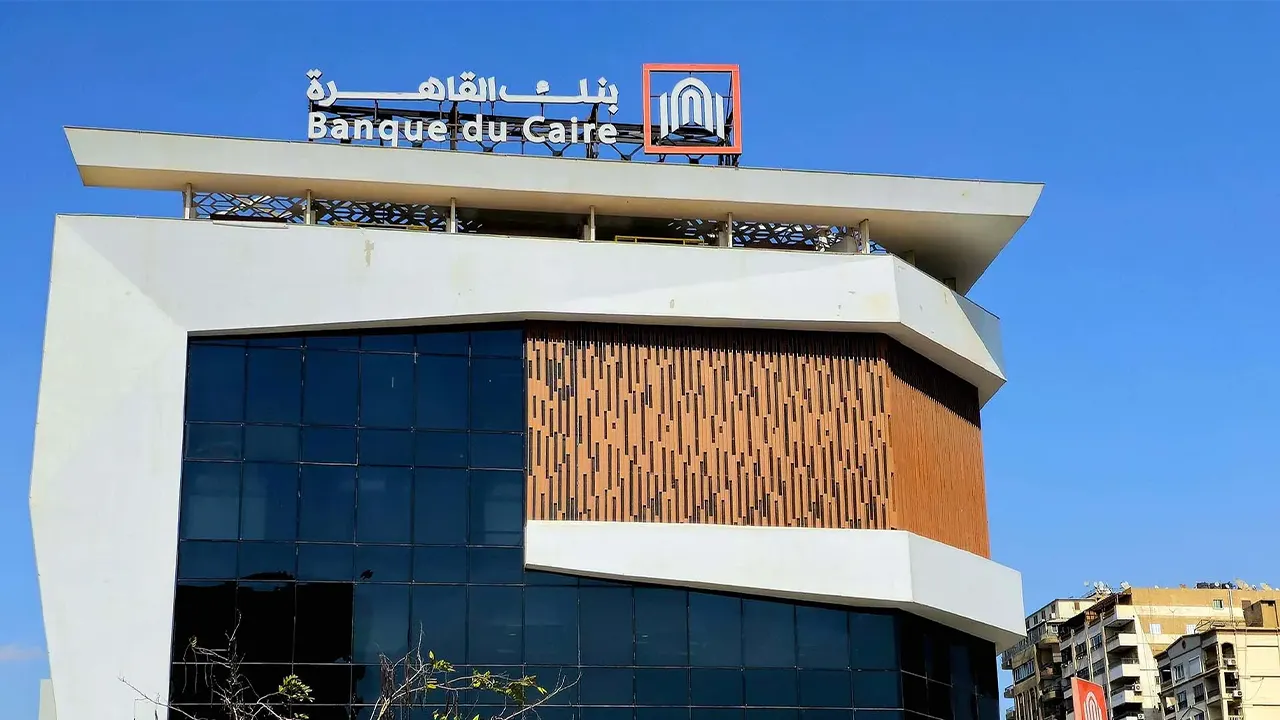
Banque du Caire has announced its intention to list on the Egyptian Exchange through the sale by its parent, Banque Misr, of 4.575 billion shares, or 30 percent of its capital, according to a bank statement carried by CNBC on 11 October. The offer follows a first half in which the lender lifted net profit 15.1 percent to 8.587 billion pounds, on our calculation from its accounts, with operating income up 8.9 percent to 22.11 billion pounds.
How the Offer Is Built
The statement splits the sale into 2 tranches: a private placement to qualified investors in Egypt, the United States and a number of other countries, and a public offer to individual investors in Egypt. The bank expects subscription to close in late October and its shares to begin trading in November, provided the relevant regulatory approvals are obtained. The shares on offer are existing shares sold by Banque Misr, so on our reading the proceeds go to the selling shareholder rather than adding to Banque du Caire’s capital. It names CI Capital as lead manager and international coordinator, and EFG Hermes as manager and international coordinator. The statement as reported gave no offer price, price range or proceeds figure.
Issued capital stood at 30.5 billion pounds at 30 June, divided into 15.25 billion shares with a par value of 2 pounds each. Banque Misr owns 15,249,999,972 of them, and Misr Capital and Misr Abu Dhabi for Real Estate own 14 shares each. The 4.575 billion shares on offer are exactly 30 percent of that count, on our calculation, which leaves Banque Misr with 10,674,999,972 shares, or 70 percent, after the sale.
Total equity of 65.23 billion pounds at the end of June works out at 4.28 pounds per share, on our calculation, an accounting yardstick rather than a guide to the price, which will be set in the offer process.
The offer in numbers
| Item | Value |
|---|---|
| Issued shares | 15.25 billion |
| Par value | EGP 2 |
| Shares offered by Banque Misr | 4.575 billion |
| Stake offered | 30% |
| Banque Misr after the sale | 10.675 billion shares (70%) |
| Total equity per share, 30 Jun 2026 | EGP 4.28 |
| First-half 2026 profit per share, on 15.25 billion shares | EGP 0.56 |
Share count, ownership and equity from Banque du Caire’s separate financial statements for the six months to 30 June 2026; offer terms as announced on 11 October. Per-share figures and the post-sale stake are our calculation.
Issued capital has been stepped up since 2022. It stood at 10 billion pounds on 6 November 2022, rose to 19 billion pounds in April 2024 and 20.5 billion pounds in February 2025, and reached 30.5 billion pounds in March 2026, a 3.05-fold increase in under 4 years on our calculation. Total equity rose 32.1 percent in the 12 months to June 2026, from 49.39 billion pounds, and 47.3 percent from 44.28 billion pounds at the end of 2024, on our calculation.
Lower Credit Costs Lift First-Half Profit
Net interest income rose 10.7 percent to 18.32 billion pounds in the first half and supplied 82.8 percent of operating income, up from 81.5 percent a year earlier, on our calculation. Net fees and commissions grew 14.3 percent to 3.34 billion pounds, a 15.1 percent share. The bank reported a net interest margin of 7.4 percent, an annualised return on average equity of 27.2 percent and an annualised return on average assets of 3.2 percent.
The largest swing came from credit costs. Expected credit losses fell to 1.003 billion pounds from 3.116 billion pounds, a reduction of 2.11 billion pounds, and absorbed 4.5 percent of operating income against 15.3 percent a year earlier, on our calculation. That carried profit before tax up 18.7 percent to 12.73 billion pounds. An effective tax rate of 32.55 percent, against 30.45 percent, explains why after-tax growth came in at 15.1 percent.
Administrative expenses rose 17.1 percent to 7.76 billion pounds, faster than income, which lifted them to 35.1 percent of operating income from 32.7 percent, on our calculation.
Banque du Caire first-half income statement
| Measure | H1 2025 | H1 2026 | Change |
|---|---|---|---|
| Operating income | 20,301 | 22,110 | 9% |
| Net interest income | 16,549 | 18,318 | 11% |
| Net fees and commissions | 2,919 | 3,337 | 14% |
| Expected credit losses | (3,116) | (1,003) | (68%) |
| Administrative expenses | (6,631) | (7,764) | 17% |
| Other income/(expense) | 173 | (612) | (454%) |
| Profit before tax | 10,726 | 12,731 | 19% |
| Profit after tax | 7,460 | 8,587 | 15% |
EGP million, standalone basis, from the bank’s first-half 2026 release; changes as printed by the bank.
Deposits Fund the Loan Book With Room to Spare
Customer deposits rose by 39.06 billion pounds in the 6 months to 440.42 billion pounds, while gross loans to customers and banks grew by 22.31 billion pounds to 280.33 billion pounds. Loan growth therefore absorbed 57 percent of the deposit increase, on our calculation, and loans to customers and banks eased to 63.7 percent of customer deposits from 64.3 percent at the end of 2025. Retail customers supplied 60 percent of deposits and institutions 40 percent, the bank said.
Non-performing loans were 3.6 percent of the gross portfolio with coverage of 176 percent, backed by loan loss provisions of 18 billion pounds. The capital adequacy ratio stood at 22.09 percent and the Tier 1 ratio at 18.7 percent. Equity rose to 11.8 percent of total assets from 11.5 percent, on our calculation.
Balance sheet and ratios
| Measure | Dec 2025 | Jun 2026 |
|---|---|---|
| Gross loans, customers and banks (EGP mn) | 258,016 | 280,329 |
| Customer deposits (EGP mn) | 401,360 | 440,419 |
| Total assets (EGP mn) | 532,562 | 552,497 |
| Total equity (EGP mn) | 61,047 | 65,234 |
| Loans to deposits | 64.3% | 63.7% |
| Equity to assets | 11.5% | 11.8% |
| Capital adequacy ratio | 22.06% | 22.09% |
Balances and capital adequacy from the bank’s first-half 2026 release, standalone basis; loans to deposits and equity to assets are our calculation.
A Sale the Government Flagged in June
The announcement came on the day the Egyptian Cabinet said the 2026/2027 development plan targets growth of 5.4 percent on total investment of 3.7 trillion pounds, and cited the State Ownership Policy Document and the government offerings programme among its reforms, the latter to make room for the private sector to lead growth. At a meeting reported on 7 October, Prime Minister Madbouly and Financial Regulatory Authority chairman Islam Azzam reviewed recent and upcoming offerings on the exchange of state companies targeted under that policy, including the authority’s training of those companies’ staff for the move from provisional to final listing.
Egypt’s investor base has been growing. New investor codes on the exchange passed 171,000 by the end of the second quarter, and the net assets of investment funds grew 14.7 percent to 471 billion pounds across 224 funds, with individuals owning 75 percent of the 44 billion units in issue, the Cabinet said.
The timetable also matches the one set out in June, when Hashem El-Sayed, Assistant to the Prime Minister and head of the State-Owned Companies Unit, told CNBC he expected a Banque du Caire stake to be offered in the last quarter of 2026 and 6 more of 16 provisionally listed state companies to begin trading before the year ends.
Why it matters: A 30 percent float would give Banque du Caire a market price and a public shareholder base at a point when its profit, deposits and capital are all rising and its annualised return on equity stands at 27.2 percent. For Banque Misr, the sale turns part of an almost wholly owned holding into cash while keeping 70 percent of the bank. For Egypt, it brings to the exchange a bank the government flagged for sale in June, with both a domestic retail tranche and an international placement.
Outlook: The price range, the size of each tranche and the expected proceeds are the next disclosures to watch. Regulatory approvals come first; if they land on schedule, subscription closes in late October and the shares begin trading in November, within the last quarter of 2026 that El-Sayed expected in June.
Sources: Banque du Caire, Egyptian Cabinet, CNBC, The Edge.