Dubai Real Estate Enters a More Selective Phase as Regional Risk Tests Demand

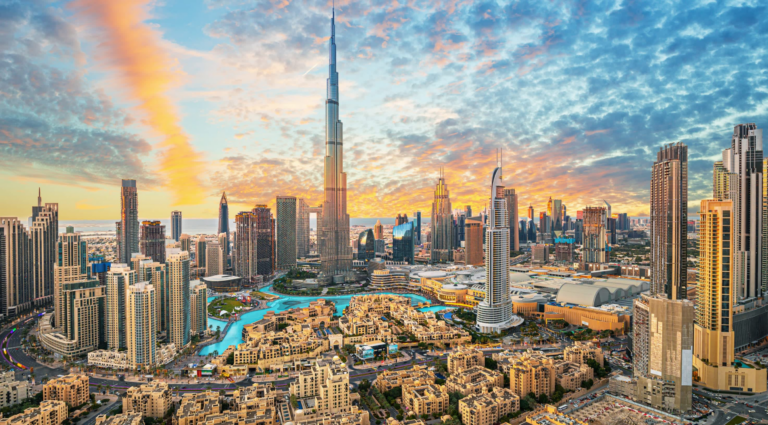
Dubai’s residential property market is no longer moving with the same broad momentum that defined the previous boom. The latest data points to a more selective phase, where transaction volumes are adjusting sharply, especially in off plan projects, while completed and prime assets remain more resilient.
According to Bloomberg, citing REIDIN data based on Dubai Land Department records, Dubai residential sales reached AED22.5 billion in May 2026, a 42% decline from April. This implies April residential sales close to AED38.8 billion, broadly consistent with REIDIN April figures of AED38.5 billion. Against February’s AED46.6 billion, May sales were around 52% lower, confirming a substantial cooling after exceptionally strong early year activity.
The Off Plan Segment Absorbs the Adjustment
The slowdown is more visible in the off plan segment. Sales of homes under construction fell about 50% month on month to AED15.8 billion in May. Based on total residential sales of AED22.5 billion, off plan still accounted for roughly 70% of May residential sales value, but absorbed most of the adjustment. This matters because off plan purchases require buyers to commit capital across multi year delivery periods, making the segment more sensitive to geopolitical uncertainty, financing costs and shifts in investor sentiment.
Completed Homes Hold Firmer
Completed properties showed more stability. May ready home sales are estimated near AED6.7 billion, based on the difference between total residential sales and off plan sales. Bloomberg and REIDIN data indicate ready unit transaction values declined by less than 15% compared with April, while average prices were near AED1,730 per square foot, broadly unchanged from late 2025. This suggests a market where buyers are negotiating harder, but owners of completed assets are not under broad pressure to accept steep discounts.
Prices Correct, Without Collapsing
Price indicators reinforce this distinction. REIDIN based data for April showed the Dubai Residential Market Sales Price Index down 1.76% month on month, while remaining 6.09% higher year on year. Apartments rose 5.49% year on year and villas rose 9.86%, although both softened on a monthly basis. This points to a correction in transaction intensity and short term pricing momentum, not a generalized collapse in values.
A Strong Starting Base
The wider context is important. Dubai entered this phase from a very strong base. Dubai Land Department reported AED252 billion in total real estate transactions during Q1 2026, up 31% year on year. However, that figure covers the total real estate market, not residential sales alone. Residential only datasets from REIDIN and CBRE show more than 45,000 Dubai residential transactions worth about AED137 billion in Q1 2026. Within that residential total, REIDIN reported AED103.4 billion of off plan sales, equal to roughly three quarters of market value.
Rental Demand Provides a Buffer
Rental demand also provides a buffer. Dubai Land Department reported AED32.2 billion in rental contracts in Q1 2026, with 118,385 new contracts and 135,607 renewals. The 25% decline in cancelled contracts suggests that the tenant base remains relatively stable. For property owners, resilient rental demand supports yields and reduces the likelihood of forced selling, particularly in established communities and well located assets.
A Less Supportive Macro Backdrop
The macro backdrop, however, is less supportive than it was at the start of the year. The World Bank’s June 2026 update projected global growth at 2.5% in 2026, down from 2.9% in 2025, citing the Middle East conflict, higher energy prices, renewed inflation pressure and higher borrowing costs. The IMF’s April 2026 reference forecast had projected 3.1% global growth under a limited conflict scenario, showing how sensitive the outlook remains to the scale and duration of regional disruption.
For Dubai real estate, the transmission channels are clear. A prolonged period of uncertainty can delay off plan purchases, reduce speculative demand, increase caution among overseas buyers, raise construction and financing costs, and shift investor focus toward completed, income generating assets. This does not undermine Dubai’s structural position, but it changes the quality of demand. Buyers are still active, yet they are becoming more selective on location, developer reputation, payment terms, delivery risk and rental yield.
A More Differentiated Market
Developer behaviour will be decisive in the next stage. Large developers with strong brands and balance sheets have more ability to slow new launches without cutting prices. Smaller developers may face greater pressure to offer discounts or payment incentives if sales momentum weakens further. This creates a more differentiated market where pricing power is likely to concentrate among projects with strong locations, credible delivery records and limited comparable supply.
Supply risk also needs monitoring. If a large pipeline of new units reaches the market while buyer sentiment remains cautious, price growth could moderate further, especially in apartment clusters with heavy launch activity. By contrast, scarce assets such as waterfront plots, prime villas and high quality completed homes are likely to remain more resilient because replacement supply is limited and end user demand is stronger.
Selective Allocation, Not a Bust
The most accurate reading is therefore not that Dubai’s real estate boom has ended, but that the market is transitioning from broad acceleration to selective allocation. The fall in May sales values reflects a sharp decline in transaction intensity, particularly off plan, rather than a system wide distress cycle. Strong Q1 liquidity, diversified foreign investment, stable rental demand and a mature regulatory framework continue to support the market.
Outlook
The outlook for the second half of 2026 depends on three indicators. First, whether off plan sales recover after the initial geopolitical shock. Second, whether completed home prices remain comparatively stable as buyers negotiate harder. Third, whether developers maintain supply discipline without resorting to widespread discounting. If regional risks ease and rental demand remains firm, Dubai could move into a slower but more sustainable cycle. If uncertainty persists, pressure is likely to remain concentrated in speculative off plan inventory and oversupplied apartment locations, while prime and completed assets continue to outperform.
Sources: Bloomberg, REIDIN, Dubai Land Department, CBRE, IMF, World Bank and Global Property Guide.