Eni Aims for Cronos to Be First Cypriot Gas Field to Market via Egypt’s Plants in 2028
Eni aims to make Cronos the first Cypriot gas field to reach market. It targets production in 2028 through Egypt’s existing plants. Diego Portogiesi, its chief executive for North Africa and the Levant, set out the plan at the Mediterranean Offshore Conference (MOC 2026) on 20 October. Partner TotalEnergies also gave 2028 for first production.
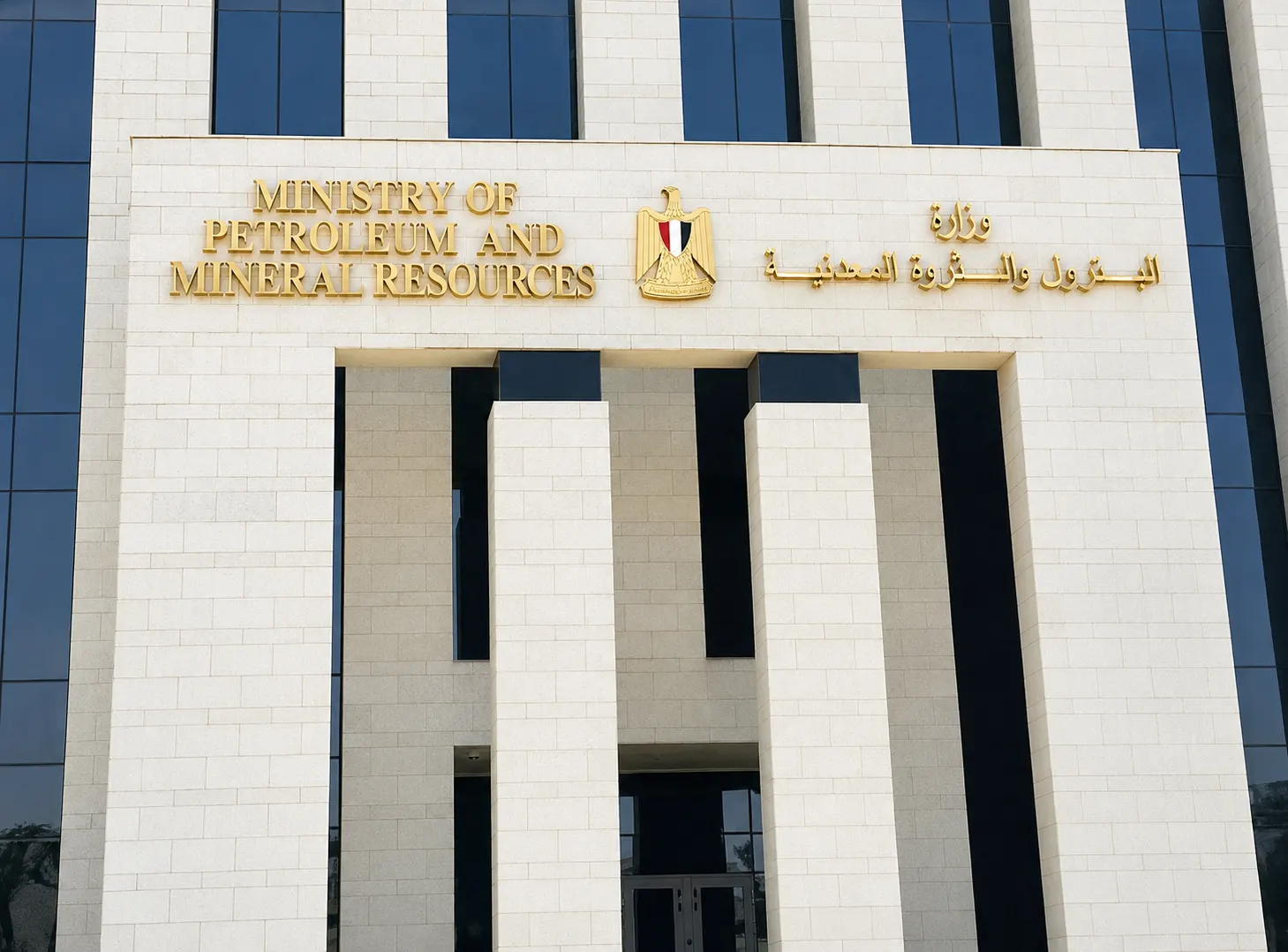
The partners announced the final investment decision on 28 July, the Ministry of Petroleum and Mineral Resources said at the time. The ministry called Cronos the first project to link Cypriot discoveries directly to Egyptian infrastructure. The gas will be processed at the Zohr field’s facilities and liquefied at the Damietta plant, then re-exported to European markets.
A Cypriot Field Built Around Egyptian Plants
Portogiesi said the project relies on Egypt’s offshore installations, transmission networks and existing processing and export plants, instead of building similar new ones. That cuts costs and execution time, he said. He described Cronos as the first integrated cross-border value chain between Cyprus and Egypt.
Julien Pouget, TotalEnergies’ senior vice president for exploration and production in the Middle East and North Africa, called the decision a major achievement for Cyprus. He thanked Egypt for its role in facilitating the project’s execution.
The Cronos-1 discovery in Block 6 was announced in August 2022. Preliminary estimates then put the gas in place at 2.5 trillion cubic feet. A second well, Cronos-2, followed in February 2024. The well’s production capacity was put above 150 million standard cubic feet a day. In its 28 July investment decision release, Eni put the field at more than 3 trillion cubic feet of gas initially in place.
Output is expected to reach a plateau of 500 million standard cubic feet a day, the partners said in July. Pouget’s company said Cronos will be developed through 4 subsea wells. It said the plateau is equivalent to an estimated 2.8 million tonnes of LNG a year.
Cronos took 47 months to go from the discovery announcement to the investment decision, on our count. First gas in 2028 would come less than 2.5 years after that decision, on our calculation.
Cronos at a Glance
| Measure | Value | Date |
|---|---|---|
| Gas in place, preliminary | 2.5 tcf | Aug 2022 |
| Gas initially in place | More than 3 tcf | Jul 2026 |
| Water depth | 2,287 m | Aug 2022 |
| Cronos-2 well capacity | Above 150 mmscfd | Feb 2024 |
| Plateau output | 500 mmscfd | Jul 2026 |
| Subsea wells | 4 | Jul 2026 |
| Final investment decision | Announced | 28 Jul 2026 |
| First production target | 2028 | 20 Oct 2026 |
Note: Company releases of 22 August 2022, 15 February 2024 and 28 July 2026, and ministry releases of 28 July and 20 October 2026. The 2.5 tcf is the 2022 preliminary estimate; the July 2026 figure supersedes it. Gas in place is not the same as recoverable reserves. Each partner holds 50 percent of Block 6.
Denise West Moves Toward a Decision as Egypt Adds Wells
Denise West is an Egyptian find off Port Said. Portogiesi said a commercial agreement came in August 2025. The ministry announced the discovery on 7 April 2026. That was 8 months after the agreement, on our count. Initial estimates put the find at 2 trillion cubic feet of gas.
His company is now working with bp, the Egyptian General Petroleum Corporation and the ministry toward a final investment decision. It targets production in less than 2 years. The well sits 10 kilometres from existing production facilities, the ministry said in April. On our reading, Denise West follows the same idea as Cronos: new gas fed into plant that already exists.
Egypt keeps adding gas of its own. On 30 September, the ministry said 3 new wells and a restarted fourth added 45 million cubic feet a day. They sit in the Western Desert, the Gulf of Suez and the onshore Nile Delta. That is 11.25 million cubic feet a day per well, on our calculation. On 31 August, the ministry put the extra gas from bp’s Fayoum 4 well in the West Nile Delta at an estimated 80 million standard cubic feet a day. The well’s production start was brought forward by an estimated 2 years, it added.
Egypt Connected 28 New Gas Wells in Fiscal 2025/2026
The Egyptian Natural Gas Holding Company (EGAS) ran 9 field development projects in fiscal 2025/2026. They connected 28 new wells to production for 1.12 billion dollars. That works out at 40.0 million dollars of development spend per connected well, on our calculation. The company also signed 5 exploration agreements worth 240 million dollars. They cover 14 exploration wells. The agreements carry 17.1 million dollars of investment per well, on our calculation.
Drilling the Velox-1 well in the West Mediterranean cost 95 million dollars, the ministry said.
Egypt’s Upstream Investment Per Well
| Item | Investment | Per well |
|---|---|---|
| Development, 9 projects, 28 wells connected | $1.12 bn | $40.0 mn |
| 5 exploration agreements, 14 wells | $240 mn | $17.1 mn |
Note: EGAS results for fiscal 2025/2026, as released by the ministry on 16 September 2026. Per-well figures are our calculation.
Supply was secured through the summer for a second straight year, the ministry said on 9 September. Record power loads passed 40,000 megawatts this summer. On 20 October, the Information and Decision Support Center (IDSC) said Egypt leads Africa in operating gas-fired power capacity, at an estimated 53.7 gigawatts. In September, the ministry put the number of units served by natural gas at an estimated 16.2 million. The Hayah Karima rural programme has connected 690 villages. That is 83.2 percent of the 829 it covers, on our calculation.
Aphrodite Advances and Cyprus Plans Its Own Market
Javier La Rosa, Chevron’s president of core assets and emerging countries, said the Aphrodite field is in initial engineering design, with possible gas supply to Egypt. La Rosa said Egypt’s processing and liquefaction plants, its domestic market and its location shorten the road from discovery to economic value.
Michael Damianos, Cyprus’s Minister of Energy, Commerce and Industry, said the infrastructure to use gas at home is still being built. Cyprus targets completing it by 2029, so gas can fuel power generation. For now, exporting discovered gas is a suitable commercial option, he said. The options for Cronos, he added, include sending gas to Egypt to use its infrastructure, or using facilities linked to Aphrodite.
More Cypriot gas could follow the same path. On 7 October, the ministry said Petroleum and Mineral Resources Minister Karim Badawi and Damianos discussed putting into effect a memorandum signed between Egypt and an ExxonMobil and QatarEnergy consortium. It covers studying ways to develop and market Cypriot gas, and to use Egyptian infrastructure to receive, liquefy and re-export it.
Why it matters: Cronos turns Egypt’s processing and liquefaction plants into a service for a neighbour’s gas. The ministry said in July that the project supports the sustained operation of Egypt’s gas facilities. Denise West would add new supply close to existing plant. Egypt gains a place in Cyprus’s gas trade, on our reading.
Outlook: The conference closes on 22 October. The markers to watch are final investment decisions on Denise West and on Aphrodite, and the studies under the ExxonMobil and QatarEnergy memorandum. Badawi and Damianos discussed the Aphrodite decision, the ministry said on 7 October. Cronos first gas is set for 2028.
Sources: Ministry of Petroleum and Mineral Resources, Eni, TotalEnergies, Information and Decision Support Center, The Edge.