US Q3 Results: SpaceX Revenue Jumps 161 Percent as Netflix and Capital One Grow Profit
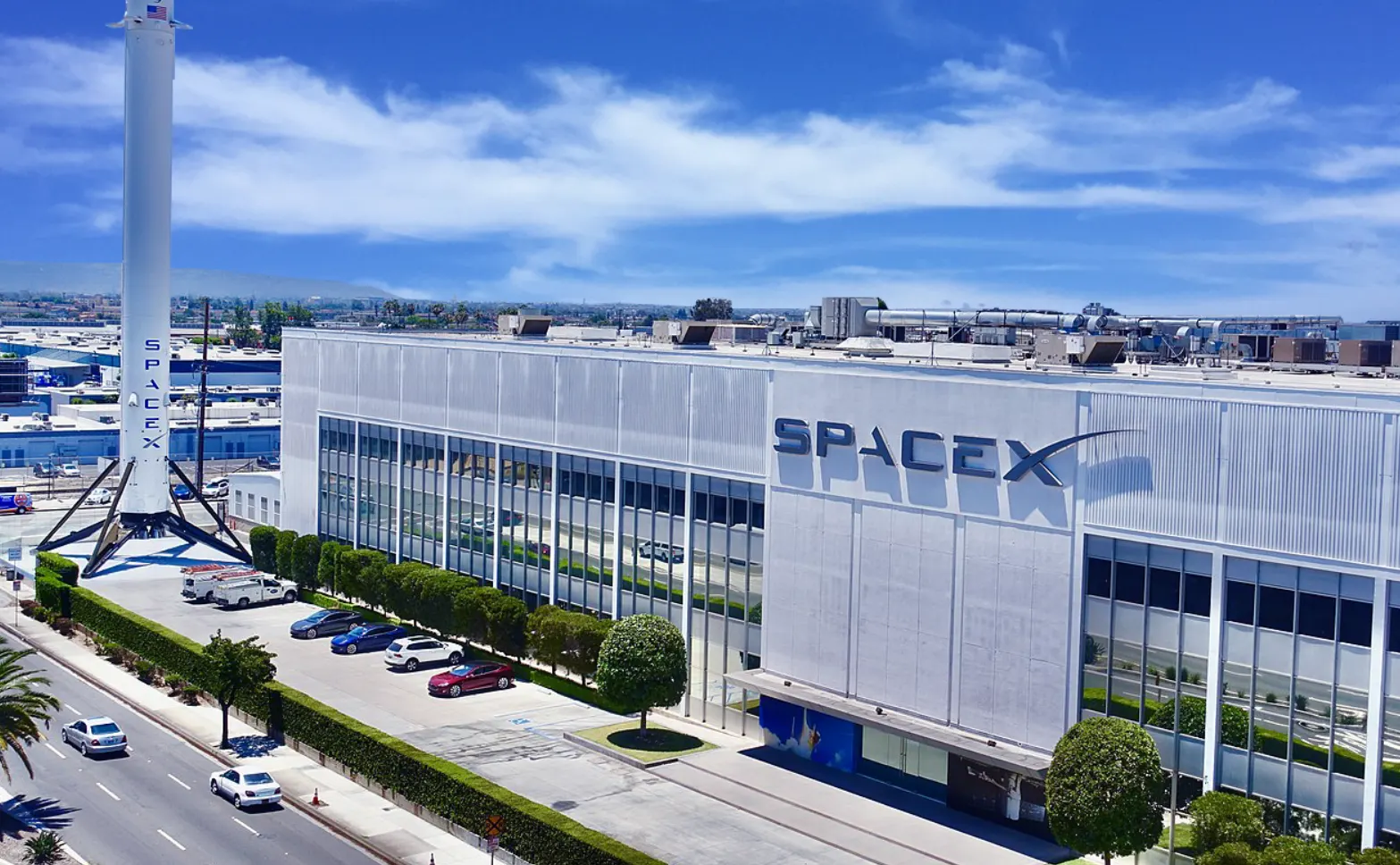
SpaceX’s third-quarter revenue rose 161 percent to 14.58 billion dollars. A net loss of 1.05 billion dollars a year earlier turned into a net profit of 4.40 billion. Netflix and Capital One reported minutes later, after Tuesday’s US close, and both grew profit. Across the three, quarterly revenue rose by 11.35 billion dollars on the year, and SpaceX supplied 79.3 percent of that increase, on our calculation.
Three US results after the close, third quarter 2026, ranked by net income
| Company | Revenue | Net income | Change in net income |
|---|---|---|---|
| SpaceX | $14,575m | $4,404m | from a $1,054m loss |
| Netflix | $12,874m | $3,664m | +43.9% |
| Capital One | $16,344m | $3,539m | +10.9% |
Third quarter of 2026 against the third quarter of 2025. Capital One’s revenue is total net revenue. Netflix’s and Capital One’s profit changes are our calculation from the companies’ figures; Capital One prints its change as 11 percent. Results were filed with the US Securities and Exchange Commission between 20:00 and 20:06 GMT on 20 October.
SpaceX: Super Intelligence Revenue Rises 830 Percent
The Super Intelligence segment, the unit SpaceX used to report as Artificial Intelligence, brought in 7.56 billion dollars. That is 51.9 percent of group revenue, on our calculation. A year earlier the same segment’s revenue was 813 million dollars. The company credited new cloud services agreements, the purchase of Cursor and wider use of Grok.
Most of the increase came from one revenue line, on our reading. Super Intelligence solutions and infrastructure sales rose by 6.66 billion dollars. That is 74 percent of the group’s 9 billion dollar revenue increase, on our calculation. The purchase of Cursor closed on 14 August, at an implied equity value of 60 billion dollars. Cursor contributed 608 million dollars of revenue.
Connectivity, home to Starlink, grew 69 percent to 5.25 billion dollars. Consumer subscribers reached 13.6 million, up from 7.2 million a year earlier. Average revenue per user fell to 69 dollars from 83 dollars. Consumer growth came from volume, not price, on our reading. Even so, the segment’s operating margin widened to 45.1 percent from 38.4 percent, on our calculation.
Space grew slowest of the three segments, on our reading. Its revenue rose 6 percent to 1.77 billion dollars. The segment swung to an operating loss of 7 million dollars, from a profit of 259 million a year earlier. Research and development spending there climbed to 1.23 billion dollars from 849 million. The company said it continued to accelerate investment in Starship. The company also launched its first revenue-generating Starship mission, which delivered 26 Starlink V3 satellites to the constellation.
Net income was higher than operating income. Operating income was 2.79 billion dollars, or 63.4 percent of net income, on our calculation. Interest income added 873 million dollars and other income 1.03 billion. A tax benefit of 390 million made up the rest, after 675 million dollars of interest expense, on our calculation.
The build-out is expensive. Capital spending reached 19.59 billion dollars in the quarter, 1.34 times revenue, on our calculation. The Super Intelligence unit accounted for 83.9 percent of it, on our calculation. Over the 9 months capital spending was 48.07 billion dollars. That is 3.47 times the 13.85 billion of a year earlier, on our calculation. Cash and marketable securities totalled 89.86 billion dollars at 30 September, on our calculation. Net of 38.84 billion dollars of debt and finance leases, that leaves 51.01 billion dollars of net cash, on our calculation. The listing brought in 85.68 billion dollars of net proceeds over the 9 months. For the 9 months as a whole the company still showed a net loss of 413 million dollars.
SpaceX revenue by segment, third quarter 2026
| Segment | Revenue | Change on a year | Share of total |
|---|---|---|---|
| Super Intelligence | $7,560m | +830% | 51.9% |
| Connectivity | $5,248m | +69% | 36.0% |
| Space | $1,767m | +6% | 12.1% |
| Total | $14,575m | +161% | 100% |
Changes on a year as printed by SpaceX; shares of total are our calculation. Adjusted EBITDA was 8.81 billion dollars, against 2.17 billion a year earlier.
Netflix: Margin Widens to 34.6 Percent
Netflix’s revenue rose 11.8 percent to 12.87 billion dollars. Operating income climbed 37 percent to 4.46 billion dollars. The operating margin of 34.6 percent was 6.4 points above a year earlier, on our calculation. The company said the margin came in ahead of its forecast mainly because of the timing of expenses.
Net income rose 43.9 percent to 3.66 billion dollars, on our calculation. Diluted earnings per share rose 49 percent to 0.87 dollars. They grew faster than profit because the diluted share count shrank 3.3 percent, on our calculation. Buybacks explain that, on our reading. The company bought back 63.9 million shares for 4.8 billion dollars in the quarter, which it called “our largest quarter ever of stock repurchases”. The spend was 1.66 times the quarter’s 2.88 billion dollars of free cash flow, on our calculation. Another 22.3 billion dollars of buyback capacity remains.
Latin America grew fastest in dollar terms, by 17 percent, but Asia Pacific led at constant exchange rates, up 15 percent, on our reading. The United States and Canada still produced 43.7 percent of revenue, on our calculation.
For the full year, Netflix expects 2026 revenue of 51.1 billion dollars, up 13 percent. It expects an operating margin of 31.5 percent, against 29.5 percent in 2025. Advertising is the soft spot, on our reading. The company now expects 2026 ad revenue of approximately 2.7 billion dollars, against approximately 3 billion before. It cites a slightly slower than expected rollout of some ad product capabilities. Its free cash flow forecast moves to approximately 12 billion dollars from 12.5 billion, mainly on a real estate deal due to close in the fourth quarter.
Netflix, third quarter and fourth-quarter forecast
| Measure | Q3 2025 | Q3 2026 | Q4 2026 forecast |
|---|---|---|---|
| Revenue | $11,510m | $12,874m | $13,442m |
| Operating margin | 28.2% | 34.6% | 26.0% |
| Net income | $2,547m | $3,664m | $2,787m |
| Diluted EPS | $0.59 | $0.87 | $0.67 |
From the Netflix shareholder letter of 20 October 2026; the fourth-quarter column is the company’s own forecast. The 26.0 percent margin includes the cost of the recently announced headcount reductions.
Capital One: Profit Rises 11 Percent and Charge-Offs Fall 10 Percent
Capital One earned 3.54 billion dollars, against 3.19 billion dollars a year earlier. Diluted earnings per share rose to 5.61 dollars from 4.83 dollars. Excluding adjusting items, earnings were 6.69 dollars a share. Those items totalled 868 million dollars before tax, on our calculation. Acquisition amortisation accounted for 483 million of them. Discover integration costs added 338 million and the Brex integration 47 million. “The Discover integration continues to go well,” said Richard Fairbank, founder, chairman and chief executive.
Total net revenue rose 6 percent to 16.34 billion dollars. Net interest income, at 12.89 billion dollars, was up 4 percent. Non-interest income moved faster, up 17 percent to 3.46 billion dollars. Discount and interchange fees climbed 29 percent, to 2.34 billion. The net interest margin reached 8.41 percent. That is 40 basis points above the second quarter and 5 above a year earlier.
Net charge-offs fell 10 percent to 3.12 billion dollars. The charge-off rate eased to 2.73 percent from 3.16 percent. The provision for credit losses still rose 7 percent, to 2.92 billion dollars. It included a 225 million dollar loan reserve release. Pre-provision earnings came to 7.49 billion dollars, 5.5 percent more than a year earlier, on our calculation. Pre-tax income rose a slimmer 4.3 percent, on our calculation. On our calculation, higher pre-tax income supplied 190 million dollars of the 347 million dollar gain in net income. A lower tax bill supplied the other 157 million, on our calculation. The effective rate was 22.6 percent, against 27.1 percent a year earlier.
Returns improved. Return on tangible common equity rose to 21.12 percent from 18.82 percent. The share count fell 5 percent on the year to 601.5 million. Dividends per share were 0.80 dollars, against 0.60 dollars a year earlier. The common equity Tier 1 ratio was 13.8 percent at the end of the quarter. That is up from 13.7 percent in the second quarter and below the 14.4 percent of a year earlier.
Why it matters: SpaceX spent more on capital projects than it took in as revenue this quarter, mostly in its Super Intelligence unit, on our calculation. The money raised in its listing is paying for that build, on our reading. Netflix turned double-digit revenue growth into a wider margin. This quarter it spent more on buybacks than it generated in free cash flow, on our calculation. Capital One is writing off less bad debt, but its provision still rose. A lower tax bill supplied 45 percent of its profit gain, on our calculation.
Outlook: Netflix’s next marker is its own fourth-quarter forecast of 13.44 billion dollars of revenue and a 26.0 percent margin. Its ad tier is due in 15 new countries in 2027. The first group of launches comes in March. SpaceX expects its 800 MHz transaction to close in the first half of 2027. It targets the first launch from Starbase Louisiana in 2029. Capital One’s next test is whether the lower charge-off rate lasts as the Discover integration continues.
Sources: SpaceX, Netflix, Capital One, The Edge.