Egypt’s Exports to Its Trading Blocs Jump 16.8 Percent to US$54.4 Billion in 2025
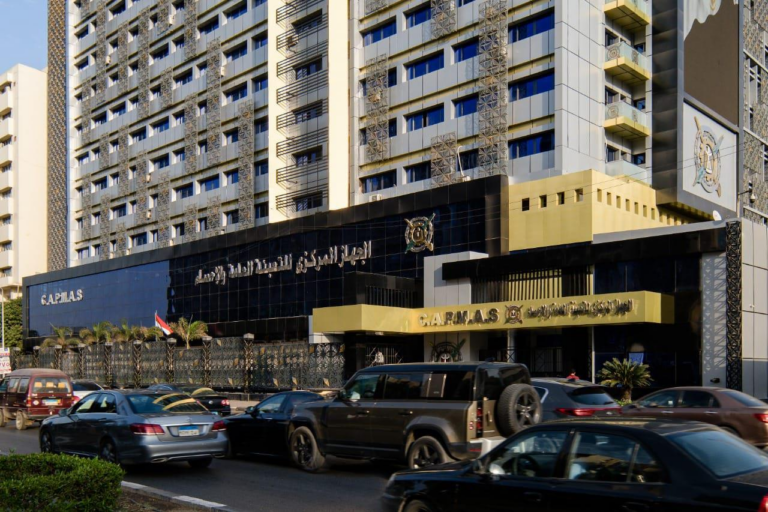
Egypt’s exports to the economic blocs it belongs to rose 16.8 percent in 2025 to 54.4 billion dollars, from 46.6 billion the year before, according to the Central Agency for Public Mobilization and Statistics, a gain that outpaced import growth several times over and left the country with a clear trade surplus with these groupings.
The detail shows where the growth came from. Exports to the Greater Arab Free Trade Area, or GAFTA, rose 22.9 percent to 19.8 billion dollars, making it Egypt’s single largest export destination among the blocs, while exports to the economies covered by the Economic and Social Commission for Western Asia, or ESCWA, climbed 32.3 percent to 16.9 billion dollars. The figures cover the six groupings Egypt participates in: GAFTA, ESCWA, COMESA, the Group of 15, the Community of Sahel-Saharan States and the D-8 group of developing economies.
The contrast between exports and imports is the most telling number. Imports from the blocs rose just 4.6 percent to 42.3 billion dollars, from 40.4 billion, so export growth of 16.8 percent ran at more than three and a half times the pace of import growth, our calculation. That gap produced a trade surplus with the blocs of about 12.1 billion dollars, on our calculation from the 54.4 billion in exports against 42.3 billion in imports, a notable position for a country that runs a sizeable overall trade deficit. In year-on-year terms, exports rose about 7.8 billion dollars while imports rose only about 1.9 billion, so the improvement in the balance was driven overwhelmingly by the export side.
Within the trade flows, GAFTA stands out on both sides of the ledger. It was not only the largest export destination but also the largest source of imports, with imports from the group rising 5.4 percent to 15.0 billion dollars. That still leaves Egypt with a bilateral surplus of about 4.8 billion dollars with GAFTA, our calculation, underlining the strength of Egypt’s trade position within the Arab free-trade area. Elsewhere, imports from the Group of 15 rose 11.0 percent to 12.6 billion dollars, imports from the Sahel-Saharan community rose 12.6 percent to about 1.2 billion, and exports to the D-8 group edged down 0.4 percent to about 4.0 billion, the only decline among the export figures.
The pattern points to a broadly favourable trade dynamic for Egypt with its treaty partners. Measured as a coverage ratio, exports to the blocs were equal to about 129 percent of imports from them, our calculation, meaning Egypt sold considerably more to these partners than it bought. That is a meaningful contribution to the external accounts at a time when the authorities are working to narrow the current-account deficit and rebuild foreign-currency inflows, and it reflects both the recovery of Egyptian export competitiveness and the depth of the country’s trade ties across the Arab region and Africa.
The African dimension of the data is worth drawing out. Alongside the Arab groupings, Egypt participates in COMESA and the Sahel-Saharan community, which connect it to fast-growing sub-Saharan markets, and rising imports from the Sahel-Saharan group, up 12.6 percent, point to deepening two-way trade with African partners. For a country that has made expanding African trade an explicit policy goal, growth in flows across these blocs supports the strategy of using preferential access to diversify beyond a handful of traditional markets and to build Egypt’s role as a manufacturing and re-export platform for the continent.
The wider significance is for the external accounts. Egypt runs a structural overall trade deficit, because it imports large volumes of energy, food and capital goods from outside these blocs, so a surplus of about 12 billion dollars with its treaty partners is a meaningful offset that helps fund part of that gap, our reading of the figures. Combined with the recovery in tourism, remittances and Suez Canal receipts, stronger bloc exports are one of the levers the authorities are counting on to narrow the current-account deficit and rebuild foreign-currency buffers, which is why the composition of this trade, export-led rather than import-compressed, matters as much as the headline growth rate. Export growth of this kind adds foreign currency directly rather than saving it by squeezing demand, and that distinction is central to the external adjustment Egypt is trying to engineer.
Why it matters: Trade with regional and developing-economy blocs is a structural strength for Egypt, giving it preferential access to large and growing markets across the Arab world and Africa, and a 16.8 percent jump in exports with a surplus of about 12 billion dollars is a direct, positive contribution to the balance of payments. Export growth running at several times the pace of imports is exactly the composition the authorities want, since it improves the trade balance without simply compressing imports. For Egypt, deeper trade with these blocs supports the drive to earn more foreign currency and reduce reliance on external borrowing, and for the Gulf, which sits at the centre of GAFTA, the data underscore how integrated Egypt has become with regional markets as both a supplier and a destination.
Outlook: Sustaining the momentum will depend on the competitiveness of Egyptian exporters as the pound stabilises and on demand across the partner blocs. Continued strong export growth to GAFTA and ESCWA, alongside contained import growth, would keep improving the trade balance and support the external adjustment the country is pursuing. The main variables to watch are regional demand, the exchange rate and the pace at which Egypt can move up the value chain in what it sells to its treaty partners.
Sources: Central Agency for Public Mobilization and Statistics.