Egypt Pushes for Bigger UAE Investment in Its Gas Sector as Foreign Interest Builds
Egypt is pressing to draw more investment from the United Arab Emirates into its natural-gas sector, as Petroleum Minister Karim Badawi used a visit to Abu Dhabi on 2 July to back the overseas expansion of Egyptian energy firms and to seek expanded upstream investment from ADNOC, the state oil company. The push comes as separate deal activity underscores renewed foreign interest in Egypt’s oil and gas acreage.
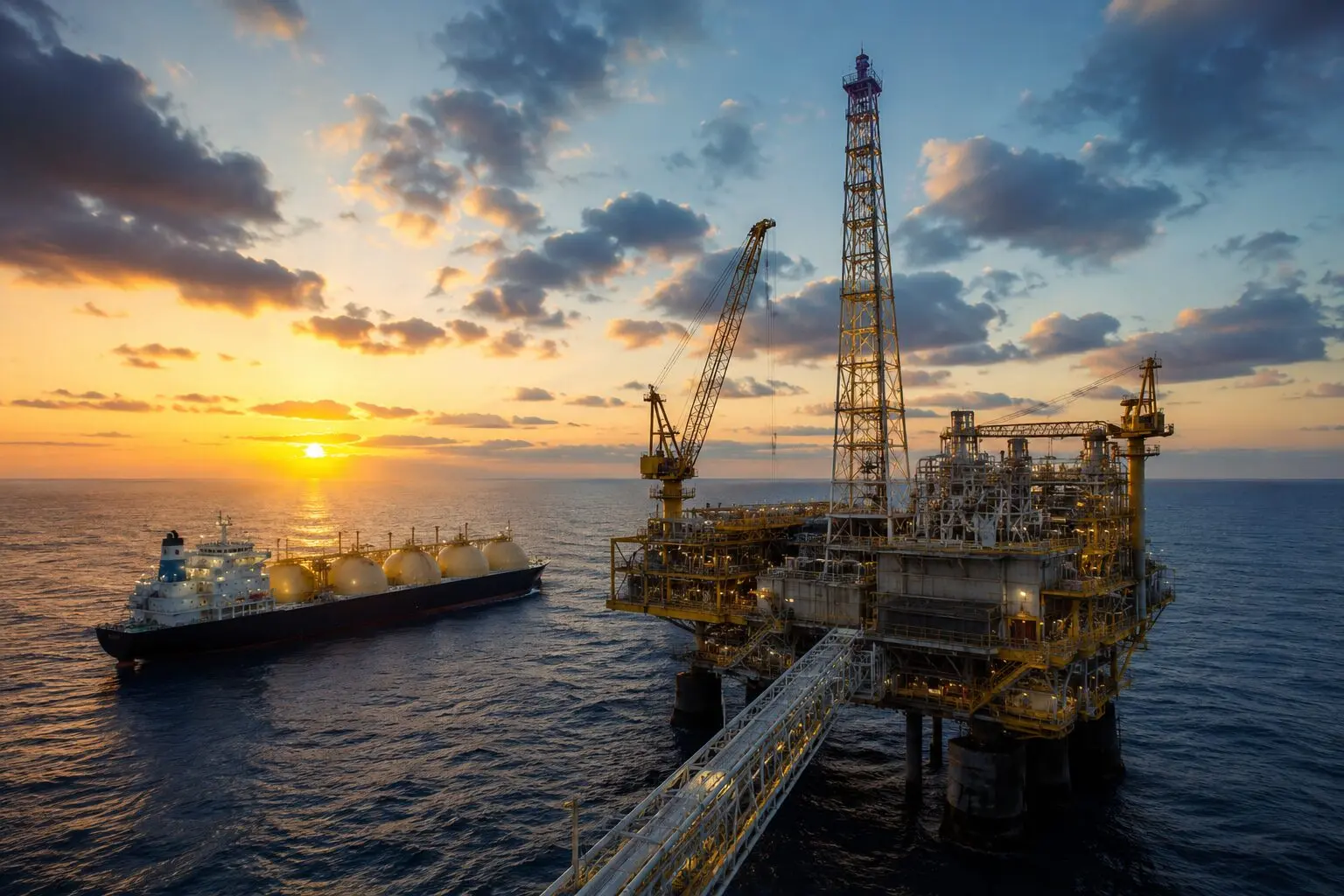
At the centre of the discussions is Arcius Energy, a joint venture between bp and ADNOC’s international arm, which holds a growing position offshore Egypt. The venture’s 2026 work programme includes developing the Harmattan gas field, drilling a new offshore exploration well at West Atoll, and continuing its participation in the flagship Zohr field and the North Damietta area that contains the Atoll field. The Harmattan development rests on a final investment decision of about 500 million dollars taken earlier in the year, with production expected to start in 2028, so the project is already committed rather than newly announced, and the aim of the visit was to build on it toward a larger ADNOC commitment in Egyptian gas.
The context for Egypt’s push is a pressing national need. The country swung in recent years from being a gas exporter to a net importer as domestic output fell and demand rose, forcing it to buy liquefied natural gas at a cost in scarce foreign currency. Lifting domestic production is therefore both an energy-security and a balance-of-payments priority: every additional unit of gas produced at home displaces an import that would otherwise have to be paid for in dollars. That is why the government has made attracting upstream investment from partners such as ADNOC, and supporting the overseas work of its own service companies, a central plank of its energy strategy.
The urgency behind Egypt’s push is visible in its recent gas history. Output from the giant Zohr field, discovered in 2015 and once the centrepiece of Egypt’s ambition to become a regional gas hub, has declined from its peak, and with domestic demand rising the country turned back to importing liquefied natural gas, reversing the brief period in which it exported gas. Because those imports are paid for in foreign currency at a time when Egypt is working to rebuild its external buffers, every field brought into production at home carries a double benefit: it adds energy supply and it saves hard currency. That is the calculation behind courting a well-capitalised partner such as ADNOC to develop discovered but idle fields quickly.
Separately, and on the same day, a corporate transaction highlighted the appetite of other foreign investors for Egyptian acreage. Genel Energy, a London-listed producer, agreed to acquire Capricorn Energy in an all-cash deal worth about 360 million dollars, securing a foothold in Egypt through Capricorn’s Western Desert portfolio, which spans the Badr El Din and Obaiyed concessions among others. The offer, at 4.74 dollars a share plus a special dividend, is expected to complete in the second half of the year subject to Egyptian approvals. Although it is a separate deal, not part of the ADNOC discussions, its timing reinforces the picture of renewed investor interest in Egypt’s upstream at a moment when the government is actively courting capital.
The visit also had a second track that works in the opposite direction, supporting the overseas work of Egypt’s own service companies. Firms such as Petrojet and ENPPI have won engineering and construction work in the UAE, and the government frames that export of Egyptian engineering capacity as another way to earn foreign currency and make use of skilled personnel. The two threads, attracting inward investment into Egyptian gas and exporting Egyptian services abroad, are complementary parts of the same strategy of using the energy sector to strengthen the external accounts.
Taken together, the committed Harmattan development and the Genel acquisition represent on the order of 860 million dollars of upstream activity tied to Egypt in a single window, our calculation from the two figures, a signal that the sector is drawing fresh commitments even as the government seeks more. For a state trying to reverse the slide in domestic gas output, the combination of a partner willing to develop discovered fields and a buyer paying to enter the market is exactly the momentum it wants to build.
Why it matters: Reviving domestic gas production is one of the most direct levers Egypt has to improve its external accounts, because it substitutes home-produced energy for costly liquefied natural gas imports that drain foreign currency. Attracting a major Gulf investor such as ADNOC to develop discovered but undeveloped fields would combine capital, technology and long-term commitment at a time when Egypt needs all three, and the parallel entry of other foreign producers shows the acreage is competitive for investment. For the UAE, deploying capital into Egyptian gas extends ADNOC’s regional footprint and ties two of the region’s larger economies more closely together, and for Egypt it supports the drive to cut the import bill, rebuild the energy sector and earn foreign currency through its service companies working abroad.
Outlook: The near-term markers are whether the discussions translate into a concrete expansion of ADNOC’s Egyptian commitments beyond the projects already under way, the progress of the Harmattan development toward its 2028 start, and the completion of the Genel acquisition. Sustained foreign investment in exploration and development, alongside the government’s own push, would be the clearest sign that Egypt is turning the corner on domestic gas output and, with it, on the import bill that has weighed on its external position.
Sources: Egyptian Ministry of Petroleum and Mineral Resources; Reuters.