Egyptian Listed Banks Enter the 2026 Earnings Test From a Strong Q1 Profit Base
Egypt’s listed banking sector entered 2026 with strong profitability momentum. First quarter results showed resilient earnings, strong balance sheets, and continued support from high nominal interest rates. However, these results should be treated as the starting point for analysis, not the final conclusion on the sector’s performance in 2026.
The Q1 results were mostly announced during April and May, before the full economic impact of regional geopolitical tensions could be reflected in bank earnings. Even if tensions ease, part of the impact is already embedded in business decisions, supplier contracts, shipping costs, insurance pricing, foreign currency planning, inventory cycles, and investor risk appetite. For Egyptian banks, the real test will therefore unfold gradually across Q2, Q3, and Q4 of 2026.
Q1 showed strong profit concentration among leading listed banks
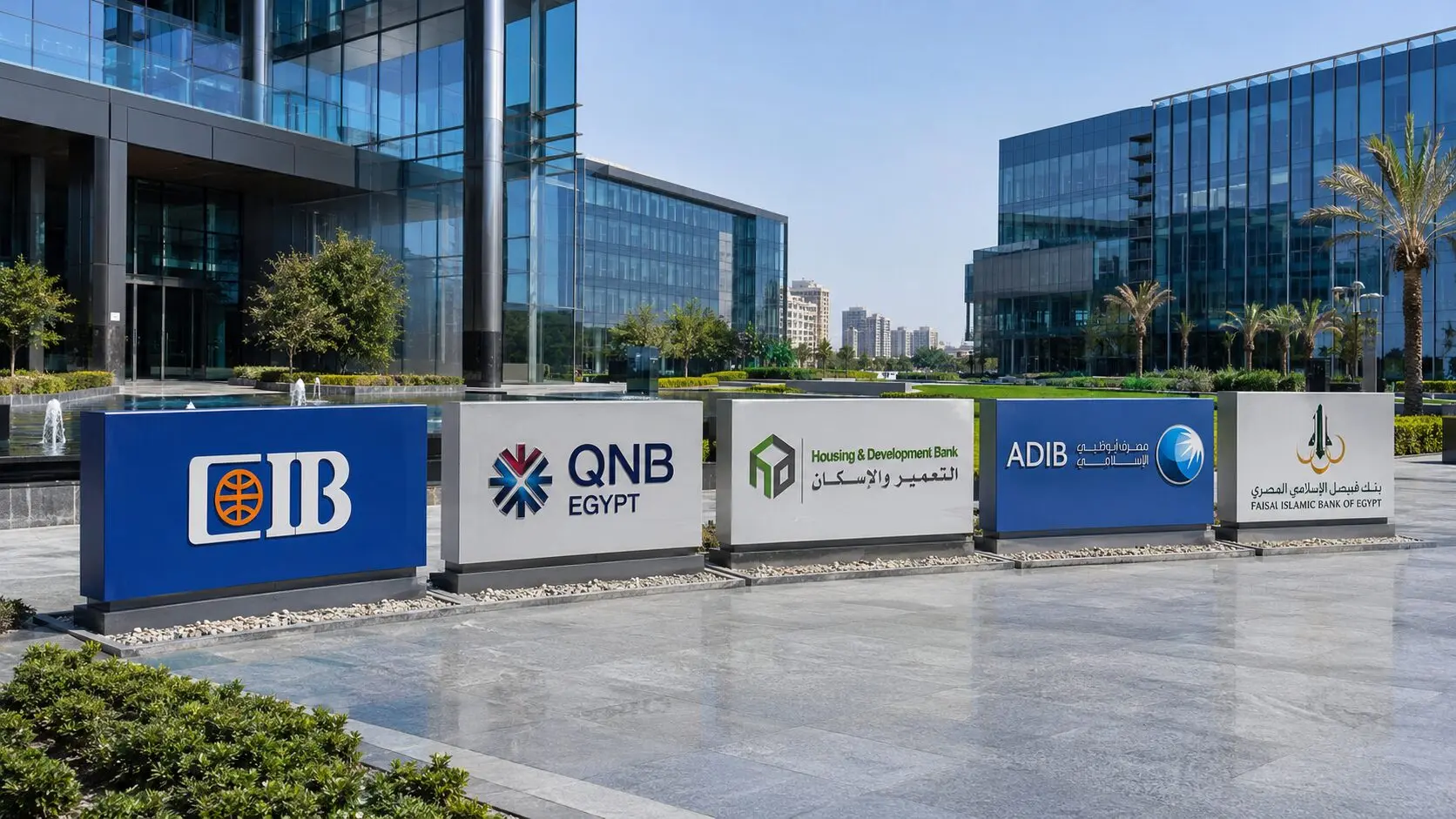
The five most profitable listed Egyptian banks generated approximately EGP 39.7 billion in combined net profit during Q1 2026. The ranking confirms that earnings remain concentrated among large scale banks with strong liquidity, broad deposit franchises, and diversified revenue streams.
| Rank | Bank | Q1 2026 net profit | YoY growth |
|---|---|---|---|
| 1 | Commercial International Bank | EGP 17.8bn | 7.0% |
| 2 | QNB Egypt | EGP 9.5bn | 33.0% |
| 3 | Housing and Development Bank | EGP 5.621bn | 13.4% |
| 4 | Abu Dhabi Islamic Bank Egypt | EGP 3.655bn | 20.5% |
| 5 | Faisal Islamic Bank of Egypt | EGP 3.094bn | 219.0% |
| Combined top five | Around EGP 39.7bn |
Commercial International Bank
CIB remained the largest profit contributor among listed Egyptian banks, reporting Q1 2026 consolidated net income of EGP 17.8 billion, up 7 percent year on year. The bank also reported consolidated revenue of EGP 31.2 billion, supported by balance sheet growth, strong net interest income, and a net interest margin of 8.88 percent.
CIB’s results underline the importance of scale in Egypt’s banking sector. Its profitability was supported by a large deposit base, strong capital position, and a diversified lending portfolio. At the same time, management commentary pointed to a more uncertain macroeconomic environment, with future priorities shifting toward balance sheet resilience, sustainable growth, liquidity durability, and disciplined risk management.
QNB Egypt
QNB Egypt reported net profit of EGP 9.5 billion in Q1 2026, up 33 percent year on year. The bank’s performance was supported by a 24 percent rise in net interest income and a 36 percent increase in net banking income.
However, the result also showed early signs of risk repricing. Cost of risk increased by 105 percent to EGP 1.54 billion, while the non performing loan ratio stood at 4.58 percent and total coverage reached 118.9 percent. This makes QNB Egypt one of the most important banks to monitor in the coming quarters because its results already capture both strong earnings momentum and rising credit risk sensitivity.
Housing and Development Bank
Housing and Development Bank reported consolidated net profit after tax of EGP 5.621 billion in Q1 2026, compared with EGP 4.959 billion in Q1 2025, representing growth of around 13.4 percent.
The bank remained one of the strongest listed profit contributors in Egypt, supported by its ongoing commercial banking transformation and continued expansion beyond its traditional housing finance base. For analytical consistency, the consolidated figure is the most appropriate measure when comparing the bank with other listed lenders.
Abu Dhabi Islamic Bank Egypt
ADIB Egypt reported net profit attributable to shareholders of EGP 3.655 billion in Q1 2026, compared with EGP 3.033 billion in Q1 2025, reflecting growth of around 20.5 percent.
The result was supported by higher net income from funds, stronger fee and commission income, and a significant increase in net trading income. ADIB Egypt’s performance also highlights the continued strength of Islamic banking profitability in a high rate environment, particularly where funding discipline and asset repricing remain supportive.
Faisal Islamic Bank of Egypt
Faisal Islamic Bank reported net profit after non controlling interests of EGP 3.094 billion in Q1 2026, compared with EGP 969.9 million in Q1 2025, representing growth of around 219 percent.
The sharp increase reflected stronger operating income, higher dividends, improved trading income, and a low comparison base from the previous year. While the growth rate is exceptional, the sustainability of this level of earnings growth should be assessed carefully in the coming quarters, especially as credit costs and market volatility become more visible.
Q1 profitability was strong, but it was not the full stress test
The first quarter captured the early part of a more complex operating environment. High interest rates continued to support bank margins and treasury income, while balance sheet growth remained solid across the largest institutions. This helped banks absorb higher operating expenses and, in some cases, rising provisioning costs.
However, Q1 was not yet the full stress test. The impact of geopolitical tensions on banks usually appears with a lag because it first affects trade routes, energy costs, shipping insurance, corporate working capital, inventory cycles, and foreign currency demand before it fully appears in asset quality and earnings.
This is why Q2, Q3, and Q4 will matter more than Q1 for assessing the true quality of 2026 earnings.
Why the impact may not be fully reversible
Even if regional tensions ease, the economic impact is unlikely to disappear immediately. Companies may have already locked in higher transport and insurance costs, revised pricing assumptions, delayed investment decisions, increased precautionary foreign currency balances, or adjusted import and inventory cycles.
Banks will therefore need to manage the second round effects. These include changes in corporate borrowing behaviour, pressure on repayment capacity, tighter liquidity management, higher funding competition, and more cautious credit underwriting.
For Egypt’s banking sector, the key issue is not whether geopolitical tensions continue at the same intensity. The key issue is that the shock has already influenced business planning and financial conditions. This makes the rest of 2026 a live test of earnings durability.
Main transmission channels to watch
Cost of risk and expected credit losses
Credit risk is likely to be the most important indicator. A rise in expected credit losses, provisioning, restructuring activity, or sector specific stress would suggest that macro pressure is moving from headline risk into loan portfolios.
Net interest margin
High rates support asset yields, but deposit repricing and stronger competition for liquidity can pressure margins. The coming quarters will show which banks can preserve spreads without taking excessive balance sheet risk.
Foreign currency liquidity
Foreign currency demand may increase if companies face higher import bills, shipping costs, or payment uncertainty. Banks with strong foreign currency liquidity and diversified funding should be better positioned.
Trade finance and corporate lending
Regional disruption can increase working capital needs for importers, exporters, logistics companies, manufacturers, and energy exposed businesses. Strong loan growth will only be positive if it is backed by quality borrowers and disciplined underwriting.
Treasury and investment income
Treasury portfolios may remain an important earnings driver, but they can also introduce volatility if yields, exchange rates, or capital flows shift. Earnings quality will therefore matter as much as headline profit.
Q2, Q3, and Q4 will define the year
Q2 should provide the first clearer evidence of immediate transmission effects, especially through funding costs, foreign exchange behaviour, trade finance demand, and early credit risk indicators.
Q3 will be more important for identifying whether pressures are temporary or becoming embedded in borrower behaviour, deposit pricing, and provisioning assumptions.
Q4 will be the most important quarter for assessing whether Egyptian listed banks can preserve asset quality, capital strength, and profitability after a full year of elevated external risk.
The sector entered this period from a position of strength. CIB and QNB Egypt continue to benefit from scale, liquidity, and diversified earnings. Housing and Development Bank remains a major profit contributor with a growing commercial banking profile. ADIB Egypt and Faisal Islamic Bank show the continued strength of Islamic banking models in a high rate environment.
Still, strong Q1 profit growth should not be interpreted as immunity from risk. The better interpretation is that Egyptian listed banks entered the geopolitical earnings test with a strong profit buffer.
Outlook
Egyptian listed banks delivered a strong Q1 2026, supported by high interest rates, resilient liquidity, strong deposit franchises, and diversified income streams. But the more important earnings story for 2026 is still ahead.
Q1 confirmed the sector’s profitability base. Q2, Q3, and Q4 will test the durability of that base.
The central question for the rest of the year is not whether Egyptian banks can generate high nominal profits. They already can. The question is which banks can protect earnings quality while managing funding costs, foreign exchange volatility, credit risk, and the delayed impact of regional geopolitical tensions on corporate and household balance sheets.
Sources: CIB, QNB Egypt, Egyptian Exchange, Housing and Development Bank, ADIB Egypt, Faisal Islamic Bank of Egypt, and verified Q1 2026 financial disclosures.