European Commission Creates EU Sanctions Office After 21 Packages on Russia

The Takeaway: The new EU Sanctions Office will coordinate European Commission work on sanctions, from policy design through enforcement and outreach to non-EU countries to stop evasion. It starts on 16 January 2027, and former Swedish ambassador to the EU Lars Danielsson becomes sanctions envoy on 6 February. The main Russia-related list now exceeds 4,700 names. EU governments still decide sanctions and enforcement stays mainly with member states, so the Office supports them rather than replaces them.
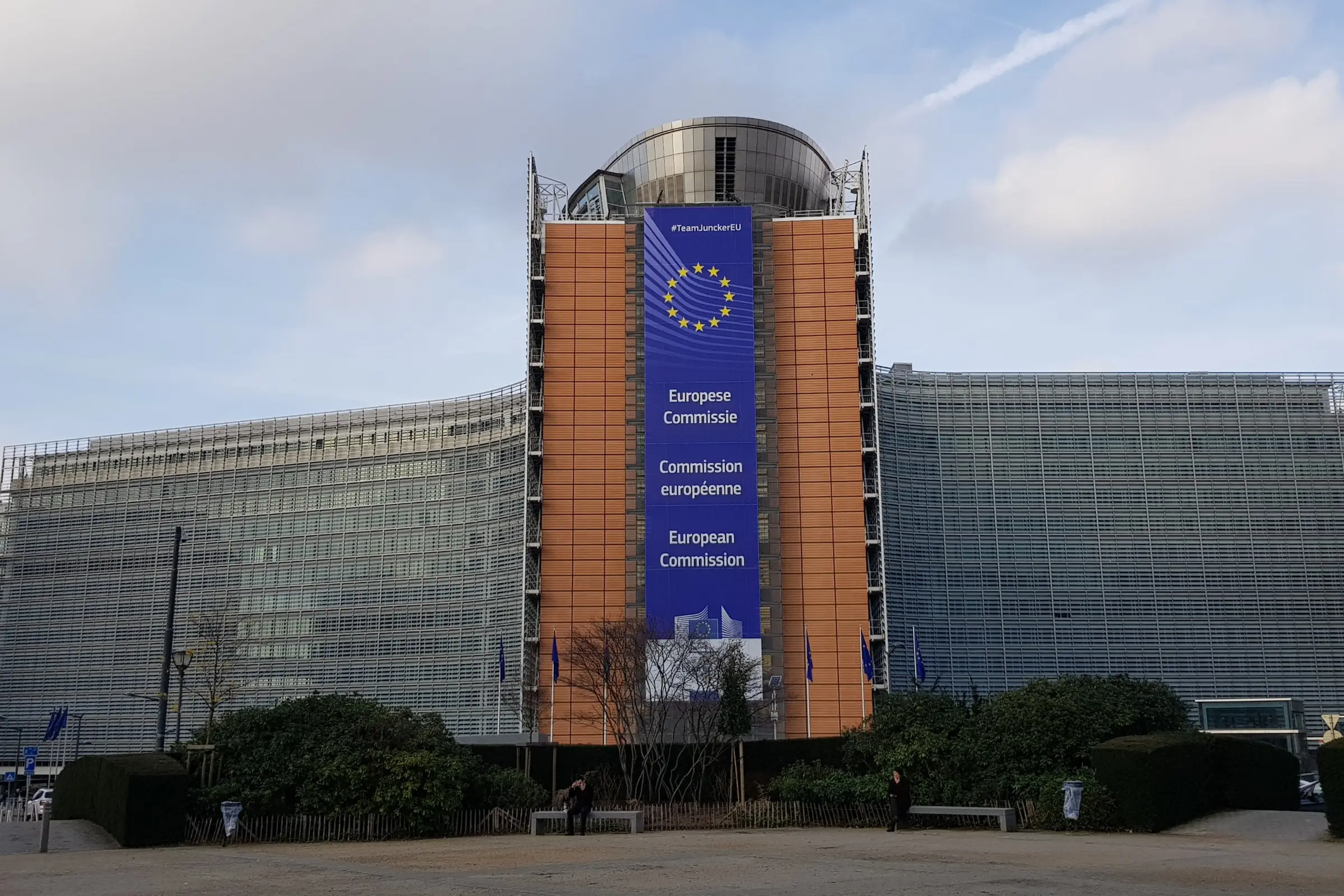
The European Commission will bring its sanctions expertise together in a new office inside its Secretariat-General on 16 January 2027, after 21 packages of measures against Russia.
The Commission announced the EU Sanctions Office on Wednesday, saying the scale and complexity of those measures had shown the need for stronger coordination. The Office is meant to cover the Commission’s part in the whole life of a sanctions measure: policy design, implementation, enforcement, efforts to stop evasion and outreach to non-EU countries.
The Office gathers expertise from across the Commission
The Office will sit in the Secretariat-General, the central department that steers and coordinates the Commission’s work under its President. Political responsibility goes to Maria Luís Albuquerque, the Commissioner for Financial Services and the Savings and Investments Union.
The Office will draw on the Secretariat-General itself, on the directorates-general for financial services (DG FISMA), trade (DG TRADE) and taxation and customs (DG TAXUD), on the European Anti-Fraud Office (OLAF) and on other services. The Commission describes this as bringing expertise together. It does not say whether units will move or merge, and it gives no staff number, budget or head for the Office.
The remit covers all EU sanctions regimes. The Commission singles out Russia and Belarus, then Iran, North Korea, Syria, and hybrid and organized crime. It says the Office’s approach will ensure sanctions coordination for the EU with member states and non-EU countries.
Member states are promised faster compliance guidance, data sharing, and economic and technical analysis, with the aim of applying and enforcing sanctions in the same way across the bloc. “Sanctions are only as effective as our ability to implement and enforce them,” Albuquerque said.
A new envoy takes over the outreach to non-EU countries
Lars Danielsson, a Swedish career diplomat, will become International Special Envoy for the Implementation of EU Sanctions on 6 February 2027, when David O’Sullivan’s mandate ends. The Commission appointed O’Sullivan in December 2022, so he will have served just over four years.
Danielsson’s career includes senior posts in the Swedish Prime Minister’s Office, among them State Secretary for International and EU Affairs. He was Sweden’s ambassador and permanent representative to the EU from 2016 to 2023.
The envoy’s task is to work with non-EU countries to reduce the risk that EU sanctions are bypassed, notably through alternative trade routes, financial channels or procurement networks. Under the new structure the post will be attached to the Commission’s Secretary-General and keep a direct reporting line to Albuquerque. The Office will help prepare and follow up the envoy’s missions and provide administrative and logistical support.
That outreach already has a regular forum. O’Sullivan was due to convene the eighth Sanctions Coordinators Forum on 5 November with member states and 12 partners, including the United States, the United Kingdom, Japan and Ukraine. Its agenda listed payment networks in non-EU countries, evasion patterns in Russia’s military industry and Russian energy exports.
One October round makes up close to a third of the Russia list
The EU has adopted 21 packages of sanctions on Russia since February 2022, an average of one every 81 days between the first and the latest. Nine came in 2022, and the 21st followed on 23 July 2026.
The sharper recent change is in the number of names. On 12 October the Council of the EU, where member governments sit, added 1,569 individuals and entities linked to Russia’s military industry, the largest set of listings it has agreed. Those listed face an asset freeze, and individuals also face a travel ban.
That round took the total under the EU’s main Russia-related listing regime to close to 4,600. After the 16 November round the list stands at over 4,700, so the October round alone accounts for close to a third.
Recent EU listing rounds on Russia (number of listings)
| Round | Date | Listings |
|---|---|---|
| 19th package | 23 Oct 2025 | 69 |
| 20th package | 23 Apr 2026 | 120 |
| 21st package | 23 Jul 2026 | 218 |
| October round | 12 Oct 2026 | 1,569 |
| November round | 16 Nov 2026 | 113 |
Listings are individuals and entities. Other rounds in the same period are not shown.
Across every regime, the Council of the EU counts over 7,800 sanctioned individuals and entities and almost 50 sanctions regimes. That count of names and the Russia total are both rounded minimums, and some names sit under more than one regime; the Commission’s sanctions tracker warns that its own count can include such names twice. The Russia list therefore cannot be stated as a precise share of the wider total.
The shipping list has grown too. The EU describes the shadow fleet as aging tankers carrying Russian oil around its sanctions and its price cap, the ceiling above which it bans shipping that oil to other countries. Its list of such vessels stood at 557 in October 2025. The 21st package in July took that to 673.
Direct trade has shrunk to a fraction of its 2021 level
EU goods exports to Russia fell 66.0% between 2021 and 2025, and imports fell 82.8%, Eurostat data show. That left the EU with a small surplus in 2025, after a deficit in each of the four previous years.
EU goods trade with Russia (in EUR billions)
| Period | Export | Import | Net |
|---|---|---|---|
| 2021 | 89.2 | 163.6 | -74.5 |
| 2022 | 55.0 | 202.5 | -147.5 |
| 2023 | 38.3 | 50.8 | -12.5 |
| 2024 | 32.0 | 36.3 | -4.3 |
| 2025 | 30.3 | 28.1 | 2.2 |
| Jan to Sep 2026 | 21.9 | 19.0 | 2.9 |
Export and Import are EU flows with Russia, not seasonally adjusted. Net is exports minus imports, calculated before rounding.
The decline has slowed. In the first nine months of 2026, exports were 2.6% below the same period of 2025, while imports were 12.6% lower.
The bans are large against the prewar base. The Council of the EU, citing the Commission, puts them at over EUR 48 billion of goods that would have been exported to Russia and EUR 91.2 billion that would have been imported.
Compared with 2021 volumes, the same estimate puts 54% of exports and 58% of imports under embargo.
The EU has also gone further on trade through third countries. In its 20th package it used its anti-circumvention tool for the first time, banning exports of computer-controlled machine tools and radios to Kyrgyzstan where there is a high risk they will be re-exported to Russia.
EU governments keep the final say
The new structure does not change who decides. EU governments adopt sanctions unanimously in the Council of the EU, on a proposal from the High Representative for Foreign Affairs and Security Policy, who conducts EU foreign policy. Where measures include asset freezes or other economic steps, the High Representative and the Commission jointly propose the regulation that gives them legal effect.
Enforcement stays primarily with member states, and the Commission oversees how they apply the rules. The Commission has already published more than 500 answers to frequently asked questions on the Russia measures.
In The Edge’s reading, the Office will matter less for how many sanctions the EU adopts than for how consistently 27 national systems apply them and how well the bloc tracks trade and payments moving through other countries. With more than 4,700 names on one list, that is now the harder job.
The Commission argues that the pressure is working, pointing to Russian growth slowing from 4.9% in 2024 to 1% in 2025. It has also warned that persistently high oil prices linked to the Middle East crisis could ease that pressure.
What to watch:
16 January 2027: the changes setting up the EU Sanctions Office take effect.
6 February 2027: Danielsson takes up the envoy post as O’Sullivan’s mandate ends.
15 July 2027: the EU’s pause on automatic adjustment of the oil price cap runs until this date.
31 July 2027: the current extension of EU economic sanctions on Russia expires.
Method: details of the EU Sanctions Office and the envoy are from the European Commission’s press release IP/26/2499 of 18 November 2026, with its news item of 5 November 2026 on the sanctions meetings. The note on double counting is from the Commission’s EU sanctions tracker. Sanctions counts and procedures are from the Council of the EU’s sanctions pages and its press releases of 23 October 2025 and 23 April, 23 July, 12 October and 16 November 2026. Trade figures are from Eurostat’s extra-EU trade statistics, last updated on 13 November 2026. Percentages, sums, shares and averages not attributed to a source are The Edge’s calculations.
Sources: European Commission, Council of the EU, Eurostat, The Edge.