Xi Pitches China’s Open Market at APEC CEO Summit Amid 1% Retail Sales Growth

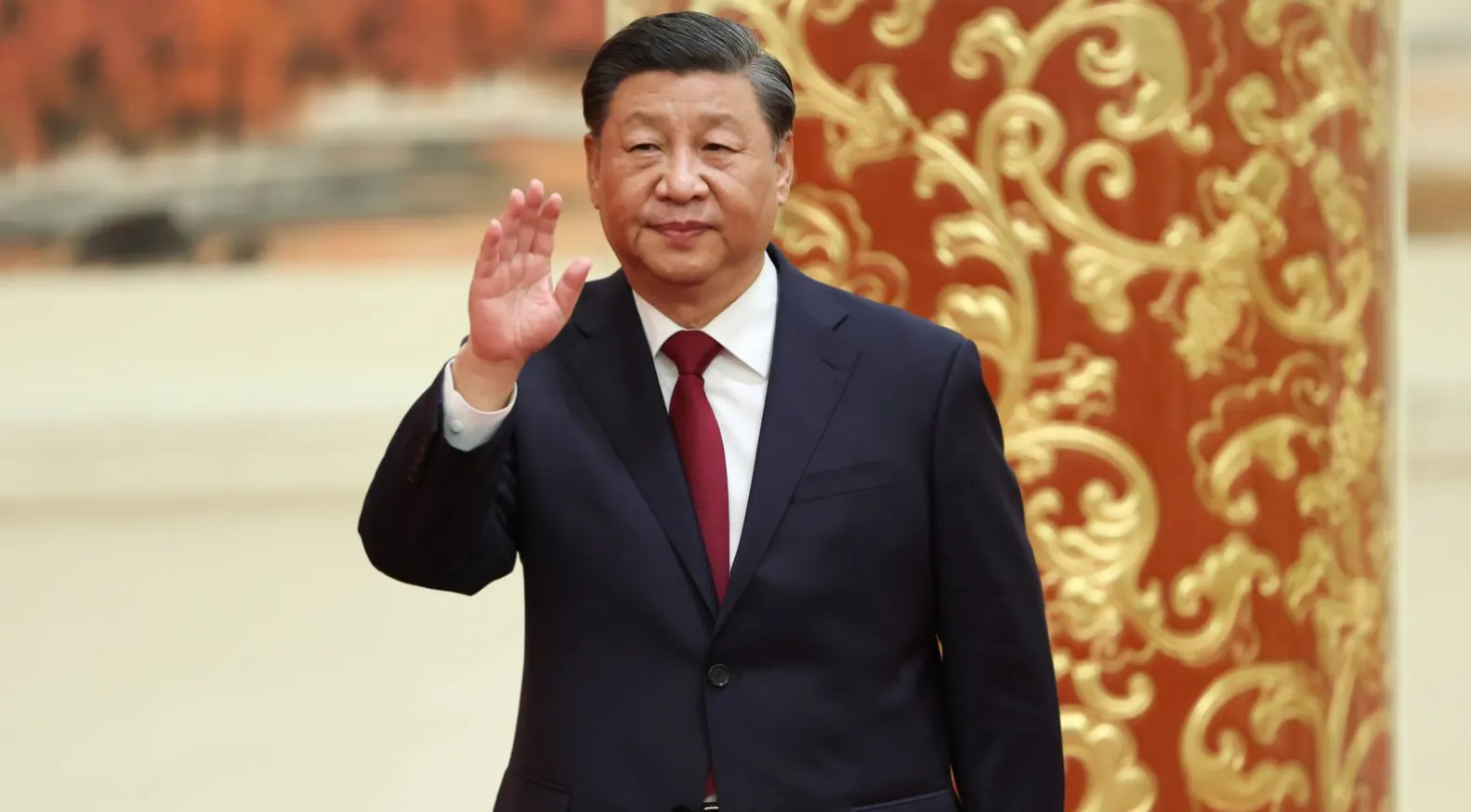
The Takeaway: President Xi Jinping told the APEC CEO Summit that China will open further to global business, listing tariff cuts and wider market access among the steps but giving no rates, product list or timetable. The 4.6% growth he cited for January to September sits just inside this year’s official target. The pitch meets a soft home market: retail sales rose 1.0% over January to October, while goods imports climbed 23.6%.
Retail sales had risen just 1.0% in the first ten months of 2026 when Chinese President Xi Jinping offered global executives a “super-sized open market” in Shenzhen on Wednesday.
The tariff reference comes without a schedule
At the opening ceremony of the Asia-Pacific Economic Cooperation (APEC) CEO Summit, the president said China’s opening would run from cutting tariffs and expanding market access to reform of rules, regulation and standards. The aims he listed were full market access and an accommodating operating environment for manufacturers, a steady opening of services and a more predictable setting for companies from around the world.
Tariffs appear once in the speech, with no rate, product list or date attached. The reference is a statement of intent, and what it will cover is not yet known.
The wording also changes between versions. The foreign ministry’s English text says China “will not only cut tariffs and expand market access” but will also “carry out reform” in challenging areas. Its Chinese text, posted first, and its Arabic text describe a span instead, running from tariff cuts and wider access to exploring reform in what they call deep waters.
Neither of the ministry’s summaries of the speech, in Chinese or English, mentions tariffs.
China’s tariff changes this year have come as formal notices from the Customs Tariff Commission of the State Council. Its plan of 29 December 2025 set provisional rates below most-favored-nation levels, the standard rates for most trading partners, on 935 items from 1 January. In April it granted zero tariffs for two years to 20 African countries not classed as least developed.
On 9 November the commission extended by two months the suspension of a 24% additional tariff on US goods. A 10% additional rate stays in place. Each of those measures named its scope and its start date, and the keynote does neither.
Growth sits just above the bottom of the target
Xi gave no basis for the 4.6% he cited. It matches the preliminary estimate published on 19 October by the National Bureau of Statistics: growth from a year earlier at constant prices, meaning after price changes are removed.
That is 0.1 percentage point above the floor of the range in this year’s government work report. The range runs from 4.5% to 5%, and the report also promised to strive for better in practice.
The first quarter set the pace at 5.0%. Growth then dropped to 4.3% in the second quarter and recovered to 4.5% in the third.
Each quarter fell short of the same quarter of 2025 as first published, with the widest gap, 0.9 percentage point, in the second. Services grew 5.2% over the nine months, against 3.8% for the secondary sector of industry and construction.
China’s 2026 targets and the latest official readings (%)
| Indicator | 2026 target | Latest | Period |
|---|---|---|---|
| GDP growth | 4.5 to 5 | 4.6 | Jan to Sep |
| Consumer price rise | around 2 | 0.9 | Jan to Oct |
| Urban surveyed unemployment | around 5.5 | 5.2 | Jan to Oct average |
Targets are from the government work report of 5 March 2026. GDP growth is at constant prices. The targets apply to the full year.
Consumer prices are furthest from the goal, rising less than half as fast as the target. Unemployment is on the better side of its mark.
The work report also wanted personal income to grow in step with the economy. Disposable income per person rose 4.4% in real terms over the first three quarters, a little behind GDP.
Consumers are the soft spot in the pitch
Xi described China as the world’s second largest consumer market, with the largest middle income group, and said rising imports of quality goods and services would release more diverse demand. China will keep staging its Export to China events for foreign suppliers, he added.
The bureau’s figures show how slowly that market is growing. Retail sales of consumer goods rose 1.0% over January to October before adjusting for prices, and only 0.4% in October. Consumer prices rose 0.9% over the same ten months, nearly matching that pace.
Services are doing better, with retail sales of services up 4.9% against 0.9% for goods. Even so, the bureau said on 16 November that the domestic imbalance between “strong supply and weak demand” is acute.
Imports tell a different story. Goods imports rose 23.6% in yuan terms over the ten months, and 34.7% in October alone. Over the first three quarters of 2025 they had slipped 0.2%.
Those numbers support the claim that China is buying more, but they say little about households. They are not adjusted for prices, the release does not separate price from volume, and they include industrial inputs, while retail sales measure sales for non-business use, restaurant meals included.
In The Edge’s reading, the speech answers a question about access, while the bureau’s numbers point to demand inside China as the tighter limit for companies hoping to sell there.
Investment data complicate the invitation to business
The president presented the 15th Five-Year Plan, covering 2026 to 2030, as an invitation to business worldwide.
Fixed asset investment, spending on construction and equipment, fell 8.1% over January to October, steeper than the 7.2% drop through September. Excluding real estate development, the fall was 5.1%.
Private investment fell 11.4% and manufacturing investment slipped 2.9%. Spending in high-tech industries went the other way, rising 4.0%.
Companies funded from outside the mainland grew more slowly than industry as a whole in October. Value added, or output net of inputs, rose 3.0% at industrial firms backed by foreign, Hong Kong, Macao or Taiwan investors, against 4.8% for all industrial firms above the official size threshold. Private firms, at 3.2%, did little better.
The factory mood also turned. The manufacturing purchasing managers’ index fell to 49.3 in October, below the 50 line that separates expansion from contraction.
The picture is not uniformly weak. Profits at industrial firms above that threshold rose 15.5% over the first nine months, and value added in high-tech manufacturing grew 17.6% in October.
China’s economy in 2025 and 2026 (% change from a year earlier)
| Indicator | Jan to Sep 2025 | Jan to Sep 2026 | Jan to Oct 2026 |
|---|---|---|---|
| GDP, constant prices | 5.2 | 4.6 | n/a |
| Retail sales of consumer goods | 4.5 | 1.1 | 1.0 |
| Goods imports, yuan | -0.2 | 22.3 | 23.6 |
| Goods exports, yuan | 7.1 | 16.4 | 17.6 |
| Fixed asset investment | -0.5 | -7.2 | -8.1 |
| Consumer prices | -0.1 | 0.9 | 0.9 |
| Real disposable income per person | 5.2 | 4.4 | n/a |
The 2025 column is as first published in October 2025. Fixed asset investment excludes rural households; the bureau revised last year’s data and calculates the 2026 rates on a comparable basis, so that row is not strictly comparable across years. Retail sales, trade and investment are not adjusted for prices. n/a means not published.
The regional message centers on open trade
Most of the speech was addressed to the region. Xi called for support for free and open trade and investment, steady work toward a Free Trade Area of the Asia-Pacific and the removal of trade and investment barriers.
APEC economies account for more than 60% of global GDP, Xinhua reported. More than 2,000 business representatives from those economies and 13 others came to the summit.
Xi said China has fully honored its World Trade Organization accession commitments over the past 25 years, and that it supports a World Association for Bay Areas Economic Cooperation. The summit also issued a Shenzhen initiative built on four priorities: openness and inclusiveness, innovation-driven growth, greater connectivity and mutually beneficial cooperation.
What to watch: The APEC Economic Leaders’ Meeting, which Xi chairs, ends in Shenzhen on 19 November, and the foreign ministry has said it looks forward to agreement on a Shenzhen Leaders’ Declaration. The bureau’s November figures for retail sales and investment are due on 15 December at 02:00 GMT, a date its calendar marks as preliminary, and will give a fresh official reading on the weak demand it flagged.
Method: the keynote is from the Ministry of Foreign Affairs of China’s Chinese, English and Arabic texts of 18 November 2026 and the State Council’s English text of the same date; economic figures are from the National Bureau of Statistics of China releases of 20 October 2025, 19 October 2026 and 16 November 2026, and the next release date from its 2026 calendar; the targets are from the government work report of 5 March 2026 as carried by Xinhua.
Tariff measures are from Customs Tariff Commission of the State Council notices of 29 December 2025, 28 April 2026 and 9 November 2026, as carried by Xinhua and the Ministry of Finance of China; summit details are from Xinhua reports of 13 and 18 November 2026 and the foreign ministry’s press conference of 13 November 2026. Differences in percentage points and comparisons with targets are The Edge’s calculations.
Sources: Ministry of Foreign Affairs of China, National Bureau of Statistics of China, Customs Tariff Commission of the State Council, Ministry of Finance of China, Xinhua, The Edge.