Regional Conflict Puts Gulf’s US$124 Billion Remittance Lifeline Under Strain
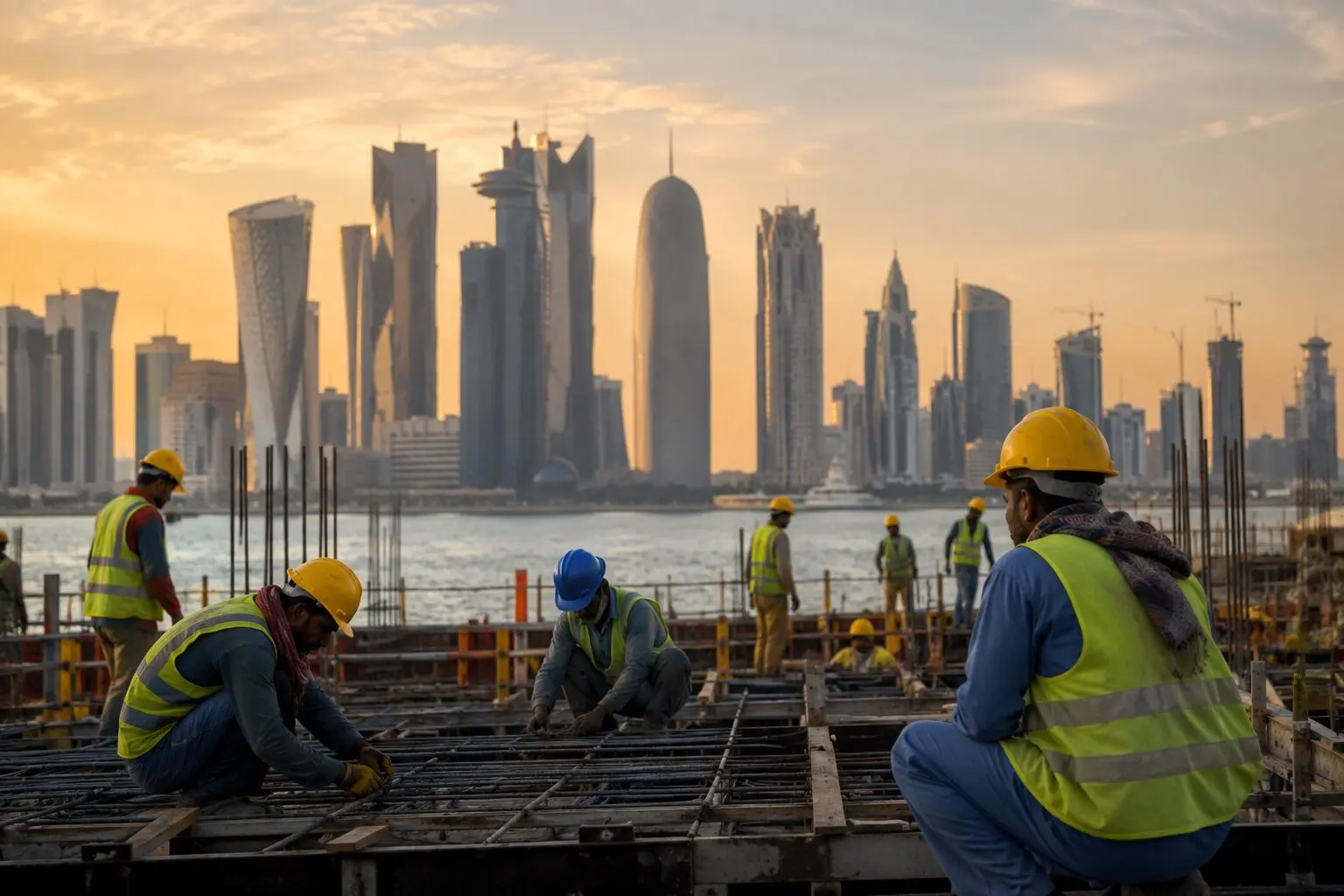
Regional conflict is putting pressure on one of the Gulf’s most important but often overlooked financial channels: the money sent home by foreign workers. Bloomberg reported that migrant workers across the six GCC countries sent an estimated US$124 billion to their home countries in 2024, supporting families across Asia, the broader Middle East and Africa. The pressure now is not only humanitarian or labour related. It is also macroeconomic, because remittances help finance household consumption, education, health care, imports and foreign exchange stability in several developing economies.
The scale is significant. The World Bank estimated that officially recorded remittances to low and middle income countries reached US$685 billion in 2024, while global remittance flows reached about US$905 billion. On that basis, the Gulf’s US$124 billion remittance channel is equivalent to roughly 18 percent of all remittances received by low and middle income countries and about 14 percent of global remittance flows. That makes the GCC labour income channel a systemic source of external financing for many recipient economies, not just a private transfer flow between workers and families.
Early data suggest a mixed pattern. Bloomberg reported that Western Union saw an acceleration in outbound remittances from the Middle East during the early phase of the conflict, which may reflect precautionary transfers as workers rushed to move funds to family accounts for safety and liquidity. India, where the UAE alone accounts for about one fifth of inward remittances, saw money sent by overseas workers rise by more than 28 percent in the three months through March. Bangladesh also recorded strong inflows, with Bangladesh Bank data showing a record US$3.75 billion in remittances in March 2026.
But this initial increase should not be read as a sign of strength. It may instead represent front loaded transfers and a drawdown of savings. Bloomberg cited cross border payments executives saying transaction volumes increased while average transaction values fell, a pattern consistent with stress rather than income growth. In the Philippines, cash remittances grew only 2 percent in April to US$2.72 billion, the slowest pace in nearly four years, while Kenya’s diaspora remittances reached a record in March before easing about 6 percent in April, with the Gulf related corridor among those that softened.
A simple sensitivity test shows why the issue matters. If Gulf remittance outflows fell by 5 percent, the annualized hit to recipient households would be about US$6.2 billion. A 10 percent decline would remove US$12.4 billion from household income streams, while a 15 percent decline would imply an US$18.6 billion shock. These numbers are especially important for economies where remittances represent a high share of household income, current account financing or foreign currency liquidity.
For Gulf economies, the risk is also direct. Foreign workers built much of the region’s modern infrastructure and remain central to private sector activity in construction, hospitality, logistics, health care, transport and domestic services. If income disruption, wage delays, mobility constraints or job insecurity persist, the impact can feed back into project execution, service delivery and consumer demand. The International Labour Organization has warned that migrant workers tend to absorb a disproportionate share of labour market adjustment in crisis periods, leaving lower income workers especially exposed to loss of income and rising costs.
The broader macro backdrop adds to the pressure. The World Bank’s April 2026 regional update said disruptions to key energy supply routes and infrastructure had weakened the 2026 growth outlook for the Middle East, North Africa, Afghanistan and Pakistan region. Excluding Iran, the World Bank expected regional growth to slow from 4.0 percent in 2025 to 1.8 percent in 2026, well below its earlier projection. Slower growth, higher import costs and reduced activity in labour intensive sectors would all weaken the income base from which migrant workers send money home.
The policy implication is clear. The most effective way to protect remittance stability is not to restrict flows, but to preserve worker income and payment channels. That means ensuring wages are paid on time, contracts are honoured, transfer networks remain operational, and lower income workers are not excluded from temporary support measures. Western Union’s own 2026 outlook noted that its assumptions did not include any prolonged impact or escalation of Middle East conflicts, highlighting how sensitive the remittance business is to extended disruption.
For recipient countries, the priority is to monitor not only headline remittance inflows, but also transaction size, source country concentration, labour return flows and exchange rate effects. IFAD estimates that more than 200 million migrant workers and diaspora members send money home each year, supporting about 800 million family members, and that remittances to low and middle income countries have exceeded US$5 trillion over the past decade. This makes the Gulf remittance channel a household lifeline and a macro stabilizer at the same time.
The near term risk is therefore not a sudden collapse, but a gradual erosion of resilience. If the conflict eases and labour markets normalize, remittance flows may stabilize after the initial precautionary surge. If disruption persists into the second half of 2026, the combination of lower earnings, depleted savings and weaker job security could turn a temporary liquidity response into a deeper income shock for millions of households across Asia, Africa and the wider region.
Sources: Bloomberg; World Bank; IFAD; International Labour Organization; Western Union; Reserve Bank of India; Bangladesh Bank; Bangko Sentral ng Pilipinas; Central Bank of Kenya.