Korea and China Keep a Standing Supply Chain Hotline as Bilateral Trade Jumps 51.3 Percent
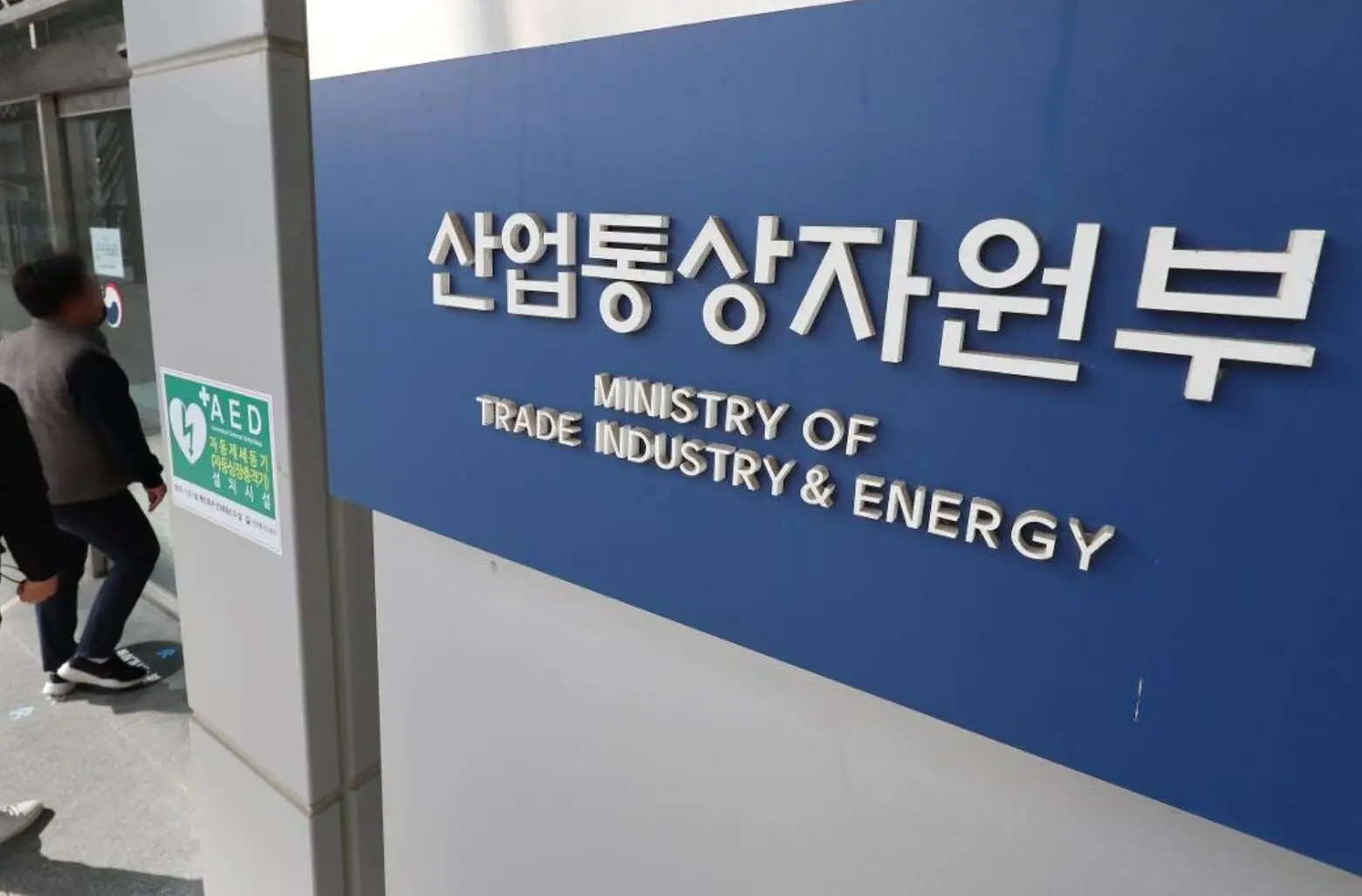
South Korea and China agreed on 13 October to keep their supply chain hotline running as a standing channel for monitoring critical goods, at talks in Huizhou in China’s Guangdong province, as trade between the two economies rose 51.3 percent to 263.1 billion dollars in the first eight months of 2026. Customs data show that Korean exports drove the gain: they rose 76.1 percent to 145.40 billion dollars, while imports from China rose 28.8 percent, turning a deficit a year earlier into a surplus of 27.69 billion dollars, on our calculation.
Two Meetings in Huizhou
The Ministry of Trade, Industry and Resources said its director general for trade cooperation and Wang Liping, director general of the Department of Asian Affairs at China’s Ministry of Commerce, led the two delegations at the fourth Korea-China supply chain hotline meeting and the sixth working meeting on the countries’ industrial cooperation parks. The hotline is an intergovernmental channel that first met in Seoul on 18 December 2023 and has met every year since. Through it the two sides track supply conditions not only for export-controlled items but for a wider set of production inputs, with urea and wiring harnesses named as examples.
At this round the Korean side asked Beijing for continued attention so that companies can bring in key items from China without disruption, and the two discussed a more predictable business environment for Korean firms operating in China. Both agreed to keep the hotline as the standing channel for supply chain cooperation, to review supply trends for key items regularly, and to consult quickly when problems arise. Korea’s lead delegate said the supply chain is “directly tied to our companies’ production and exports” (our translation).
The industrial cooperation parks were designated in October 2015 on the back of the Korea-China free trade agreement: Saemangeum on the Korean side, and Yantai in Shandong, Yancheng in Jiangsu and Huizhou in Guangdong on the Chinese side. The talks followed the leaders’ summit in Gyeongju on 1 November 2025 and a memorandum on stronger park cooperation signed on 5 January in the presence of both leaders. In September a delegation of more than 20 Chinese companies toured Saemangeum. In Huizhou the two sides shared details of the support programmes and incentives at Saemangeum and Huizhou, discussed easier entry for companies investing in each other’s parks, better logistics links and simpler investment procedures, and discussed sending further Chinese investment survey teams.
Korea Moves Into Surplus With China
Korea Customs Service figures split the 263.1 billion dollar total into 145.40 billion dollars of exports to China and 117.72 billion dollars of imports. A year earlier Korea ran a deficit of 8.85 billion dollars with China over the same eight months, so the bilateral balance has swung by 36.53 billion dollars, on our calculation. For the whole of 2025 the deficit was 11.17 billion dollars.
Korea’s trade with China, January to August
| Measure | 2025 | 2026 | Change |
|---|---|---|---|
| Exports | $82.55bn | $145.40bn | +76.1% |
| Imports | $91.39bn | $117.72bn | +28.8% |
| Total trade | $173.94bn | $263.12bn | +51.3% |
| Balance | -$8.85bn | +$27.69bn | +$36.53bn |
Korea Customs Service country data, customs clearance basis. Eight-month totals, changes and the 2025 balance are our calculation from the monthly figures; balances and changes are computed before rounding.
Korea was in surplus with China in each of the first eight months of 2026, and the monthly surplus widened from 0.34 billion dollars in January to 8.79 billion in August. In the first eight months of 2025 only February showed a surplus, of 20.5 million dollars. Export growth to China rose from 47.0 percent in January to 119.5 percent in August, while import growth peaked at 42.8 percent in June and stood at 32.6 percent in August.
Korea’s monthly trade with China, 2026
| Month | Exports | Imports | Balance |
|---|---|---|---|
| January | $13.53bn | $13.19bn | $0.34bn |
| February | $12.78bn | $11.64bn | $1.14bn |
| March | $16.71bn | $14.13bn | $2.59bn |
| April | $17.66bn | $15.59bn | $2.07bn |
| May | $18.88bn | $15.10bn | $3.78bn |
| June | $20.00bn | $16.42bn | $3.58bn |
| July | $21.71bn | $16.32bn | $5.39bn |
| August | $24.12bn | $15.33bn | $8.79bn |
Customs clearance basis, same source; balances are computed before rounding.
The eight-month exports already exceed full-year exports to China in 2025, 130.78 billion dollars, by 11.2 percent, and top the 133.01 billion of 2024. China took 20.96 percent of Korea’s exports in January to August, up from 18.20 percent a year earlier, and supplied 23.96 percent of its imports, against 22.11 percent. Exports to China ran 17.91 billion dollars ahead of those to the United States, 127.49 billion. Adding Hong Kong, which is listed separately and which bought 53.88 billion dollars of Korean goods, lifts the combined share of exports to 28.73 percent.
Chips Carry the Gain
Integrated circuits explain almost all of the rise. Korea’s exports of them to China rose 220.5 percent to 82.65 billion dollars in January to August, and accounted for 90.5 percent of the 62.86 billion dollar increase in exports to China, on our calculation. Their share of everything Korea sells to China rose to 56.8 percent from 31.2 percent. Exports to China other than integrated circuits grew 10.6 percent, to 62.76 billion dollars. In August alone, integrated circuits made up 66.6 percent of exports to China.
Korea’s integrated circuit trade with China, January to August
| Measure | 2025 | 2026 | Change |
|---|---|---|---|
| Exports to China | $25.79bn | $82.65bn | +220.5% |
| Imports from China | $12.16bn | $24.61bn | +102.4% |
| Share of exports to China | 31.2% | 56.8% | +25.6 pts |
| China’s share of Korea’s chip exports | 30.2% | 37.6% | +7.4 pts |
Integrated circuits are HS heading 8542. Customs data; totals, shares and changes are our calculation.
China’s share of Korea’s integrated circuit exports rose even as total integrated circuit exports grew 157.7 percent to 219.95 billion dollars, so China outpaced a market that itself more than doubled. Imports of integrated circuits from China also doubled.
The pace carried into September. The ministry’s monthly trade release of 1 October put exports to China at 26.01 billion dollars, up 122.7 percent and above 20 billion dollars for a fourth straight month, with semiconductor shipments to China of 14.4 billion dollars in 1 to 25 September, up 321 percent. Combining that preliminary figure with the customs data, exports to China reached 171.41 billion dollars in January to September, on our calculation.
Why it matters: Trade with China has turned from a drag on Korea’s goods trade balance into a contributor. Over January to August the surplus with China supplied 13.7 percent of Korea’s total trade surplus of 202.46 billion dollars, on our calculation, after a deficit with China in the same months of 2025. That surplus rests heavily on one product group, integrated circuits. The hotline deals with what Korean factories buy from China, such as urea and wiring harnesses, and this round also took up a predictable business environment for Korean companies operating there.
Outlook: Korea’s lead delegate said Korea would continue follow-up talks with the Chinese side so that park cooperation centred on Saemangeum delivers results companies can feel. On the wider trade framework, China’s Ministry of Commerce said on 9 September that the 16th round of second-stage negotiations on the Korea-China free trade agreement had taken place in Beijing. The September country breakdown in Korea’s customs data will show whether the chip-led surplus with China widened again after August’s 8.79 billion dollars.
Sources: Ministry of Trade, Industry and Resources, Korea Customs Service, China’s Ministry of Commerce, The Edge.