OPEC Fund Approves 645 Million Dollars for Fourteen Countries, With Morocco Taking the Largest Single Operation
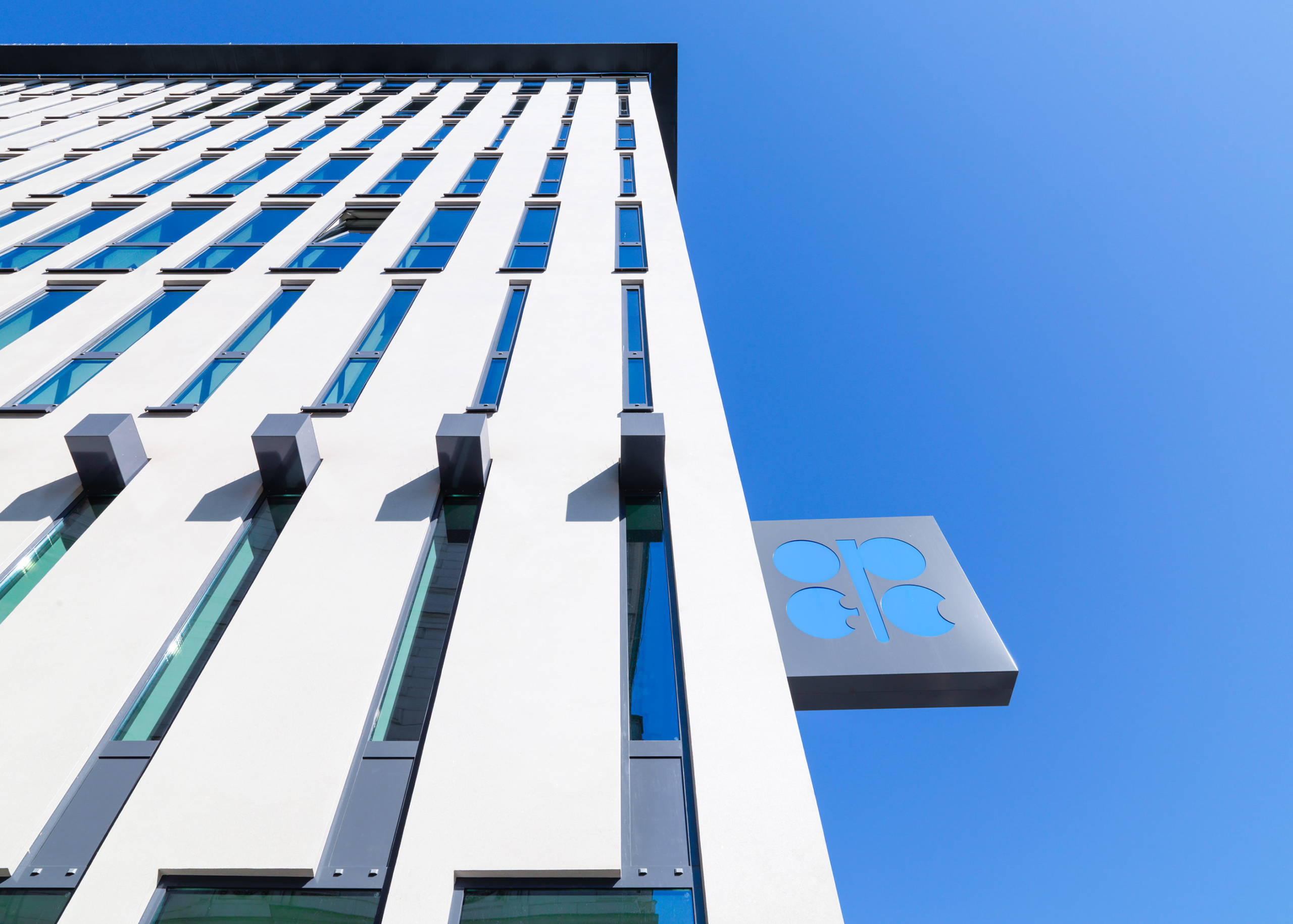
The OPEC Fund for International Development has approved 645 million dollars in new financing since its last Governing Board session, backing projects across 14 partner countries in Africa, Asia, Europe and Latin America. The package splits into 435 million dollars for public sector projects and 210 million dollars for private sector operations, which is 67.4 percent public and 32.6 percent private on our calculation.
The single largest commitment is a 150 million dollar investment in Morocco, financing a major new dam intended to improve water security and climate resilience, reduce flood risk and support sustainable agriculture. That one operation is 23.3 percent of the whole package and 34.5 percent of the public sector envelope, on our calculation.
Where the money is going
| Operation | Sector | Amount |
|---|---|---|
| Morocco, new dam | Public | $150m |
| Paraguay, syndicated term loan | Private | Up to $100m |
| Sierra Leone, Bumbuna-1 expansion | Public | $45m |
| Azerbaijan, Caspian desalination | Private | $40m |
| Oman, Yiti Sustainable City | Private | Up to $40m |
| El Salvador, San Salvador roads | Public | $30m |
The six largest itemised operations, from the OPEC Fund release of 16 September 2026. The Paraguay figure is a syndication the Fund has been mandated to arrange; 50 million dollars of it comes from the Fund own account and a further 50 million dollars is expected from FinDev Canada. Five further operations of 30 million dollars each, in Sri Lanka, Tajikistan, Zambia, Armenia and Kazakhstan, are not shown.
President Abdulhamid Alkhalifa framed the approvals around infrastructure rather than headline size. “These investments address essential foundations of sustainable development: reliable water and energy, resilient infrastructure, effective economic institutions and access to finance,” he said. He added that working across both the public and private sectors helps partner countries “overcome immediate constraints while creating the conditions for greater opportunity and long-term resilience.”
The private book adds up exactly, the public book does not
Reading the release own itemisation closely produces a result the release does not state. The six private sector operations named, in Armenia, Azerbaijan twice, Kazakhstan, Oman and Paraguay, total exactly 210 million dollars, which is the full private sector figure. That arithmetic only works if the Fund counts its own 50 million dollar share of the Paraguay syndication rather than the full 100 million dollars it has been mandated to arrange, and it confirms that reading.
The public side does not close the same way. The six named public operations, in El Salvador, Morocco, Sierra Leone, Sri Lanka, Tajikistan and Zambia, total 315 million dollars against a stated public envelope of 435 million dollars. That leaves 120 million dollars of public financing approved but not itemised in the release, or 27.6 percent of the public book, on our calculation. Eleven countries are named against the 14 stated, which is consistent with three unnamed operations carrying that balance.
The ticket sizes are also more uniform than the headline suggests. Six of the twelve itemised operations are exactly 30 million dollars. Morocco 150 million dollars is five times that modal ticket, and it is the only operation above 100 million dollars.
What the money buys, per unit
The release gives enough detail on three operations to price them against what they deliver, which the Fund itself does not do.
Sierra Leone 45 million dollar loan expands the Bumbuna-1 Hydroelectric Power Station by 60 megawatts, which is 750,000 dollars per megawatt of renewable capacity on our calculation. The release puts the beneficiary population at approximately 1.4 million people in Freetown, which works out at about 32 dollars per person served. These ratios measure the Fund financing contribution, not the total cost of the projects.
Tajikistan 30 million dollars reconstructs an 82.2 kilometre section of the Dushanbe to Kulma to China border highway, or roughly 365,000 dollars per kilometre on our calculation. El Salvador 30 million dollars covers 2.4 kilometres of road upgrade in the San Salvador Metropolitan Area together with new grade-separated interchanges, so the per-kilometre figure there is not comparable; the interchanges, not the road length, are where that money goes.
Two of the fourteen countries are in the Middle East and North Africa. Morocco at 150 million dollars and Oman at up to 40 million dollars together account for 190 million dollars, or 29.5 percent of the total package on our calculation.
Why it matters: the OPEC Fund is a small multilateral making a deliberate choice about where development money is scarce, and this package shows the shape of that choice. Two thirds of it is public sector lending into water, power and roads, the kind of infrastructure that commercial lenders will not price. The Morocco dam is the clearest statement in the set: at 150 million dollars it absorbs more than a third of the public envelope on its own, and it is a water security project in a country where drought has become a recurring fiscal problem rather than a weather event. For Oman, the up to 40 million dollars for the Plaza District at Yiti Sustainable City is a different kind of commitment, a private sector loan into a mixed-use development targeting net zero emissions by 2040, which is the Fund lending alongside a Gulf state rather than to one. The Kazakhstan loan is the Fund first private sector financing in that country, so the package widens the map as well as deepening it.
Outlook: the approvals come two weeks after the Fund priced a one billion dollar three-year benchmark bond on 3 September, its third public benchmark of 2026, and this 645 million dollar package is 64.5 percent of that single bond on our calculation. That bond is the stronger signal on the funding side. It drew a final orderbook above 4.8 billion dollars, which is 4.8 times the amount raised, letting the Fund tighten pricing by 3 basis points from initial thoughts to a final spread of 20.5 basis points over United States Treasuries, the tightest level it has ever achieved. More than 100 investors took part, 54 percent of them central banks and official institutions. A lender funding itself at its own record spread, with official money making up over half the book, is not capital constrained. On the asset side, the three unnamed countries and the 120 million dollars of unitemised public financing are the first thing to watch, since they will show whether the regional spread widens further. On the Morocco dam, the figure to follow is disbursement rather than approval: a 150 million dollar commitment to a major new dam is a multi-year drawdown, and the pace of it will say more about the project than the headline number does.
Sources: OPEC Fund for International Development.