Saudi FDI Inflows Climb 33.5 Percent to 159.1 Billion Riyals as Stock Tops 1 Trillion Riyals

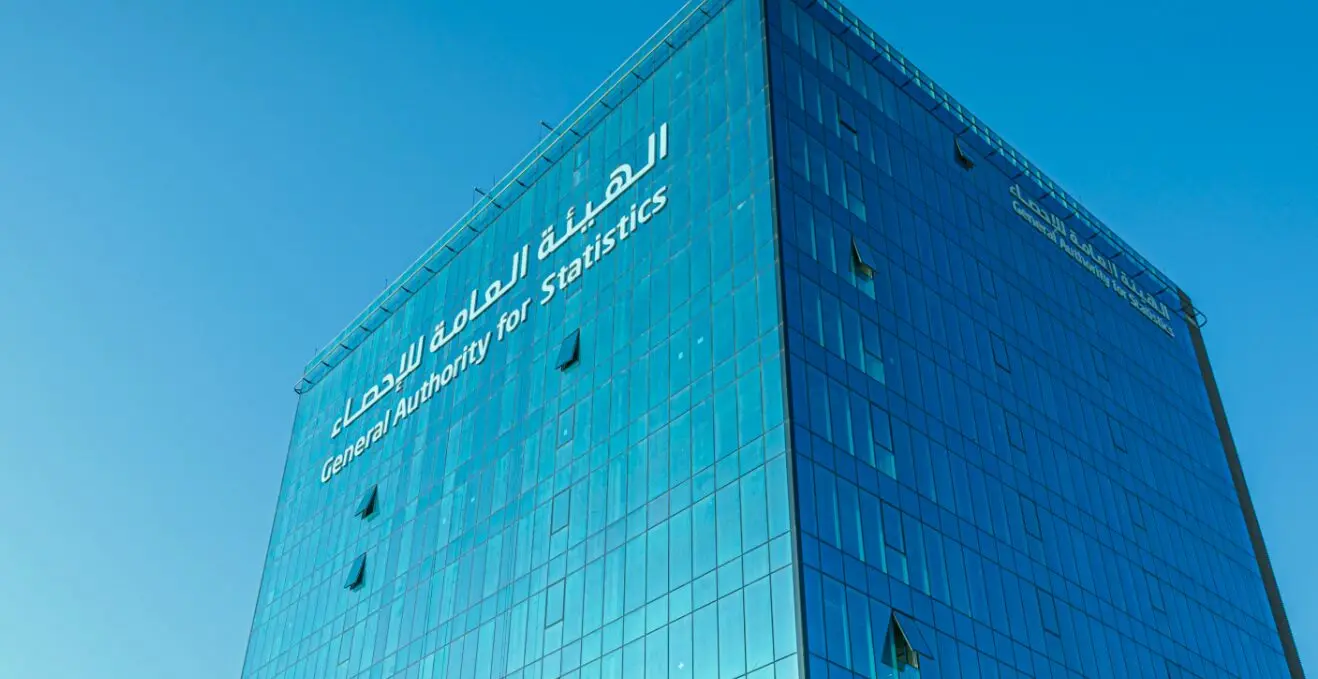
Foreign direct investment inflows into Saudi Arabia rose 33.5 percent to 159.1 billion riyals in 2025, from 119.2 billion in 2024, and the stock of foreign direct investment in the Kingdom reached 1,058.8 billion riyals at the end of the year, up 8.3 percent, the General Authority for Statistics (GASTAT) said in its annual FDI release for 2025.
Over a longer span, inflows in 2025 were five times their 2017 level and the stock doubled over the same period, the Saudi Press Agency reported, putting compound annual growth from 2017 to 2025 at 24 percent for inflows and 10 percent for the stock.
Inflows rise to 3.3 percent of GDP
Inflows in 2025 were 39.9 billion riyals higher than in 2024, on our calculation.
Set against the size of the economy, inflows equalled 3.3 percent of 2025 GDP, up from 2.5 percent in 2024, and the stock rose to 22.2 percent of GDP from 20.8 percent, on our calculation using the IMF’s October 2026 World Economic Outlook figures for Saudi GDP in dollars, converted at the Saudi Central Bank’s rate of 3.75 riyals per dollar.
Saudi FDI Stock Passes 1 Trillion Riyals
| Year | Inflows (SAR bn) | Net inflows (SAR bn) | Stock (SAR bn) |
|---|---|---|---|
| 2022 | 119 | 100 | 791 |
| 2023 | 96 | 86 | 897 |
| 2024 | 119.2 | 80.0 | 977 |
| 2025 | 159.1 | 81.4 | 1,058.8 |
Annual FDI 2025 release, 15 October 2026. Values for 2022 and 2023, and the 2024 stock, are chart labels rounded to the nearest billion riyals. Stock is measured at year end.
Construction and manufacturing lead the new money
Construction drew the most new foreign investment in 2025, 34.5 billion riyals or 21.7 percent of inflows, followed by manufacturing at 33.4 billion riyals, 21.0 percent. Administrative and support services added 22.4 billion riyals, 14.1 percent. Together the three took 90.3 billion riyals, or 56.8 percent of all inflows, on our calculation.
The stock is weighted differently. Manufacturing holds 285.4 billion riyals, 27.0 percent of the total, ahead of wholesale and retail trade at 157.7 billion riyals and financial and insurance activities at 133.1 billion riyals. Those three account for 54.4 percent of the stock, on our calculation, so foreign capital in the Kingdom sits mainly in industry, trade and finance rather than in a single sector.
Outflows, which the authority’s quarterly bulletin defines as transactions that reduce liabilities, such as dividend payments and loan repayments, rose 98.5 percent to 77.7 billion riyals, led by manufacturing at 25.2 billion riyals. As a result, net inflows grew a more modest 1.7 percent, to 81.4 billion riyals, and equalled 51.2 percent of gross inflows, against 67.1 percent in 2024, on our calculation. Net inflows have stayed at 80 billion riyals or more in each of the four years shown.
Three Activities Draw 56.8 Percent of 2025 Inflows
| Activity | Inflows (SAR bn) | Share of inflows |
|---|---|---|
| Construction | 34.5 | 21.7% |
| Manufacturing | 33.4 | 21.0% |
| Administrative and support services | 22.4 | 14.1% |
| Three activities combined | 90.3 | 56.8% |
Shares for single activities as published; the combined row is our calculation.
Gulf and Egyptian capital among the leading investors
The United Arab Emirates is the largest holder of foreign direct investment in Saudi Arabia, with 170.7 billion riyals at the end of 2025, or 16.1 percent of the stock. Luxembourg follows with 125.3 billion riyals and the United States with 73.0 billion riyals, and the top three together hold 34.9 percent of the total, on our calculation.
In net terms, Luxembourg led with 24.4 billion riyals, 30.0 percent of the year’s net inflows. The UAE and Egypt followed with 9.4 billion riyals each, together 18.8 billion riyals, or 23.1 percent of the total, on our calculation.
The UAE Holds the Largest Share of Saudi FDI Stock
| Investor | Stock, end 2025 (SAR bn) | Net inflows 2025 (SAR bn) |
|---|---|---|
| United Arab Emirates | 170.7 | 9.4 |
| Luxembourg | 125.3 | 24.4 |
| United States | 73.0 | 5 |
| France | 70 | 0 |
| United Kingdom | 69 | 4 |
Stock values for the UAE, Luxembourg and the US, and net inflows for the UAE and Luxembourg, are as published; other values are chart labels rounded to the nearest billion riyals. Egypt’s net inflow of 9.4 billion riyals is published; its stock is not.
The authority’s quarterly bulletin shows the same strength at the end of last year: inflows of 53.1 billion riyals in the fourth quarter of 2025, the largest of the six quarters shown and 39.1 percent of the four 2025 quarters combined. Its quarterly figures do not sum to the annual release: inflows across the four 2025 quarters come to 135.8 billion riyals against 159.1 billion, a gap of 23.3 billion riyals, or 14.6 percent of the annual figure, on our calculation. The two series are best read on their own terms. On the quarterly basis, inflows in the first half of 2026 came to 49.4 billion riyals, 6.4 percent lower than a year earlier, on our calculation.
Why it matters: The 2025 figures show foreign direct investment rising both in money and as a share of output. Inflows worth 3.3 percent of GDP, a stock above 1 trillion riyals and a sector mix led by construction and manufacturing point to capital going into building and industry. The weight of the UAE and Egypt among net investors also shows Arab capital flowing within the region.
Outlook: The next quarterly bulletin, covering the third quarter of 2026, will show how inflows compare with a strong end to 2025, when the fourth quarter alone brought 53.1 billion riyals. With the stock at 1,058.8 billion riyals and inflows rising in each year since 2023, the Kingdom’s foreign investment base is the largest in the four years the release shows.
Sources: GASTAT, IMF, Saudi Press Agency, Saudi Central Bank, The Edge.