Saudi Contraction Narrows to 4.7 Percent as Non Oil Growth Is Revised Up to 0.9 Percent
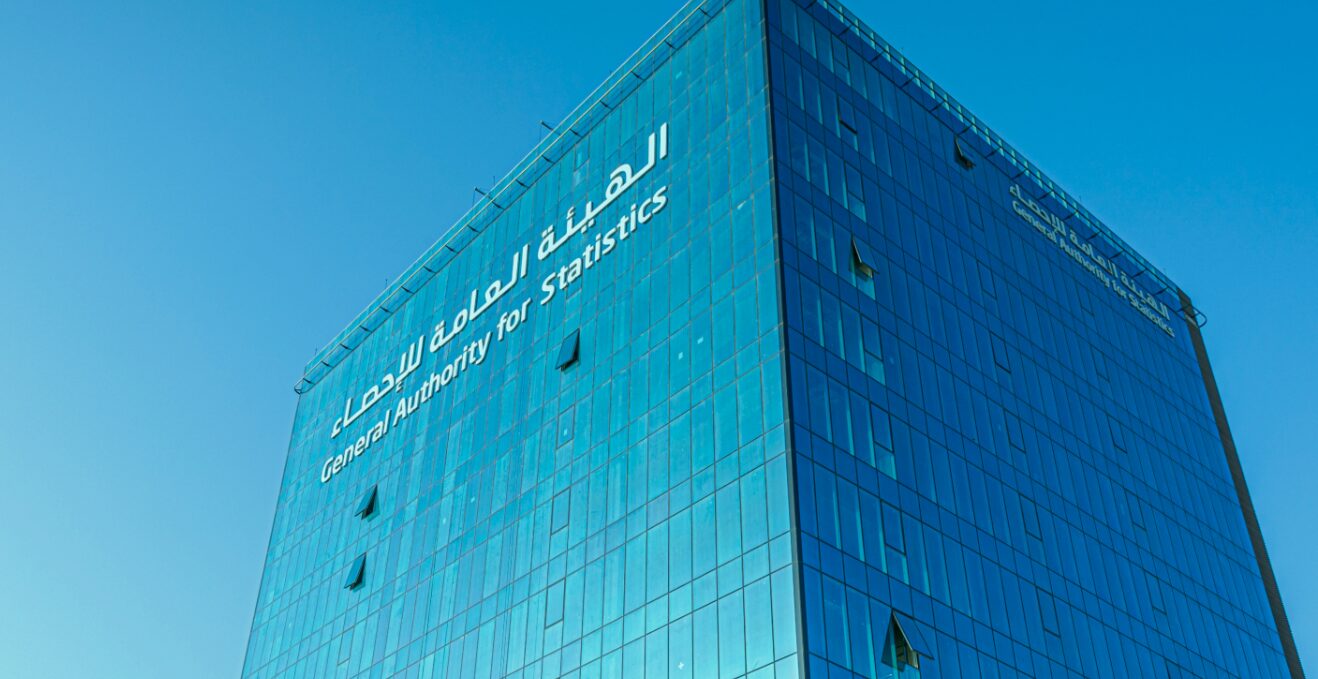
Saudi Arabia’s economy contracted less than first estimated in the second quarter, and the part of it that Vision 2030 is built on did better than first estimated. The detailed national accounts released by the General Authority for Statistics on Tuesday put the year on year fall in real GDP at 4.7 percent, narrower than the 4.8 percent flash estimate of late July, while growth in non oil activities was revised up to 0.9 percent from 0.6 percent. Oil activities were marked slightly lower, at minus 24.8 percent against minus 24.7 percent in the flash; the table carries both readings.
A single sector drove the contraction, and it was not the one Riyadh is betting on
The arithmetic of the quarter is stark: oil activities subtracted 5.4 percentage points from annual growth while non oil activities added 0.6, with government activities and net taxes on products each adding 0.1, per the GASTAT release. On a seasonally adjusted basis the economy shrank 4.8 percent from the first quarter, with oil activities down 21.6 percent quarter on quarter, non oil activities down 0.4 percent and government activities up 0.2 percent. The swing bears the clearest imprint of the war related oil shock, on our reading: real GDP had grown 3.0 percent year on year in the first quarter, per GASTAT’s detailed accounts for that quarter, before contracting 4.7 percent in the second, a 7.7 percentage point swing in the year on year growth rate between the two quarters, on our calculation. Within non oil activities, community, social and personal services grew 4.1 percent year on year, finance, insurance and business services 3.3 percent and agriculture, forestry and fishing 2.6 percent.
The IMF had already described the economy as resilient through the shock
The International Monetary Fund’s Executive Board concluded its 2026 Article IV consultation in late July with an assessment that the Saudi economy “has thus far proven resilient in the face of the war in the Middle East, supported by strong fundamentals, diversified oil and logistics infrastructure, and the authorities’ efforts to ease bottlenecks.” The Fund said rerouting oil through the East West pipeline to Red Sea ports has limited the drop in oil deliveries, while higher oil prices have more than offset volume losses, generating an oil revenue windfall. Its projections have overall growth slowing to 1.7 percent in 2026 before rebounding to 5.5 percent in 2027, with non oil growth easing to 2.6 percent this year and accelerating to 4.5 percent next year, from 4.2 percent in 2025, supported by stable employment, strong government spending and the steady execution of capital projects. The Fund expects a gradual recovery once maritime traffic through the Strait of Hormuz begins to normalize, with risks to the downside.
| Activity, year on year | Detailed estimate | Flash estimate |
|---|---|---|
| Real GDP | -4.7% | -4.8% |
| Oil activities | -24.8% | -24.7% |
| Non oil activities | +0.9% | +0.6% |
| Government activities | +0.9% | +0.9% |
GASTAT detailed national accounts for the second quarter of 2026 against the flash estimates published in late July. Seasonally adjusted, the economy shrank 4.8 percent quarter on quarter in the detailed reading.
| IMF projection | 2025 | 2026 | 2027 |
|---|---|---|---|
| Real GDP growth | 4.6% | 1.7% | 5.5% |
| Non oil GDP growth | 4.2% | 2.6% | 4.5% |
| CPI inflation, average | 2.0% | 2.2% | 2.1% |
Selected indicators from the IMF’s 2026 Article IV consultation with Saudi Arabia, concluded 22 July and published 29 July. 2026 and 2027 are projections.
Why it matters: The detailed accounts sharpen the picture the flash sketched: the second quarter contraction is an oil volume story, concentrated where the shipping disruption bites, while the non oil economy that carries the diversification agenda kept growing through the shock and grew faster than first thought. A 0.3 percentage point upward revision is small in absolute terms, but it lands entirely on the side of the economy Riyadh needs to hold up, and the IMF’s projection path has that side accelerating back toward 4.5 percent growth as conditions normalize.
Outlook: The statistics authority’s calendar carries 2 more Saudi releases this week, the August business confidence index on Wednesday 9 September and the July industrial production index on Thursday 10 September, per the GASTAT release calendar, as carried in our Week Ahead of 5 September. Both will give the first official soundings of the third quarter, where the IMF’s recovery case starts to be tested.
Sources: General Authority for Statistics of Saudi Arabia, International Monetary Fund, The Edge.