Saudi Arabia Records 15.23 Million Umrah Performers as Domestic Demand Offsets Fewer Foreign Arrivals
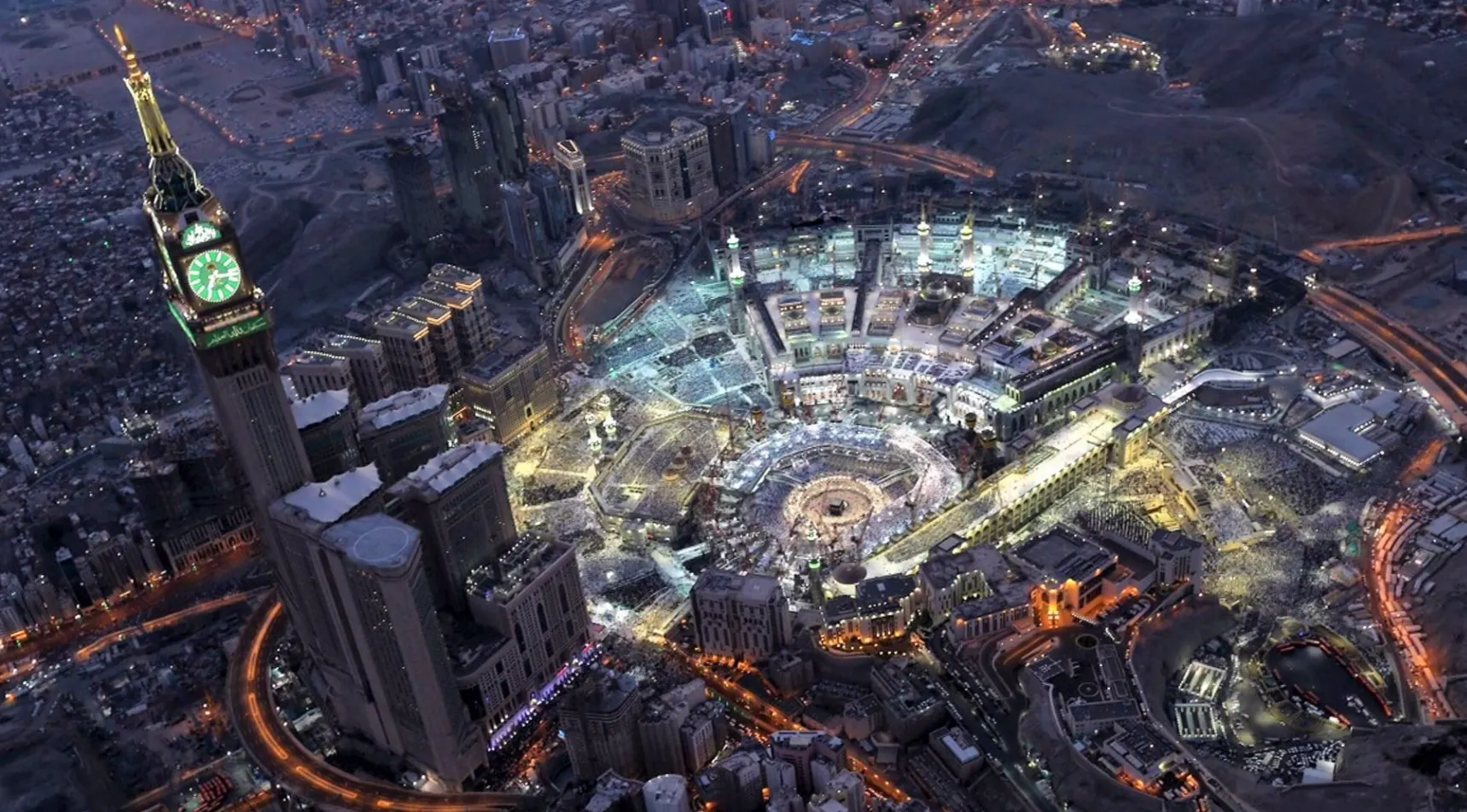
Saudi Arabia recorded 15.23 million Umrah performers in the first quarter of 2026, almost exactly the figure of a year earlier, but the stable headline conceals a substantial shift in where that demand came from.
The General Authority for Statistics puts the quarter at 15,233,767 performers, against 15,222,497 in the first quarter of 2025, a difference of 11,270 or less than one tenth of one percent.
External performers, meaning those arriving from outside Saudi Arabia, fell to 5,769,271 from 6,523,630, a decline of 11.6 percent. Internal performers, those setting out from inside the country, rose to 9,464,496 from 8,698,867, an increase of 8.8 percent. Those year-on-year comparisons are our calculation across the two published bulletins, since the Q1 2026 edition carries no year-earlier comparison of its own.
| Q1 Umrah performers | 2025 | 2026 |
|---|---|---|
| Total | 15,222,497 | 15,233,767 |
| External | 6,523,630 | 5,769,271 |
| Internal | 8,698,867 | 9,464,496 |
The economic story is therefore not headline growth. It is resilience through a change in the composition of demand.
Domestic participation filled the gap
Saudi nationals accounted for 28.9 percent of all Umrah performers during the quarter, up from 24 percent a year earlier. Among those performing Umrah from within the country, nationals numbered 4,396,828, or 46.5 percent of internal performers, while non-Saudi residents accounted for 5,067,668, or 53.5 percent. The increase in internal participation therefore very nearly offset the reduction in international Umrah, and the majority of that internal base is resident rather than national.
The distinction matters because domestic and foreign religious travel have different economic characteristics. Both support hotels, restaurants, ground transport and retail. International visitors additionally generate aviation demand and foreign tourism receipts. A stable overall performer count can therefore coexist with a changed economic value and composition of visitor spending.
Aviation’s share of arrivals increased
Of the 5.77 million external performers, 86.0 percent arrived by air, up from 82.2 percent a year earlier. Land entry accounted for 13.6 percent, down from 17.5 percent, and sea arrivals for 0.4 percent against 0.3 percent. The rising aviation share increases the weight of airline connectivity and airport capacity within the international religious-tourism model, and it does so at a time when the absolute number of external performers is falling.
January was the strongest month for external Umrah at 2,237,418 performers, or 38.8 percent of the quarterly total, while March was the weakest at 1,390,130. Internal demand followed a different pattern, with February recording 4,558,570 domestic performers, 48.2 percent of the internal total.
Makkah and Riyadh account for most internal demand
The Makkah region accounted for 4,066,669 internal performers, published as 43 percent of the internal total, while Riyadh contributed 2,026,029, or 21.4 percent. Together they made up close to two thirds of internal participation.
The bulletin also records that 75.4 percent of internal performers travelled with family, against 17.2 percent individually and 7.4 percent with friends. That composition bears on the spending profile of religious travel, since family groups generate different accommodation, transport and food-service requirements from individual visitors.
Madinah adds a second religious-travel channel
GASTAT separately recorded 3,741,460 external visitors to Madinah and 1,984,193 internal religious visitors, a combined 5.7 million. The economic footprint of religious tourism therefore extends well beyond the Umrah count itself, linking aviation, airports, hotels, road and rail transport, food services, retail and intercity travel.
Why it matters:
The quarter shows that religious-tourism demand has more than one source. An 11.6 percent fall in international Umrah did not produce a meaningful fall in total activity because participation from inside the country rose sharply. That gives businesses exposed to religious travel a form of resilience: hotels, transport operators, restaurants and retailers can hold utilisation even when international traffic fluctuates, provided domestic and resident participation stays strong.
Substitution is not expansion. If foreign Umrah stays below previous levels for an extended period, a stable total could overstate the strength of international tourism receipts, because the two channels are not economically equivalent per visitor. The composition shift is also concentrated: more than half the internal base is non-Saudi residents, a population whose participation is tied to residency and employment conditions rather than to travel demand in the ordinary sense.
Outlook:
The decisive variable in coming quarters is not whether the total again exceeds 15 million. It is whether international participation recovers without reversing the larger domestic base. If both channels expand together, religious tourism moves from resilience through substitution toward broader growth. If internal demand continues to offset weak foreign arrivals, headline volumes may stay stable while the composition of tourism demand remains materially different from previous years. The second-quarter bulletin, which will cover the period around Ramadan, is the next test.
Sources: General Authority for Statistics, Umrah Statistics Q1 2026, and the Q1 2025 edition for the year-earlier base. Year-on-year changes and the internal national and resident shares are calculated by The Edge Research Team from the two published bulletins.