China Expands Fiscal Support After 20 Trillion Yuan of New Credit as Domestic Demand Remains Soft
China is widening fiscal support for households and private businesses after six fiscal and financial policy tools helped facilitate more than 20 trillion yuan of new lending in the first seven months of 2026, as policymakers keep trying to convert abundant financing into stronger consumption and private investment.
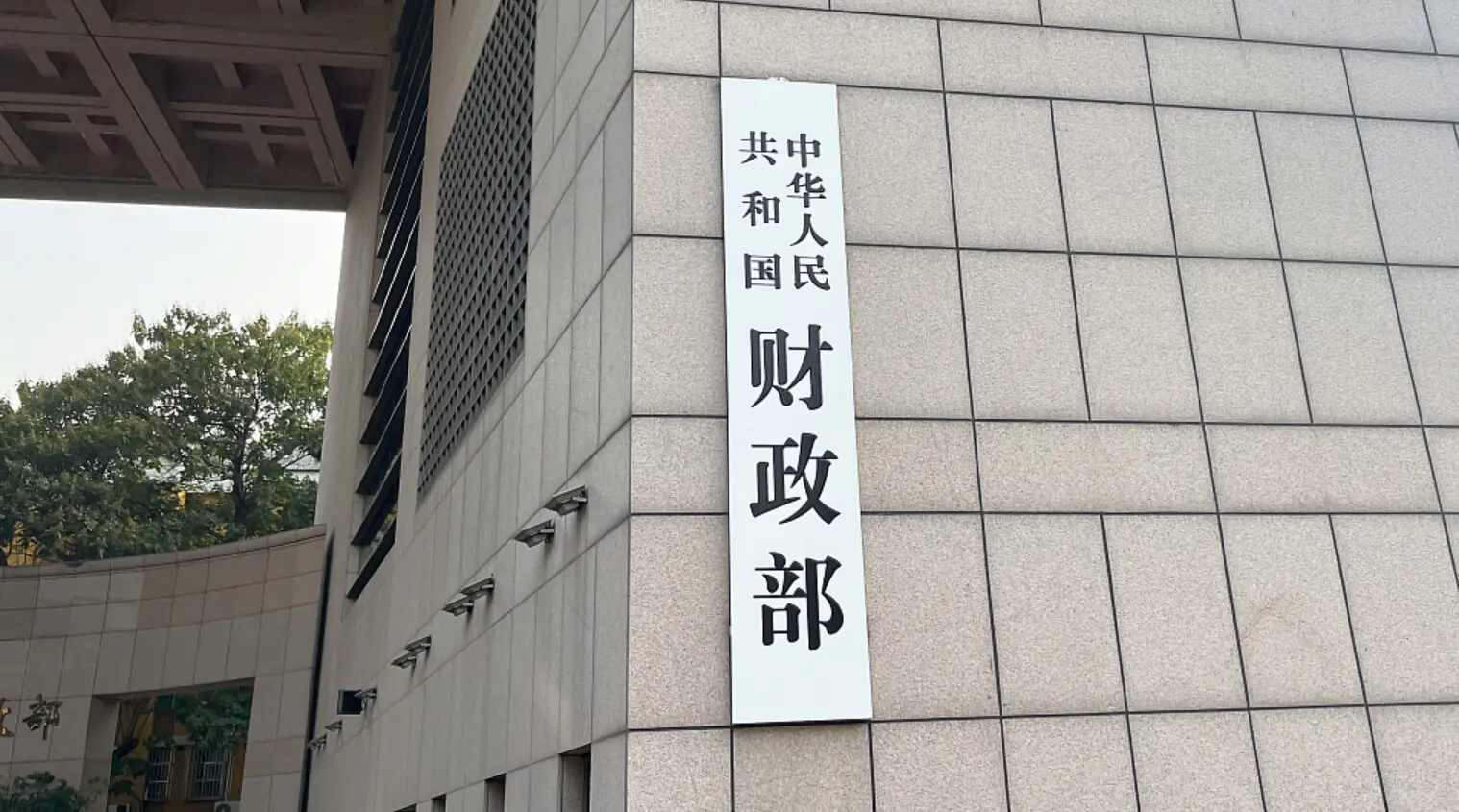
The Ministry of Finance said the six programmes supported around 1.51 trillion yuan of private investment and around 1.88 trillion yuan of household consumption, benefiting 6.22 million companies, the large majority of them small, medium and micro enterprises, and 113 million instances of individual participation. The supported lending was more than 880 billion yuan higher than in the same period a year earlier, an increase of 4.5 percent.
Authorities have now widened eligibility, raised financing ceilings and expanded the number of participating financial institutions, while signalling that further measures are being prepared for the second half of the year.
The expansion comes as domestic demand stays subdued. Retail sales rose 0.6 percent year on year in July and 1.2 percent over January to July. The single largest drag was the automobile category, where retail sales value fell 17.0 percent in July and 13.2 percent over the first seven months.
Six tools, now with wider reach
China established the six tools in January, backed by 100 billion yuan of central fiscal funds, as part of an effort to raise effective demand. Four support private investment through loan interest subsidies for small and micro enterprises, equipment-renewal loan subsidies, a special guarantee plan for private investment and a bond risk-sharing mechanism for private firms. Two target household consumption through interest subsidies on service-sector operator loans and on personal consumption loans.
Rather than relying only on conventional government spending or general interest-rate cuts, the measures use interest subsidies, guarantees and risk-sharing to influence the effective cost and availability of financing.
An upgraded framework took effect on 1 August, following the Politburo meeting of 30 July. The enterprise interest-subsidy programme was broadened beyond fixed-asset financing to include newly issued working-capital loans. The consumer programme was expanded to cover newly incurred credit-card instalment spending of all kinds, including vehicle purchases and home renovation.
The number of participating financial institutions rose from about 100 to about 400. The expanded group covers 21 national banks together with city commercial banks, rural cooperative financial institutions, private banks and foreign banks that hold a regulatory rating of 3A or above, a condition that limits how far the widening reaches down the institutional ladder.
| Programme ceiling | Before | From 1 August |
|---|---|---|
| Small and micro enterprise loan | 50m yuan | 75m yuan |
| Service-sector operator loan | 10m yuan | 20m yuan |
| Personal consumption loan subsidy | 3,000 yuan | 5,000 yuan |
Further measures are being prepared
Vice Finance Minister Liao Min said the ministry is continuing to study and draft new coordinated fiscal and financial policies to be introduced in the second half of 2026, and undertook to make the linkage between fiscal and financial policy a regular and long-term arrangement.
The expansion is itself informative. If policymakers judged the transmission from credit to demand to be sufficiently strong, there would be less reason to widen eligibility, quadruple the number of participating institutions, raise loan ceilings and prepare a further round.
Clearing corporate arrears works on liquidity from the other side
China is at the same time intensifying efforts to clear overdue payments owed to businesses. The State Council executive meeting of 21 August, chaired by Premier Li Qiang, instructed local governments to make fuller use of special-purpose bonds and special relending facilities to accelerate repayment, to open up the chain in which one unpaid entity delays payment to the next, and to guard against new arrears.
The meeting also ordered stronger action against large companies that delay payments to small and medium-sized enterprises, including clearer sector-specific payment rules, reasonable payment terms defined by industry, tighter criteria for identifying payment defaults, stronger supervision of large-company payment behaviour and stricter disclosure requirements.
This is economically complementary to subsidised credit. A company waiting months for an invoice to be settled is financing its customer involuntarily. Clearing those arrears releases cash the company has already earned without requiring it to take on new debt. One channel makes new financing cheaper and easier to obtain. The other frees working capital already trapped inside the payment system.
Why it matters:
The important number is not the 20 trillion yuan of supported credit. It is what happens after that credit is extended. A financial system can hold abundant liquidity while households decline to spend and businesses decline to invest. Where confidence or expected returns are weak, cutting the price of money has a limited effect, because the binding constraint is not its supply.
July’s retail data show why the question is live. A headline of 0.6 percent that is dragged down by a 17.0 percent fall in automobile sales value is weak in a specific way rather than a general one, and the automobile line mixes price effects with volume effects, so it does not by itself establish collapsing demand. What it does establish is that very large volumes of supported financing have not yet produced uniformly strong household spending. The economic test of the targeted model is whether the incentives generate additional spending and productive investment that would not otherwise have taken place, and that test has not yet been passed on the published evidence.
Outlook:
Future evidence will come from private fixed-asset investment, retail sales, household credit, small-enterprise borrowing, corporate payment arrears and business expectations. If those improve alongside continued lending, the targeted approach will have stronger support. If credit keeps growing while consumption and private investment stay weak, the challenge will look increasingly like a shortage of confidence and expected returns rather than a shortage of financing, and that distinction will determine whether Beijing keeps expanding targeted instruments or moves toward broader demand support. Liao Min’s second-half package is the next marker.
Sources: Ministry of Finance of China, State Council Information Office briefing transcript of 21 August 2026; State Council executive meeting of 21 August 2026 on clearing overdue enterprise payments; National Bureau of Statistics, retail sales for July and January to July 2026, released 17 August 2026.