South Korea’s Construction Contracts Jump 27.3 Percent to 80.9 Trillion Won on Chip Plants
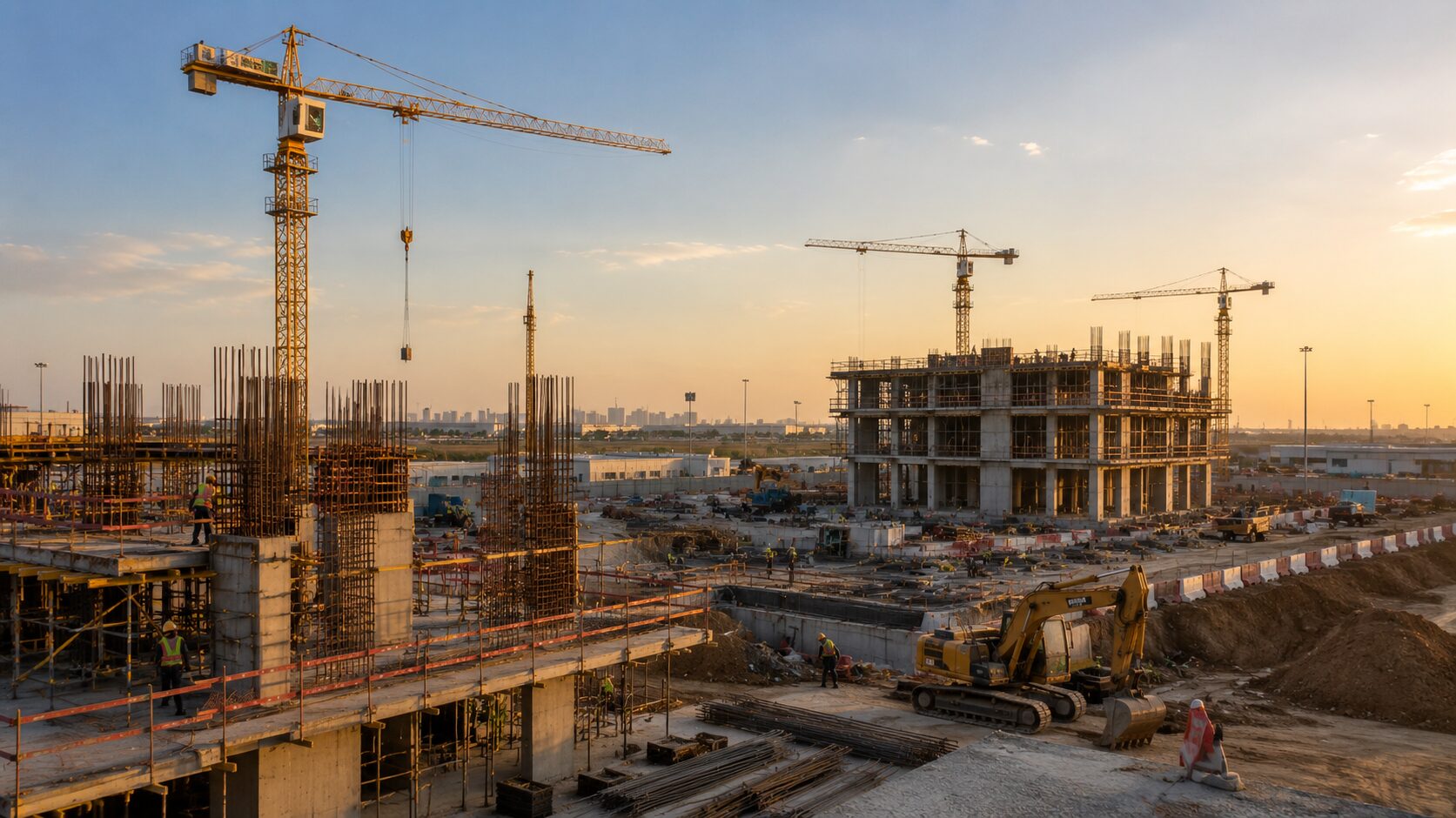
Construction contracts in South Korea rose 27.3 percent year on year to 80.9 trillion won in the second quarter of 2026, from 63.5 trillion won a year earlier, the Ministry of Land, Infrastructure and Transport said on Monday. Private semiconductor production facilities, along with public energy and housing projects, drove the increase. The figures cover contracts reported to KISCON, the construction industry information network.
Where the growth came from
| Segment | Q2 2026, tn won | Change on a year earlier |
|---|---|---|
| Private sector | 59.6 | +29.1% |
| Public sector | 21.3 | +22.4% |
| Civil engineering, incl. plant | 25.5 | +57.5% |
| Industrial plant | 12.1 | +128.4% |
| Building | 55.3 | +17.0% |
| Top 50 contractors | 44.7 | +58.0% |
Industrial plant contracts more than doubled to 12.1 trillion won from about 5.3 trillion, on our calculation. That accounts for about 39 percent of the 17.4 trillion won increase in the total, on our calculation. In the private sector, civil engineering rose 98.3 percent to 13.7 trillion won on chip plant projects, while building rose 16.9 percent to 45.9 trillion won on housing, office and mixed use projects. Public civil engineering grew 27.1 percent to 11.8 trillion won on gas facilities and power plants, and public building 17.1 percent to 9.4 trillion won on public housing.
Concentration at the top
The 50 largest contractors signed 44.7 trillion won, 55.3 percent of the total and about 94 percent of the increase, on our calculation. Firms ranked 51 to 100 saw contracts fall 18.0 percent, while those ranked 101 to 1,000 grew 3.5 to 4.7 percent. By site, the capital region rose 27.8 percent to 43.6 trillion won and the rest of the country 26.7 percent to 37.2 trillion won.
Why it matters: Construction contracts give a forward indication of the work entering the project pipeline. The surge shows semiconductor investment flowing into construction, and it is concentrated among the largest firms.
Outlook: The third quarter data will show whether plant orders keep carrying the total, or whether housing and public works take a larger share.
Sources: Ministry of Land, Infrastructure and Transport.