US 50 Percent Tariffs on Selected Canadian Goods Take Effect Under Section 338
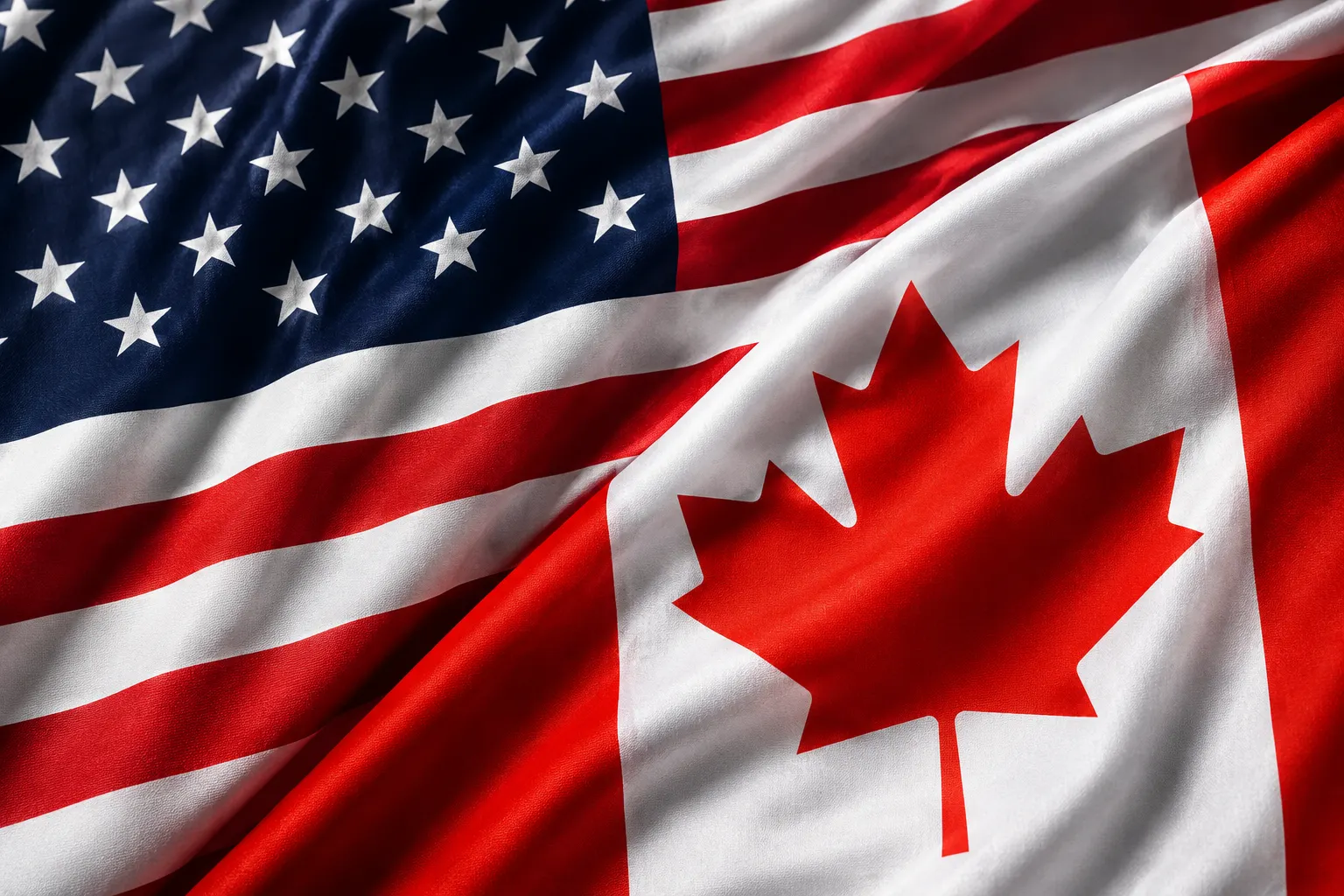
The United States began applying additional 50 percent tariffs on a range of Canadian goods on Saturday, after a three-day suspension expired, adding a new layer of duties to one of the world’s largest bilateral trading relationships.
US Customs and Border Protection issued implementation guidance late on Friday confirming that the additional duties would apply to covered Canadian goods entered for consumption, or withdrawn from warehouse for consumption, from 12:01 a.m. Eastern time on 22 August, or 04:01 GMT.
The tariffs arise from three presidential proclamations issued on 20 July under Section 338 of the Tariff Act of 1930, targeting what the US administration describes as discriminatory Canadian treatment of American alcoholic beverages, dairy products and motor vehicles.
The measures apply to specified Canadian products rather than all imports from Canada. The Office of the United States Trade Representative has estimated that the three actions collectively cover nearly 20 billion dollars of imports.
Importantly, the 50 percent rate is an additional ad valorem duty. It should not be interpreted as meaning that every affected product carries a total tariff rate of exactly 50 percent.
A three-day suspension ends
The original three proclamations, 11046, 11047 and 11048, were scheduled to take effect on 19 August. President Donald Trump subsequently issued Proclamation 11056 on 18 August, temporarily suspending implementation for three days while United States and Canada negotiations continued. The suspension ran until 12:01 a.m. Eastern time on 22 August.
Customs and Border Protection’s implementation guidance, issued at 11:16 p.m. Eastern time on 21 August, instructed importers, brokers and filers to begin using the relevant Harmonized Tariff Schedule classifications once that deadline was reached.
That makes implementation of the tariffs the confirmed development. It does not, however, establish that negotiations between Washington and Ottawa have permanently ended.
Canadian Prime Minister Mark Carney said on 18 August that the two sides had made “substantial progress”, although important work remained, and said Washington had agreed to postpone implementation through the end of 21 August while talks continued.
On 19 August, Carney told Canada’s provincial and territorial premiers that the federal government was continuing to work toward an agreement designed to secure the greatest possible access to the US market for Canadian businesses.
Canada was still signalling continued engagement on Friday. Foreign Affairs Minister Anita Anand said after meeting US Secretary of State Marco Rubio on 21 August that Canada would continue to engage constructively with the United States on trade and on strengthening the bilateral economic relationship.
The tariff implementation therefore represents an escalation in the dispute, but the primary-source record does not support describing the broader negotiating channel as permanently closed.
USMCA does not provide a blanket exemption
One of the most consequential features of the Section 338 measures is their treatment of goods qualifying under the United States-Mexico-Canada Agreement. The White House states explicitly that the additional duties apply to covered goods regardless of whether they qualify as originating under that agreement.
That distinguishes this action from some other recent US tariff measures under which preferential North American origin has provided protection from additional duties.
The product lists are also broader than the three disputes that triggered the action might suggest. The White House says covered products range from wine to hockey sticks and cement, depending on the proclamation and tariff classification involved.
There are, however, significant exclusions. The Section 338 duties do not apply to energy, potash, products already subject to tariffs under Section 232, and certain other goods including specified fish and critical minerals. Customs and Border Protection’s implementation guidance also identifies zero additional Section 338 treatment for specified Section 232 products and for qualifying civil-aircraft goods.
Those exclusions substantially narrow the direct exposure of some of the most strategically important areas of Canada and United States trade.
Why Section 338 matters
Section 338 is an infrequently used provision of US trade law that allows the president to impose additional duties of as much as 50 percent when another country is determined to discriminate against US commerce or impose unequal restrictions on it.
Washington invoked the authority in three separate disputes. For alcoholic beverages, the US administration objected to restrictions imposed by Canadian provinces and territories on American products. For dairy, Washington challenged Canada’s administration of tariff-rate quotas, particularly the treatment of US cheese compared with similar European Union imports under Canada’s trade agreement with the European Union. For motor vehicles, the United States objected to Canada’s tariff arrangements affecting US vehicle exports.
Canada disputes Washington’s broader characterisation of its trade policies and has argued that previous US tariff actions breached the North American trade agreement.
From deadline risk to actual tariff exposure
For businesses, the issue has now moved from whether implementation would be postponed to the cost of actual tariff exposure.
The nearly 20 billion dollars of imports identified by the Trade Representative’s office represents only part of the enormous Canada and United States trading relationship, and exemptions for energy, potash and products already covered by Section 232 limit the breadth of the direct shock.
But the lack of a general exemption for the United States-Mexico-Canada Agreement makes the measure significant for companies whose products fall within the listed tariff classifications. It also adds Section 338 to an increasingly complex US trade-policy framework that already includes sectoral Section 232 tariffs and separate Section 301 measures.
For Canada, the dispute reinforces the government’s parallel strategy of seeking to preserve access to its largest export market while strengthening domestic economic resilience and diversifying international trade relationships.
The next material developments will be any official modification or suspension of the Section 338 duties, a renewed negotiating framework between the two governments, or additional Canadian measures in response.
Sources: US Customs and Border Protection, CSMS #69606660, 21 August 2026 · President of the United States, Proclamations 11046, 11047 and 11048, 20 July 2026, and Proclamation 11056, 18 August 2026 · White House, Fact Sheet on Additional Tariffs on Canada, 20 July 2026 · Office of the United States Trade Representative, Section 338 statement, 20 July 2026 · Prime Minister of Canada, statements and First Ministers readout, 18 to 19 August 2026 · Global Affairs Canada, 21 August 2026.