US Senate Rejects Cloture 49 to 50 on Digital Asset Market Bill as Coinbase Drops 10.1 Percent
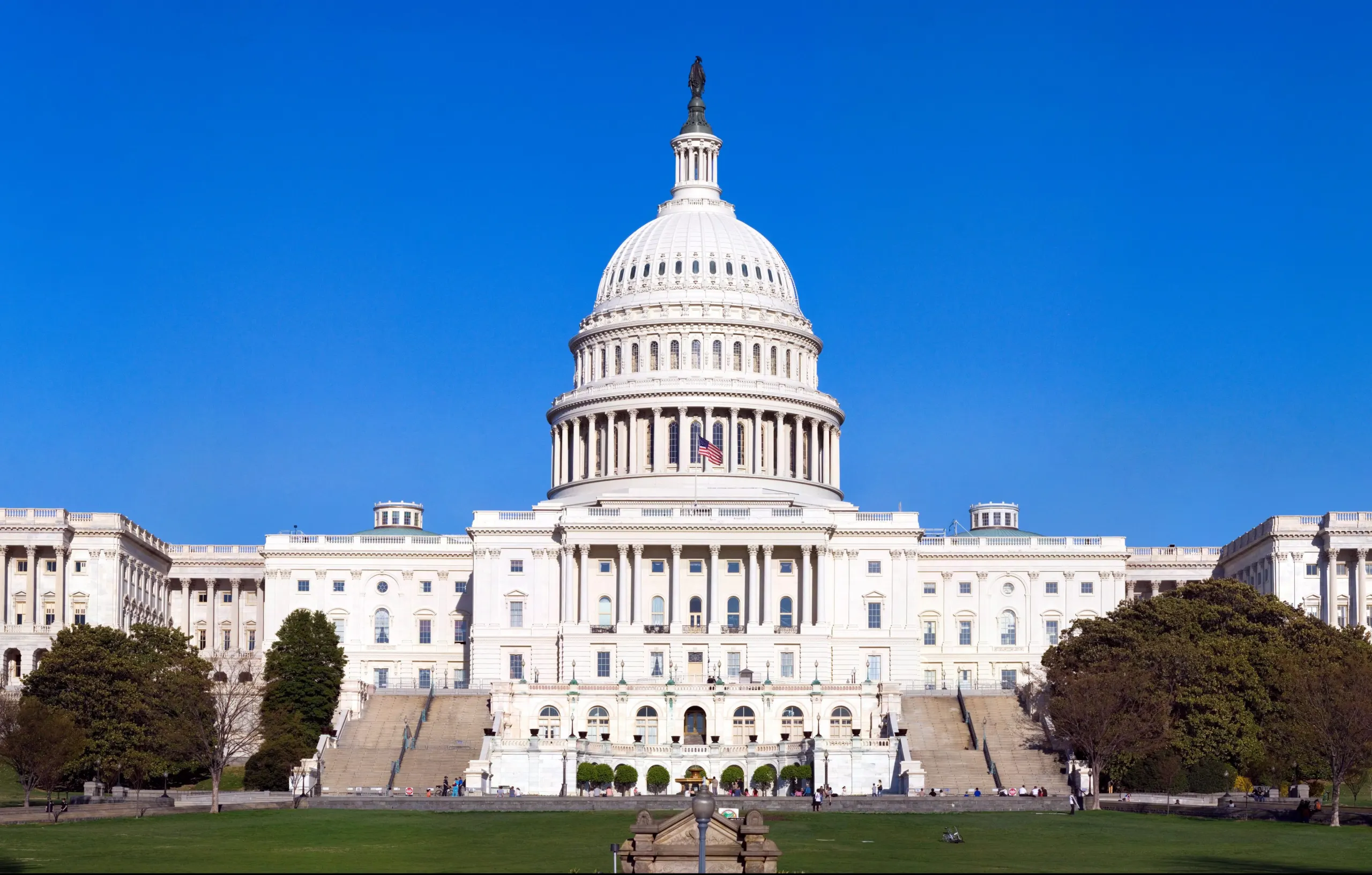
The United States Senate rejected cloture on the motion to proceed to the Digital Asset Market Clarity Act on 15 September, 49 votes to 50, leaving the measure 11 votes short of the 60 that a three fifths requirement puts on a chamber of 100, on our calculation. One senator did not vote. The question was whether to open debate, not whether to pass the bill, and the failure stops the measure short of the floor rather than voting it down.
The arithmetic of the 49
All 49 votes to proceed came from Republicans, on our count of the published roll call, and four Republicans voted against. That leaves the yes column four short of the 53 Republicans in the chamber and 11 short of cloture. Even a united Republican conference would have reached 53 and still needed seven votes from the 47 Democrats and independents, none of whom voted to proceed.
Support narrowed at every stage after the House. H.R. 3633 passed the House of Representatives 294 to 134 on 17 July 2025, 68.7 percent of those voting, with 216 Republicans and 78 Democrats in the yes column and every one of the 134 nays a Democrat. The Senate Banking Committee then advanced it 15 to 9 on 14 May 2026, 62.5 percent. On the floor it drew 49 of the 99 voting, 49.5 percent, all on our calculation. Democratic support fell from 78 of the 212 House Democrats voting, 36.8 percent, to none of the 46 Democrats and independents voting in the Senate, while Republican support fell from all 216 voting in the House to 49 of 53 in the Senate, 92.5 percent.
| Stage | Date | Result | Tally |
|---|---|---|---|
| House Agriculture | 10 June 2025 | Ordered reported, amended | 47 to 6 |
| House Financial Services | 10 June 2025 | Ordered reported, amended | 32 to 19 |
| House floor, on passage | 17 July 2025 | Passed | 294 to 134 |
| Senate Banking | 14 May 2026 | Ordered reported, amended | 15 to 9 |
| Senate floor, cloture to proceed | 15 September 2026 | Rejected | 49 to 50 |
Every recorded vote on H.R. 3633. House roll call number 199, with four members not voting, and Senate roll call number 234, with one senator not voting. The Senate question required three fifths for a majority. The committee published the 15 to 9 tally itself.
| Position | Republicans | Democrats and independents | Total |
|---|---|---|---|
| Yea | 49 | 0 | 49 |
| Nay | 4 | 46 | 50 |
| Not voting | 0 | 1 | 1 |
The Senate cloture vote by caucus, counted from the grouped vote positions published for roll call 234, on our count. The two independents are shown in the second column.
The text the Senate never reached
As introduced on 29 May 2025, the measure splits supervision between two agencies. The Commodity Futures Trading Commission would take general authority over digital commodity transactions, including exchanges, brokers and dealers, with requirements for trade monitoring, recordkeeping and the commingling of customer assets. A digital commodity would qualify for exchange trading where its blockchain is mature or has achieved decentralised control as the bill defines it, or where the issuer files certain reports. The Securities and Exchange Commission would gain jurisdiction over digital commodity activity by certain brokers and dealers on alternative trading systems and by national securities exchanges. Digital commodities on mature blockchains, and on blockchains expected to mature within certain timeframes, would be exempt from its registration requirements where annual sales fall under a certain amount and other requirements are met. Digital commodity exchanges, brokers and dealers would come under the Bank Secrecy Act for anti-money laundering and related purposes. It would also amend the Federal Reserve Act to bar Federal Reserve banks from offering certain products or services directly to an individual, and prohibit the use of a central bank digital currency for monetary policy.
That is not the text the Senate was asked to take up. The House replaced the introduced bill with an amendment in the nature of a substitute before passing it, the Banking Committee reported a further substitute on 1 June 2026, and on 14 September the chairs of that committee, the Agriculture Committee and the digital assets subcommittee released a final draft. They described it as giving the Treasury Secretary authority to prevent deposit flight tied to payment stablecoins, shielding software developers from money transmission registration with a civil safe harbour, adding guardrails on affiliate trading and conflicts of interest, and clarifying how state consumer protection laws apply. The draft was to be offered as an amendment in the nature of a substitute only if cloture were invoked. Cloture was not invoked, so it was never offered, and no source outside its sponsors has published an account of what it contains.
The venue fell harder than the token
| Instrument | Last | Change | Change % |
|---|---|---|---|
| Bitcoin | $75,747.59 | -$3,333.13 | -4.21% |
| Ether | $2,399.79 | -$141.94 | -5.58% |
| Coinbase Global | $172.11 | -$19.34 | -10.10% |
Digital assets and Coinbase Global, 15 September. Bitcoin and ether are intraday quotes captured at 21:03 GMT on 15 September 2026, changes measured against CNBC’s previous close of 79,080.72 dollars and 2,541.73 dollars. Coinbase Global is the 15 September close against a previous close of 191.45 dollars. Quotes from CNBC.
Coinbase Global fell 10.10 percent, 2.40 times the bitcoin move, and ether fell 1.32 times as far as bitcoin, on our calculation. No approved source published an explanation for that ranking and this article does not offer one.
Why it matters: The bill divides supervision of digital commodity trading between the Commodity Futures Trading Commission and the Securities and Exchange Commission, and the vote leaves that division unmade. The framework does not take effect, the conditional exemption from Securities and Exchange Commission registration does not exist, and the Commodity Futures Trading Commission takes no new authority over exchanges, brokers or dealers. Firms in the market continue under the rules that already apply to them.
Outlook: The measure keeps its place on the Senate Legislative Calendar as Calendar No. 423, where it has been since 1 June 2026, and no date for a second attempt appears in the bill’s record. House passage to today’s vote took 425 days. The bill reached the Senate on 18 September 2025 and waited 238 days to be ordered reported, and the cloture motion presented on 8 August 2026 reached the floor 38 days later, all on our calculation. A second cloture attempt needs 11 votes this one did not have, and the 14 September draft was never offered.
Sources: United States Senate, United States House of Representatives, Senate Banking Committee, Office of Senator Cynthia Lummis, Library of Congress, CNBC.