Warsh Overhauls Fed Communications and Withholds His Own Forecast as Projections Hint at a 2026 Rate Hike
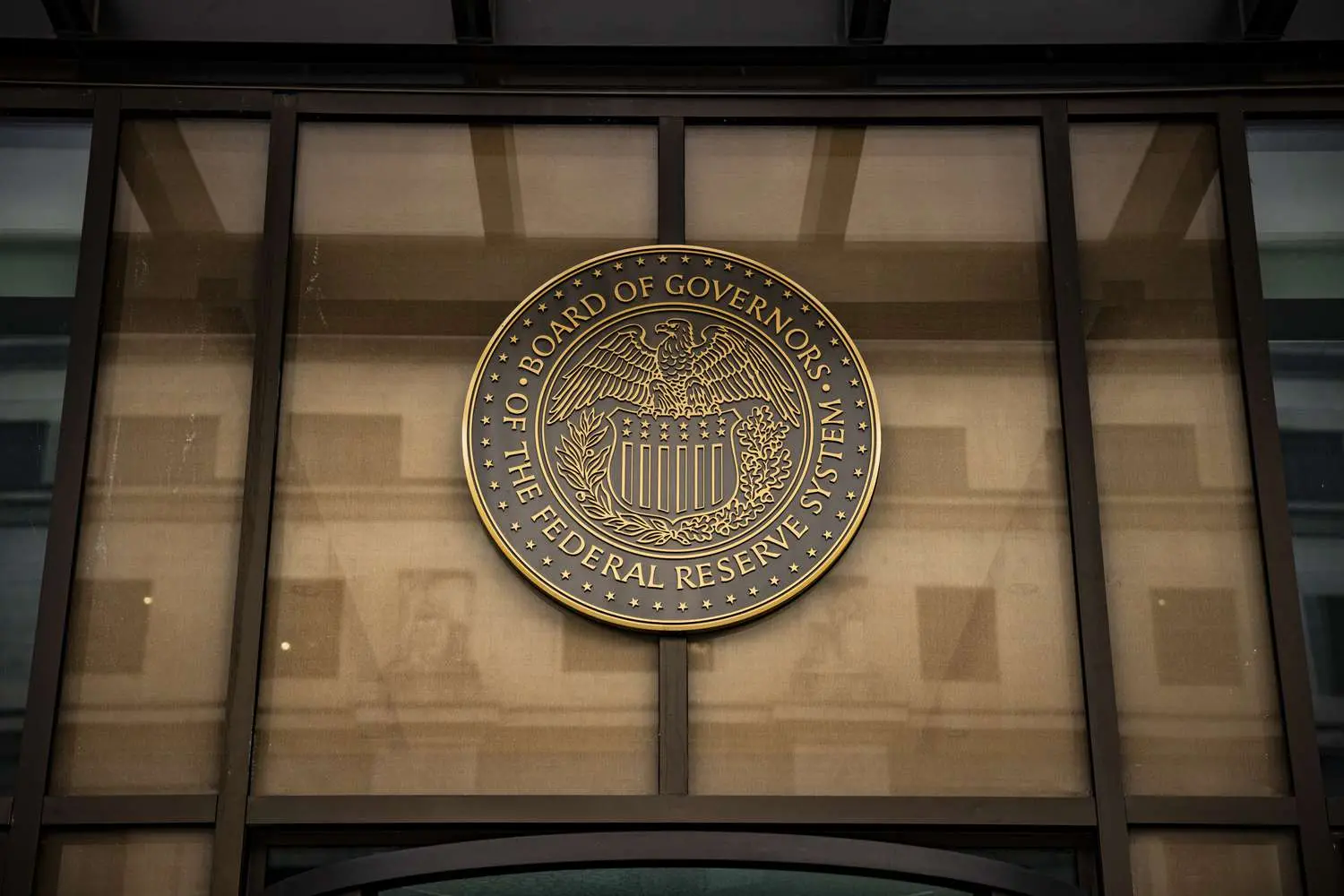
In his first appearance as Federal Reserve Chair, Kevin Warsh used the June policy meeting not only to hold interest rates steady but to begin reshaping how the central bank communicates, stripping back its statement, declining to submit his own interest-rate forecast, and unveiling a sweeping internal review. The substance of policy was unchanged — the federal funds rate was left at 3.50%–3.75% on a unanimous 12–0 vote — but the style and signalling marked a clear break from the previous era.
A Leaner Statement, by Design
The most immediate change was the policy statement itself, which was cut to roughly 130 words from the more than 300 typical of recent meetings. Warsh said the shorter text deliberately dropped the forward-guidance language that had previously signalled the Fed’s next move would likely be a rate cut, describing the old wording as “not well suited for the current policy conjuncture.” He characterised the new approach plainly, saying the statement was “a bit shorter, a bit simpler” and that it “dispenses with some older language.”
The removal of that easing bias is significant. For months, the Fed had implicitly guided markets toward an eventual cut; by stripping it out, the central bank has stopped pre-committing to a direction and returned to a more data-dependent, meeting-by-meeting posture. Warsh framed the change as a matter of communication philosophy rather than a shift in the policy stance, but the market read it as a hawkish signal.
Withholding His Own Dot
Warsh also confirmed that he had personally abstained from the Fed’s quarterly “dot plot” — the chart in which each policymaker marks where they expect rates to go. In his prepared remarks he said he had “refrained from offering any projections” of his own, consistent with his long-held views on the Summary of Economic Projections (SEP) as currently structured. In the press conference that followed, he put it more bluntly: “I did not submit a dot for me,” Warsh said. “It’s not helpful in the conduct of policy.” Warsh has long been a critic of the dot plot, arguing that this form of forward guidance can constrain the central bank’s flexibility and risks being read by markets as a commitment.
Projections Shift the Debate from Cuts Toward Hikes
Even without Warsh’s own dot, the updated projections delivered a notable message. The median forecast now shows the federal funds rate ending 2026 at 3.8% — up from 3.4% in the Fed’s March projections and a quarter of a percentage point above the current 3.5%–3.75% range. Nine of the eighteen participating policymakers projected that the rate would finish the year above the current range, while the remainder saw no change or a cut. The split does not amount to a decisive tightening consensus, but it is a major change from the earlier debate, when markets were focused on when the Fed would begin easing — the latest projections suggest the next move could just as plausibly be up. The shift reflects an economy in which activity remains solid and inflation, lifted in part by higher energy costs, has stayed above the 2% goal.
On that objective, Warsh was emphatic. He stressed that the Fed is committed to returning inflation to 2% — a level it has not sustained for half a decade — and declared that “the commitment to deliver is strong, unanimous, and unambiguous.”
A Wider Institutional Review
Beyond the statement and the dots, Warsh announced the launch of five independent task forces to review key areas of the Fed’s operations: its communications (including the SEP and the dot plot), its balance-sheet policy, its use of and reliance on data sources, productivity and jobs, and its inflation framework. He said that by year-end there would be a broad review of the central bank’s communications — encompassing press conferences, the dot-plot projections, meeting transcripts and minutes — while stressing that he did not want to prejudge the outcome and remained open-minded about possible changes. The move signals that the new chair intends to reshape not only the message but the machinery behind it, revisiting practices built up over the past decade.
Market Reaction
Markets treated the debut as less dovish than expected. US equities fell after the statement, steadied during parts of the press conference, then weakened again, with the Dow closing around 500 points lower, while the two-year Treasury yield — the maturity most sensitive to policy expectations — jumped sharply as investors repriced the near-term path. The combination of a leaner statement, the withdrawal of the easing bias and projections hinting at a possible hike forced investors who had been positioned for eventual rate cuts to reprice toward a Fed that may stay restrictive for longer — or even tighten further.
Why It Matters for the Gulf
For the Gulf, the implications run through the dollar peg. Because GCC currencies are tied to the US dollar, regional central banks generally track Federal Reserve policy, so a Fed that signals it could raise rather than cut keeps monetary conditions across the Gulf tight. Higher US yields tend to support the dollar and, by extension, the pegged Gulf currencies, reinforcing currency stability — but they also keep borrowing costs elevated for governments, banks, corporates and households in the region. The shift in tone also matters for GCC sovereign-wealth funds, whose large fixed-income and equity allocations are directly sensitive to the trajectory of US yields.
Outlook
Warsh’s debut suggests a Fed that will communicate less, commit less explicitly, and lean on incoming data rather than guidance. For now, the message to markets is one of patience tilted toward caution: with inflation still above target and projections hinting at a possible hike, the prospect of near-term easing has receded. How far the communications overhaul reshapes expectations will become clearer as the year-end review approaches and as the next data releases test the new framework.
Sources: Federal Reserve; CNBC.