Saudi Arabia Signs 3 Energy MoUs With Kuwait, Qatar and Egypt as IEF17 Closes in Riyadh
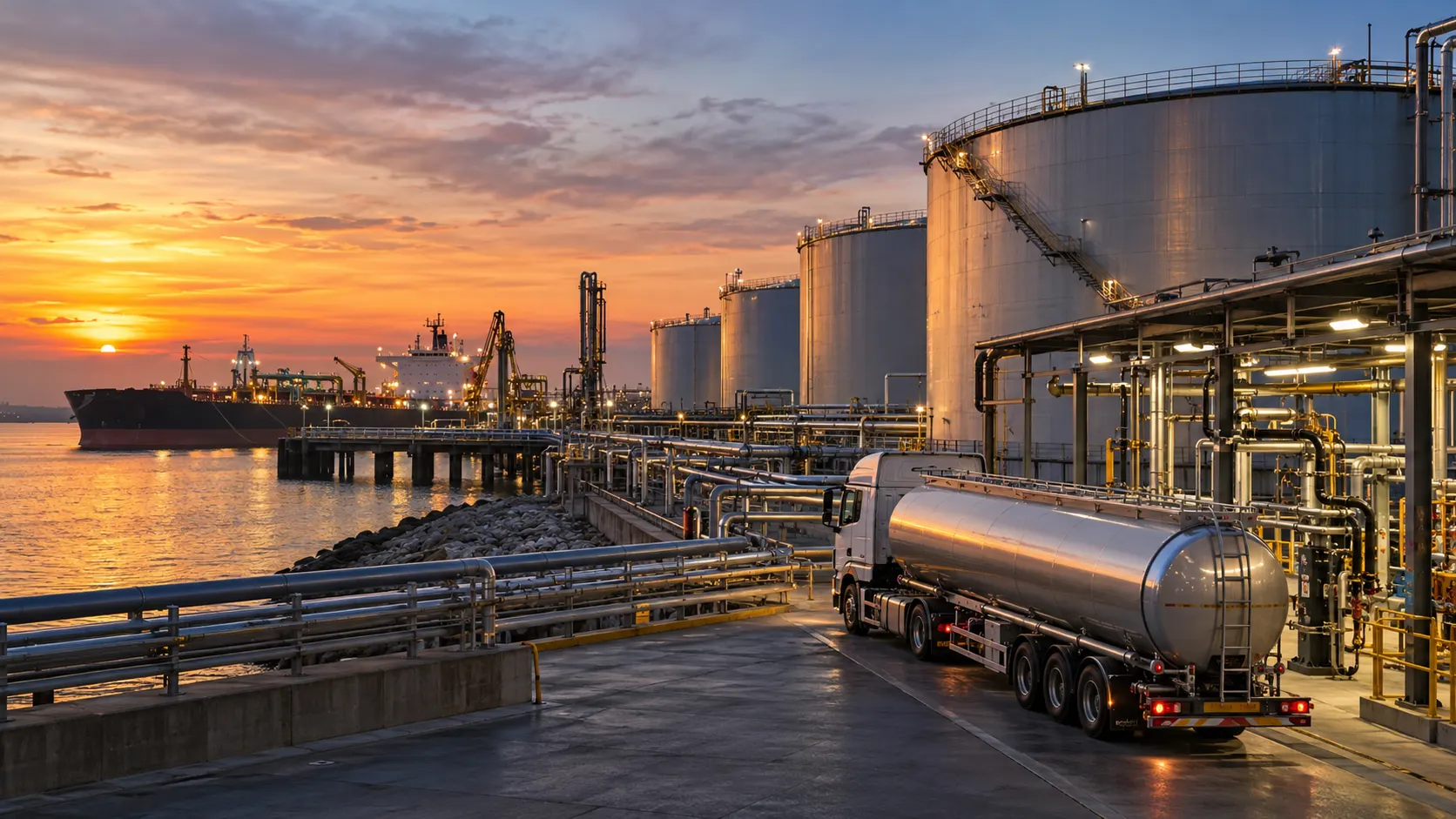
Saudi Arabia signed 3 energy memoranda of understanding in Riyadh with Kuwait, Qatar and Egypt on 11 October, the day the 17th International Energy Forum ministerial meeting, IEF17, concluded. Prince Abdulaziz bin Salman bin Abdulaziz, Minister of Energy and Minister of Industry and Mineral Resources, signed all 3, the Saudi Press Agency reported. The Kuwait memorandum covers electricity, renewable energy, grid interconnection and electricity exports. The Qatar memorandum provides for exploring joint pipeline projects to transport and export oil and gas. The Egypt memorandum covers the trade, transport and storage of crude oil, petroleum products and natural gas. None of the official accounts gave a value, a capacity or a timetable.
Kuwait: electricity exports and storage join an existing link
Kuwait’s Minister of Electricity, Water and Renewable Energy, Dr. Subaih Al-Mukhaizeem, signed for Kuwait. According to the Kuwait News Agency, the memorandum sets a framework that combines developing electricity systems, expanding renewable energy and strengthening interconnection and electricity exports, with a focus on energy efficiency, storage technologies and smart grids. The Saudi account adds digital transformation, innovation, cybersecurity and artificial intelligence, the localisation of energy materials, products and services, cooperation between companies in the 2 countries, and circular carbon economy technologies. The Arabic text of the Kuwaiti dispatch also lists training programmes, specialised visits and joint research with universities and research centres. “We look forward to translating this cooperation into practical mutual programs and initiatives,” Al-Mukhaizeem said.
The memorandum builds on a grid Kuwait already shares with its neighbours. The GCC Interconnection Authority’s network runs through 8 substations; at Al Wafrah it connects to Kuwait’s grid at 400 kilovolts, and at Al-Zour at 275 kilovolts.
Kuwait Holds the Second-Largest Stake in the GCC Interconnection Authority
| Member state | Shareholder | Value ($m) | Share |
|---|---|---|---|
| Saudi Arabia | Saudi Electricity Company | 484.8 | 31.6% |
| Kuwait | Kuwait Investment Authority | 409.7 | 26.7% |
| UAE | Abu Dhabi Water and Electricity Authority | 236.3 | 15.4% |
| Qatar | Ministry of Finance | 179.5 | 11.7% |
| Bahrain | Ministry of Finance and National Economy | 138.0 | 9.0% |
| Oman | Ministry of Finance | 85.9 | 5.6% |
Nominal values in million dollars as listed by the authority, whose paid-up capital is 1,534,170 shares of 1,000 dollars each. Shares are our calculation on that capital.
On our calculation, Saudi Arabia and Kuwait together own 58.3 percent of the authority’s 1.534 billion dollars of paid-up capital. Add Qatar’s 11.7 percent and the 3 Gulf states that signed in Riyadh on Sunday own 70.0 percent. The Kuwait memorandum joins the 2 member states with the largest stakes.
Qatar: oil, gas, hydrogen and joint pipeline projects to explore
Saad bin Sherida Al Kaabi, Minister of State for Energy Affairs, signed for Qatar. The Qatar News Agency said the signing took place alongside IEF17 and the 25th WPC Energy Congress, both part of Riyadh Energy Week. The memorandum spans oil and petroleum products, gas and its derivatives, refining, petrochemicals, electricity, clean hydrogen and its derivatives, renewable energy, energy efficiency and energy storage. It provides for the 2 countries to explore joint projects for pipelines that transport and export oil and gas, to develop and use sustainable petrochemical materials in construction and other sectors, and to cooperate on infrastructure that widens access to energy.
On climate technology, the Qatari account lists technologies that trap, transport, reuse and store carbon. The Saudi account also refers to the UN Framework Convention on Climate Change, the Paris Agreement and the Intergovernmental Negotiating Committee tasked with developing an international legally binding instrument on plastic pollution. The memorandum enters into force once legal procedures are complete in both Qatar and Saudi Arabia, the Qatari agency said.
Egypt: trade, storage and the power link
Karim Badawi, Minister of Petroleum and Mineral Resources, signed for Egypt at the close of the ministerial meeting. Egypt’s petroleum ministry said the memorandum covers trading, handling, transporting, storing and distributing crude oil, petroleum products and natural gas, together with the related infrastructure and logistics. It also covers running and developing fuel stations and transporting and tracking petroleum products and liquefied petroleum gas cylinders. Further items are petrochemicals, a study of investment opportunities in joint projects, and export growth. According to the Saudi account, the work will run on commercial terms. It said Saudi Arabia will share its expertise in qualifying, operating and maintaining fuel stations and service centres, and its experience in opening the LPG sector to competition, and that cooperation will extend to investment in ongoing and planned projects.
The same day, Badawi and Dr. Mahmoud Esmat, Minister of Electricity and Renewable Energy, met the Saudi side, with Egypt’s ambassador in Riyadh, Hatem Abdelkader, in attendance. The ministry said they discussed building on the memorandum and reviewed the electricity interconnection projects between the 2 countries, as well as renewable energy cooperation.
At the ministerial plenary, Badawi set out Egypt’s priorities: to raise domestic oil and gas production and close the gap between output and consumption; to make fuller use of refinery capacity; and to expand petrochemicals so that imports fall. He listed the assets Egypt brings to regional trade: the national gas grid, the liquefaction plants at Idku and Damietta, its refineries, the Suez Canal and the SUMED pipeline. He cited the clearing of arrears owed to foreign partners among the steps taken to improve the investment climate.
3 memoranda signed in Riyadh, 11 October
| Partner | Signed for partner | Core fields |
|---|---|---|
| Kuwait | Dr. Subaih Al-Mukhaizeem | Electricity, renewables, interconnection, electricity exports, efficiency, storage, smart grids |
| Qatar | Saad bin Sherida Al Kaabi | Oil, gas, refining, petrochemicals, power, hydrogen, renewables, efficiency, storage, pipeline projects to explore |
| Egypt | Karim Badawi | Crude, products and gas trade, transport and storage, petrochemicals, joint investment |
Prince Abdulaziz bin Salman signed all 3 for Saudi Arabia. Fields as listed in the official accounts.
Riyadh hosts the forum’s 17th ministerial
Saudi Arabia hosted IEF17, with Italy and Nigeria as co-hosts; the previous ministerial, IEF16, met in New Delhi on 10 April 2018. The forum says it represents more than 65 producing, consuming and transit countries, and the meeting welcomed a United States announcement that it would rejoin. The forum’s account of IEF17 cites sustained investment in production, refining, LNG, grids and storage, much of the ground the 3 memoranda cover. They also follow the Saudi and UAE memorandum on grid interconnection and electricity trade, which The Edge reported on 8 October.
Why it matters: For Saudi Arabia, a single day produced frameworks with 3 partners that span power, oil, gas, petrochemicals and fuel retail, while Riyadh hosted the ministerial. For Kuwait, the memorandum adds electricity exports, storage and smart grids to a grid partnership in which it already holds 26.7 percent of the shared network’s capital. For Qatar, it includes clean hydrogen among its fields of cooperation and opens the way to explore joint oil and gas pipeline projects with Saudi Arabia. For Egypt, trade and storage on commercial terms, Saudi expertise in fuel stations and LPG, and a renewed look at the interconnection sit alongside its stated plan to raise domestic output, use its refineries more fully and import less.
Outlook: Kuwait’s minister spoke of translating the framework into joint programmes, Qatar’s memorandum takes effect once both countries complete their legal procedures, and Egypt’s ministers have already met to build on theirs. The 7th IEF-EU Energy and Climate Forum meets in Riyadh on 25 November, and IEF18 in Rome follows in 2028.
Sources: Saudi Press Agency, Kuwait News Agency, Qatar News Agency, Egypt’s Ministry of Petroleum and Mineral Resources, International Energy Forum, GCC Interconnection Authority, The Edge.