World Bank Sees Global Growth at 2.5% in 2026, the Weakest Since the Pandemic
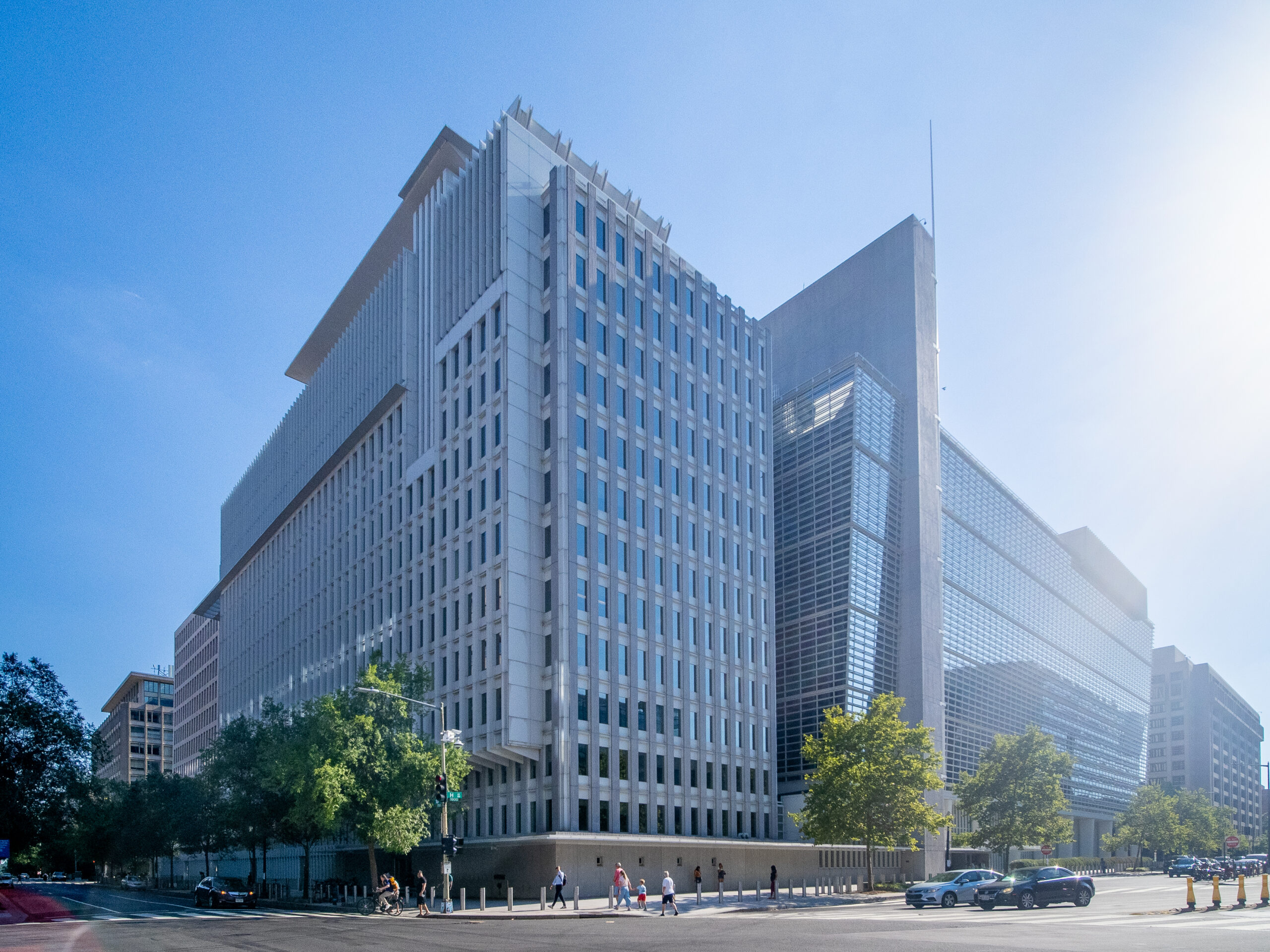
The World Bank expects global growth to slow to 2.5% in 2026, its weakest pace since the onset of the COVID-19 pandemic, as the conflict in the Middle East drives up energy prices, inflation, and borrowing costs. The forecast, in the Group’s June 2026 Global Economic Prospects report, marks a downgrade for two-thirds of the world’s economies compared with January, and comes alongside an offer of up to $100 billion in World Bank financing for affected countries.
A broad global slowdown
Global growth is projected at 2.5% in 2026, down from 2.9% in 2025, before improving to 2.8% in 2027, a pace that would still sit 0.4 percentage point below the average of the 2010s. The World Bank said the downgrades reflect higher energy prices, steeper inflation, and tighter financial conditions following the disruption to energy markets. Growth in developing economies is expected to fall to a post-pandemic low of 3.6% in 2026, from 4.4% in 2025, before recovering to 4.2% in 2027. The Bank also warned of a deeper structural cost: by 2028, developing economies other than China and India will have collectively gone nearly a decade with no progress in closing their per-capita income gap with advanced economies.
Energy and inflation at the centre
The report attributes much of the shock to the closure of the Strait of Hormuz, which has severely disrupted energy markets. Brent crude is projected to average about $94 a barrel in 2026, around 36% above 2025 levels, on the assumption that the worst disruptions abate in July. Fertilizer prices are forecast to rise sharply, with knock-on effects for food, a channel that weighs most heavily on lower-income, import-dependent economies. Together, these pressures lift global inflation to 4.0% in 2026, up substantially from 3.3% in 2025, complicating the task for central banks already balancing growth against price stability.
A severe downside scenario
The World Bank flagged significant downside risks around its baseline. If energy supply disruptions prove more severe than assumed and are accompanied by substantial financial stress, global growth could fall to just 1.3% in 2026 while inflation climbs to 4.4%. The gap between the 2.5% baseline and the 1.3% downside, and between 4.0% and 4.4% on inflation, shows how much hinges on the duration of the disruption and on conditions in financial markets in the months ahead.
The Gulf takes the biggest near-term hit, then rebounds
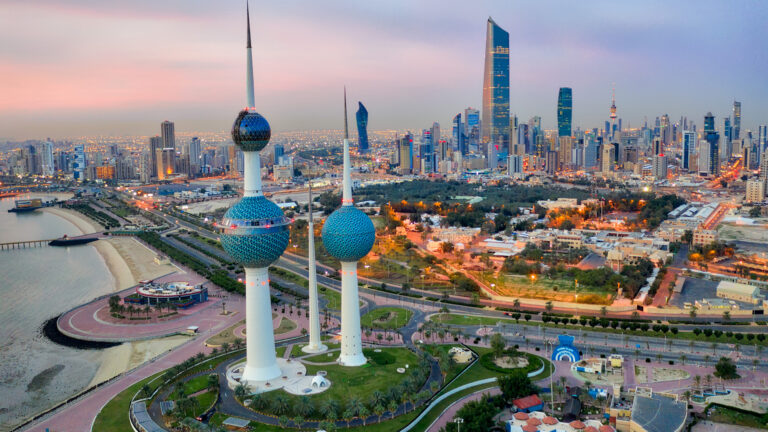
Economies in the Gulf that are directly affected by the conflict are expected to take the biggest immediate hit, with growth tumbling from 3.9% in 2025 to close to zero in 2026, a swing of nearly four percentage points in a single year. The World Bank expects a strong rebound to about 5% in 2027 and 2028, however, as trade recovers and reconstruction spending begins. The wider Middle East, North Africa, Afghanistan, and Pakistan region is forecast to grow 1.6% in 2026 before recovering to 5.0% in 2027, the sharpest swing of any region in the report and a sign that the near-term damage is concentrated while the medium-term trajectory stays intact.
Growth slows across every region
The slowdown is broad but uneven. South Asia remains the fastest-growing region yet decelerates from 7.0% in 2025 to 6.3% in 2026, recovering to 6.9% in 2027. East Asia and Pacific is projected at 4.2% in 2026 and 4.4% in 2027; Europe and Central Asia at 2.1% then 2.3%; Latin America and the Caribbean at 2.2% then 2.5%; and Sub-Saharan Africa at 4.0% then 4.4%, where food-price pressures from the fertilizer shortage are a particular strain. The dispersion underscores that the shock is global in origin but uneven in effect, hitting energy-importing and food-importing economies hardest.
World Bank Group support
The World Bank Group said it stands ready to provide up to $100 billion for affected countries over 15 months. It is immediately making $50 billion to $60 billion available through existing instruments, including $25 billion of pre-arranged financing, to fund social safety nets for the most vulnerable, shore up fiscal capacity, and provide working capital and liquidity for firms and farms. More than 30 countries are already working with the Group to enable a rapid response, and the envelope could scale to $80 billion to $100 billion if the conflict and its economic fallout persist. “Our job is to help countries steady the ship, keep reforms moving, and emerge stronger on the other side,” said World Bank Group President Ajay Banga.
Commodity exporters and fiscal resilience
The report’s special-focus chapters turn to fiscal strength. About two-thirds of developing economies, and nearly 90% of low-income countries, are commodity exporters, yet they tend to run weaker fiscal positions because their revenues are more volatile and less diversified. The Bank found that five years after a positive commodity-price shock, much of the revenue windfall has typically been spent rather than saved, leaving these economies exposed when prices reverse. Its prescription is institutional: well-designed fiscal rules and sovereign wealth funds with clear stabilization mandates, stronger domestic revenue mobilization, and greater economic diversification.
Rising debt is raising the cost of every crisis
A second chapter examines how rising debt constrains the response to shocks. Aggregate government debt in developing economies has climbed from under 40% of GDP in 2010 to over 70% today. The analysis finds the effect is self-reinforcing: the more indebted a country already is, the more sharply its borrowing costs rise with each additional unit of debt, and the effect is most acute in the most vulnerable economies. The corollary is that, for highly indebted countries, reducing debt can deliver outsized rewards in the form of fiscal space to invest in infrastructure, health, and education.
Why it matters
For the Gulf, the report frames the current downturn as a sharp but temporary external shock rather than a structural break, with growth returning to about 5% once trade normalises and reconstruction begins. Its emphasis on stabilization funds, fiscal rules, and diversification maps closely onto the tools the GCC has spent the past decade building, and it reinforces the value of the region’s large sovereign wealth buffers in absorbing exactly this kind of price and trade shock. The near-term path, however, depends heavily on how quickly energy markets and shipping through the Strait of Hormuz return to normal, the same assumption underpinning the Bank’s expectation that the worst disruptions ease from July.
Sources: World Bank Group (Global Economic Prospects, June 2026).