
AI Boom Could Drive a 128% Surge in Data Centre Electricity Demand by 2030
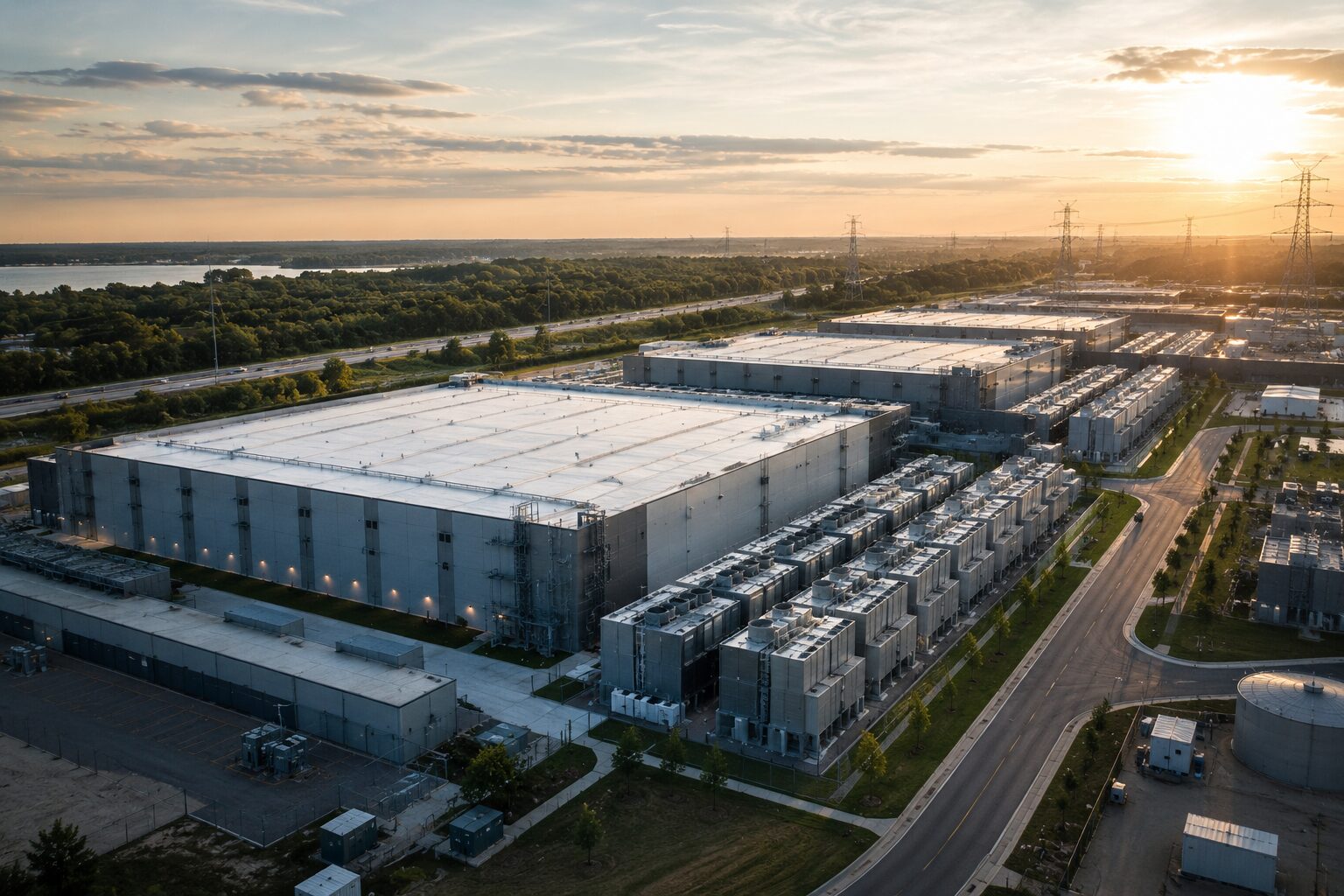
Artificial intelligence is becoming a structural force in global electricity markets. The issue is no longer only the power used by individual AI queries or model training runs. The larger shift is the rapid buildout of high density data centres, accelerator chips, cooling systems, grid connections and backup power infrastructure needed to support AI at scale.
The latest verified data show that global data centre electricity consumption reached around 415 terawatt hours in 2024, equal to about 1.5% of global electricity demand. By 2030, this is projected to rise to around 945 terawatt hours, or just under 3% of global electricity consumption.
This means global data centre electricity use could increase by around 530 terawatt hours between 2024 and 2030. In percentage terms, that is an increase of about 128%, or more than doubling in six years. The implied annual growth rate is close to 15%, far above the growth rate of overall electricity demand in most economies.
The scale is large enough to change energy planning. By 2030, data centres could consume electricity broadly comparable to the current power use of a major advanced economy such as Japan. This makes AI infrastructure a grid issue, not only a technology issue.
AI Is the Marginal Driver of Demand Growth
It is not yet reliable to say that AI accounts for a fixed share of global data centre electricity use. The stronger verified point is that AI is becoming the main marginal driver of demand growth.
The IEA projects electricity use from accelerated servers, mainly driven by AI adoption, to grow by around 30% annually and account for almost half of the net increase in global data centre electricity demand through 2030.
This distinction matters. Traditional data centres were already growing because of cloud computing, streaming, enterprise software and digital services. AI adds a new layer of demand because it requires more powerful chips, higher rack density, more intensive cooling and larger power connections.
The result is a change in the physical profile of the digital economy. Data centres are moving from conventional IT facilities toward grid scale industrial assets.
The United States Shows the Grid Pressure Most Clearly
The United States provides the clearest example of the electricity challenge.
U.S. data centres consumed 176 terawatt hours in 2023, equal to 4.4% of total U.S. electricity use. DOE and Lawrence Berkeley National Laboratory project that this could rise to between 325 and 580 terawatt hours by 2028, equal to 6.7% to 12% of national electricity demand.
The lower end of that range would still represent an increase of 149 terawatt hours from 2023, or about 85%. The upper end would represent an increase of 404 terawatt hours, or about 230%. On a midpoint basis, U.S. data centre electricity use would reach around 452.5 terawatt hours by 2028, implying growth of about 157% in five years.
That is why data centre demand has become a major issue for utilities, regulators, grid planners and local communities. The challenge is not only annual energy consumption. It is also the concentration of load in specific regions, the need for firm power, and the speed at which new projects are requesting grid connections.
In electricity systems, location matters. A national power system may appear able to absorb demand in aggregate, while specific local grids face bottlenecks, transformer shortages, transmission limits or long interconnection queues.
Regional Concentration Matters
The global data centre buildout is not evenly distributed.
The IEA identifies the United States, China and Europe as the largest regions for data centre electricity demand. Market analysis of IEA figures shows that the United States accounted for around 45% of global data centre electricity consumption in 2024, followed by China at about 25% and Europe at about 15%.
This concentration matters because the grid challenge will be most visible where data centres cluster around power availability, fibre networks, cloud regions, land availability and permitting advantages. In some locations, data centres can behave like large industrial loads arriving faster than transmission, generation and local infrastructure can expand.
The implication is clear: AI power demand is not only a global electricity story. It is also a regional planning issue.
AI Hardware Changes the Economics of Data Centres
AI workloads are power dense because they rely on specialised accelerators such as GPUs and AI chips. These systems are designed to process massive parallel workloads for training, inference, image generation, video generation and other compute intensive tasks.
The shift can be seen at the rack level. Many traditional enterprise racks operated in the low tens of kilowatts. Modern AI rack scale systems can move above 100 kilowatts per rack. HPE specifications for NVIDIA’s GB200 NVL72 system indicate around 132 kilowatts per rack, including 115 kilowatts liquid cooled and 17 kilowatts air cooled.
This changes facility design. A data hall with 1,000 such racks could represent about 132 megawatts of rack level power demand before accounting for wider site infrastructure. A much larger AI campus with 10,000 similar racks could imply more than 1.3 gigawatts of rack level demand.
These are not normal office or commercial building loads. They are closer to large industrial power users. As AI clusters scale, developers need larger grid connections, stronger substations, advanced cooling, backup generation, battery storage and in some cases dedicated power supply arrangements.
Cooling Becomes a Core Constraint
Higher rack density also changes cooling requirements.
Traditional air cooling is less effective when racks move into very high power densities. AI infrastructure increasingly requires liquid cooling, direct to chip cooling or other advanced thermal management systems. These systems can improve computing efficiency, but they also add complexity, water considerations and site selection constraints.
The key point is that AI power demand is not only about the chip. It is about the full stack: servers, networking, storage, cooling, power conversion, backup systems and grid infrastructure.
This is why simple per query energy estimates can be misleading. A single AI prompt may use a small amount of electricity, but the system required to serve billions or trillions of prompts requires large physical infrastructure.
Training Gets Attention, but Inference Drives Scale
AI energy use has two main phases: training and inference.
Training is the process of building a large model. It can require very large one off computing runs. Some external estimates place the electricity required to train GPT 4 at around 50 gigawatt hours, although this should be treated as an estimate rather than an official disclosed figure.
Inference is the everyday use of AI after a model is deployed. This includes prompts, search integration, coding tools, image generation, enterprise copilots, customer service systems and automated workflows. Inference can become the larger cumulative energy driver because it happens continuously and at very large scale.
Recent disclosed estimates show that individual text prompts may use less electricity than some older public claims suggested. Google estimates that the median Gemini Apps text prompt uses 0.24 watt hours of electricity, emits 0.03 grams of carbon dioxide equivalent and consumes 0.26 millilitres of water. Sam Altman has stated that an average ChatGPT query uses about 0.34 watt hours of electricity.
Individually, those figures are small. At scale, they become meaningful. One billion text prompts at 0.24 watt hours each would consume about 240 megawatt hours. Ten billion prompts would consume about 2.4 gigawatt hours. One trillion prompts would consume about 240 gigawatt hours.
At 0.34 watt hours per query, one trillion prompts would consume about 340 gigawatt hours. That is still only part of the total AI infrastructure footprint, but it shows why usage scale matters as much as unit efficiency.
Efficiency Is Improving, but Scale Can Offset the Gains
AI systems are also becoming more efficient.
Google says the energy use of the median Gemini Apps text prompt fell 33 times over a recent 12 month period, while the carbon footprint fell 44 times. This shows that software optimisation, hardware efficiency and cleaner power procurement can reduce the environmental impact of individual AI tasks.
However, efficiency improvements do not automatically reduce total electricity demand if usage expands faster than energy use per prompt declines. This is the central tension in AI infrastructure. Each unit of compute may become more efficient, but total demand can still rise if models are used more often, embedded into more products, expanded into richer media formats and deployed across more enterprise workflows.
The practical policy question is therefore not whether AI can become more efficient. It can. The question is whether efficiency gains can keep pace with the scale of adoption.
The Water and Land Footprint Is Also Rising
Electricity is only one part of the AI infrastructure challenge.
UNU INWEH estimates that global data centres consumed around 448 terawatt hours in 2025 and could reach 945 terawatt hours by 2030. The same analysis projects an associated water footprint of about 9.3 trillion litres by 2030 and a land footprint of more than 14,500 square kilometres.
The water number is especially important in regions already facing water stress. Cooling systems, power generation and semiconductor supply chains all carry water implications. Even when a facility uses efficient cooling, the electricity supply behind it may require water depending on the generation mix.
This means AI data centre expansion is not only a question of whether enough electricity can be generated. It is also a question of where the infrastructure is located, what water resources are available, what cooling system is used, and how local communities are affected.
Clean Energy Procurement Is Rising, but Not Enough Alone
Major technology companies have become some of the world’s largest corporate buyers of clean electricity. They are signing renewable power purchase agreements, investing in grid scale batteries, exploring advanced geothermal, and entering nuclear related agreements.
This helps reduce the carbon intensity of AI infrastructure, but it does not eliminate the energy challenge.
The IEA expects renewables to meet about half of the additional data centre electricity demand through 2030. That is significant, but it also means a large share of the increase will still need to be supplied by other sources. Natural gas and coal together are expected to meet more than 40% of additional data centre electricity demand until 2030, while nuclear begins to play a larger role toward the end of the decade and beyond.
For energy markets, this creates a complex picture. AI can accelerate clean power procurement and support investment in renewables, nuclear and storage. At the same time, fast load growth can increase demand for firm power, extend the role of gas generation, raise grid investment needs and create local reliability challenges.
Why the Data Matters
The data matters for three reasons.
First, AI is turning data centres into one of the fastest growing electricity demand categories in the world. A rise from 415 terawatt hours in 2024 to 945 terawatt hours by 2030 would add more than 500 terawatt hours of demand in six years.
Second, the U.S. numbers show that data centres are already large enough to affect national power planning. A move from 176 terawatt hours in 2023 to as much as 580 terawatt hours by 2028 would make data centres one of the most important new electricity demand drivers in the country.
Third, facility scale is changing. AI infrastructure is not simply more servers. It is higher density computing, liquid cooling, large grid connections, backup power and in some cases industrial scale energy procurement.
Implications for Energy Markets
For utilities, the AI boom creates new demand but also new pressure. Data centres can provide long term load growth, support grid investment and improve asset utilisation. But they can also strain local grids, increase peak demand and require expensive transmission, substations and generation capacity.
For power producers, AI creates demand for both clean and firm electricity. Renewable energy will remain central, but data centres also need reliability. This supports interest in gas, nuclear, geothermal, storage and hybrid power solutions.
For policymakers, the main issue is planning. AI infrastructure needs to be integrated into power system forecasts, land use planning, water management, permitting and energy security strategies. Without coordination, data centre growth can create local bottlenecks, higher electricity costs and public opposition.
For local economies, data centres can bring construction activity, long term power demand for utilities, local tax revenues and infrastructure investment. The policy challenge is to capture these benefits while managing electricity affordability, water stress, permitting pressure and grid reliability.
For investors, AI power demand is creating opportunities across utilities, grid equipment, cooling technology, power semiconductors, renewables, nuclear, natural gas infrastructure and energy storage. But valuation discipline matters because not all projects will secure power, permits or long term customers.
Outlook
AI data centre demand is likely to remain one of the defining energy themes of the decade.
The direction is clear: more AI adoption means more compute infrastructure, more high density racks, more cooling demand and larger power requirements. Efficiency will improve, but efficiency gains may be offset by higher usage volumes, larger models, richer media generation and broader enterprise deployment.
The IEA’s base case sees global data centre electricity consumption rising further to around 1,200 terawatt hours by 2035, underscoring that the issue extends beyond 2030.
The key question is not whether AI will increase electricity demand. It already is. The key question is whether power systems can expand fast enough, cleanly enough and reliably enough to support the next phase of digital infrastructure.
Overall, AI is becoming a structural driver of electricity demand, grid investment and energy strategy. The digital economy is no longer invisible to the power system. It is becoming one of its most important new loads.
Sources: International Energy Agency, DOE and Lawrence Berkeley National Laboratory, United Nations University INWEH, Google Cloud, NVIDIA, HPE, and verified data centre market information available as of June 2026.