Markets Price One in Three Odds of a Fed Rate Rise This Week
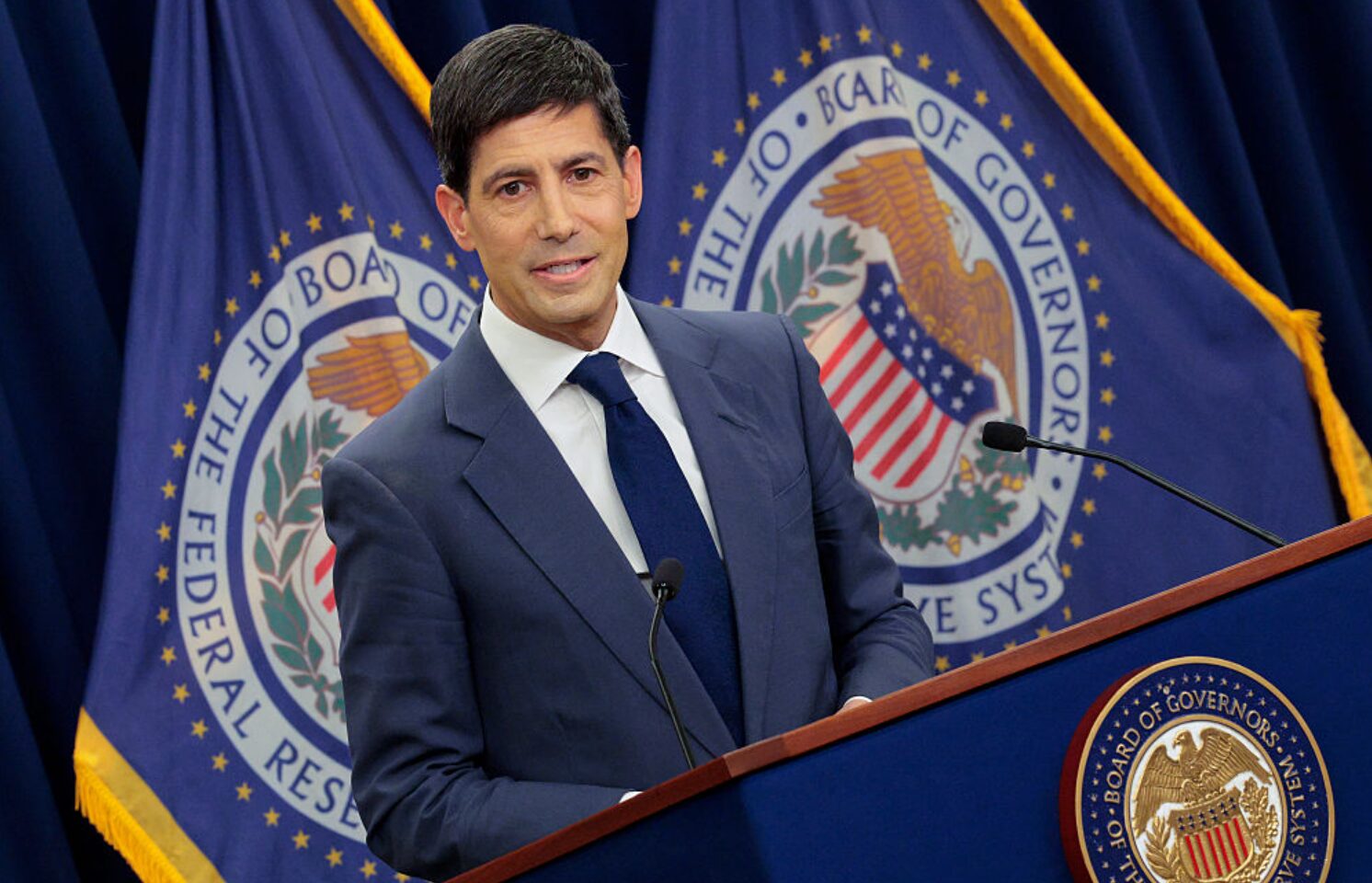
The Federal Open Market Committee announces its decision at 2:00 p.m. Eastern time on 29 July, which is 9:00 p.m. in Kuwait, with a press conference half an hour later. The target range has stood at 3.50 to 3.75 percent since December 2025 and most forecasters expect it to stay there. What has made this meeting unusual is that a serious market participant has publicly argued the opposite.
Citadel Securities put the position in its own words in a client note dated 27 July, titled “Fed Views: The Case for July”: “we now see a rate hike at the July meeting.” That is not a hedge or a refusal to rule something out; it is an affirmative call. Bloomberg reported it on 27 July and returned to it on 28 July as it began to unsettle positioning. It is worth being precise about what Citadel Securities is: a market maker and broker-dealer, not a bank. Its view carries weight because of what it sees in order flow, not because it speaks for the banking sector.
The Committee taking the decision is also not the Committee most readers will picture. Kevin Warsh took office as Chairman of the Board of Governors on 22 May 2026, for a four-year term ending 21 May 2030. Jerome Powell remains on the Board as a Governor and a voting member of the Committee.
Forbes estimated on 23 July that markets were pricing broadly a one-in-three chance of an increase in July. That is a long way from consensus and a long way from negligible, and it is the reason the decision is being watched more closely than a hold would normally warrant.
| Term | What it means |
|---|---|
| Federal funds target range | The band the Committee sets for the overnight rate at which banks lend reserves to one another |
| Summary of Economic Projections | The quarterly grid of Committee members’ forecasts for growth, unemployment, inflation and rates — published at four meetings a year, not this one |
| Blackout period | The window before a meeting during which Committee participants make no public comment on policy |
| Market maker | A firm that continuously quotes buy and sell prices in securities, profiting from the spread and from managing the resulting inventory |
| Core inflation | Price change excluding food and energy, the measure the Committee weights most heavily for signal |
Policy figures and meeting logistics in this article are read from federalreserve.gov. Price and labour data are read from the Bureau of Labor Statistics and the Bureau of Economic Analysis. The market-pricing estimate is attributed to Forbes, which did not name a data provider for it.
Where policy stands
| Measure | Detail |
|---|---|
| Target range | 3.50 to 3.75 percent |
| Last changed | 11 December 2025, a quarter-point reduction |
| Most recent meeting | 16 and 17 June 2026, held, vote 12 to 0 |
| Meeting before that | 27 and 28 January 2026, held, vote 10 to 2 |
| This meeting | 28 and 29 July 2026, statement 2:00 p.m. Eastern, press conference 2:30 p.m. |
| Summary of Economic Projections | Not published at this meeting |
| Chair | Kevin Warsh, in office since 22 May 2026 |
The January dissents are the detail most likely to be misread. Both dissenters — Governors Stephen Miran and Christopher Waller — preferred a rate cut, not a rise. The Committee’s live internal disagreement this year has been dovish, which makes a hawkish surprise a break with the recent voting record rather than an extension of it. June’s vote was unanimous.
The Committee is also in its blackout period, which runs from 18 July to 30 July. No participant can comment before the announcement, so any report quoting a Federal Reserve source on rate direction this week should be treated with scepticism.
The data the Committee is working from
| Series | Reference month | Released | Reading |
|---|---|---|---|
| Consumer price index, monthly | June 2026 | 14 July | Down 0.4 percent |
| Consumer price index, annual | June 2026 | 14 July | Up 3.5 percent, from 4.2 percent in May |
| Core consumer price index, annual | June 2026 | 14 July | Up 2.6 percent |
| Personal consumption expenditures price index, annual | May 2026 | 25 June | Up 4.1 percent |
| Core personal consumption expenditures, annual | May 2026 | 25 June | Up 3.4 percent |
| Nonfarm payrolls | June 2026 | 2 July | Up 57,000 |
| Unemployment rate | June 2026 | 2 July | 4.2 percent |
The picture is genuinely mixed, which is the honest reason a one-in-three probability is not absurd. Headline consumer price inflation fell sharply in June, driven by a 5.7 percent drop in the energy index, and the annual rate came down from 4.2 percent to 3.5 percent. Core consumer price inflation at 2.6 percent is close to target. But the personal consumption expenditures measure, which the Committee formally prefers, was running at 4.1 percent headline and 3.4 percent core in May — materially hotter.
The awkwardness is one of sequencing. June personal consumption expenditures data are released on 30 July, the day after the decision. The Committee will act without its preferred inflation measure for the most recent month.
Payroll growth of 57,000 with unemployment at 4.2 percent is soft. A labour market adding fewer than 60,000 jobs a month is not one that ordinarily invites tightening, and this is the strongest argument against the Citadel Securities call.
What Bank of America has actually said
Because the claim has circulated in Arabic-language coverage, it is worth stating plainly. Bank of America forecast in June that the Federal Reserve would raise rates three times during 2026, telling CNBC on 22 June that inflation was getting unambiguously worse. That is a view about the year, published five weeks before this meeting. It is not a call for an increase at this meeting, and the bank has not made one.
Why it matters: A decision that markets price at roughly two-to-one against a move is still a decision with a meaningful tail, and the tail is being argued by a firm that sees a large share of American order flow. For Gulf economies whose currencies are pegged or closely managed against the dollar, the mechanical consequence is direct: a change in the federal funds target range transmits into local policy rates within days, and Gulf central banks have tracked Federal Reserve moves closely through this cycle. A surprise increase would therefore not stay in Washington.
Outlook: Four things to watch. First, the statement at 2:00 p.m. Eastern, 9:00 p.m. in Kuwait, and whether the vote is unanimous as in June or split as in January. Second, the direction of any dissent, since every dissent this year has favoured easing. Third, the June personal consumption expenditures release on 30 July, which arrives a day late and will reframe the decision whichever way it goes. Fourth, the response of Gulf central banks, whose rate decisions typically follow within a day of a Federal Reserve move.
Sources: Board of Governors of the Federal Reserve System; US Bureau of Labor Statistics; US Bureau of Economic Analysis; Bloomberg, 27 and 28 July 2026; CNBC, 22 June 2026; Forbes, 23 July 2026.