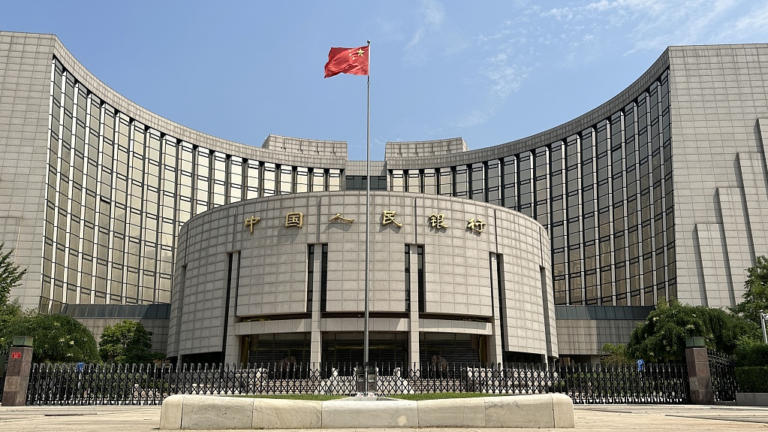
Japan’s Core Inflation Slowed to 1.7 Percent on the Day the Bank of Japan Raised Rates

Japan’s consumer prices excluding fresh food rose 1.7 percent in the year to August, in figures the Statistics Bureau published on 18 September, the same day the Bank of Japan voted 7 to 2 to raise its policy rate to around 1.25 percent.
The all items index rose 1.9 percent and the measure excluding both fresh food and energy also rose 1.9 percent. All three readings sat below the 2 percent target, by different margins, and which one is cited changes how far below it Japan appears to be.
Three measures, three different distances from target
| Measure | Index, 2025 = 100 | Change on the year |
|---|---|---|
| All items | 102.2 | +1.9% |
| Excluding fresh food | 102.0 | +1.7% |
| Excluding fresh food and energy | 102.5 | +1.9% |
Source: Statistics Bureau of Japan, Consumer Price Index, Japan, August 2026, on the 2025 base, published 18 September 2026.
The pattern across the three is more informative than any one of them. Taking fresh food out lowers the rate from 1.9 to 1.7 percent, so fresh food was adding to inflation in August. Taking energy out as well raises it back to 1.9 percent, so energy was subtracting from it, on our reading.
That is the reverse of the European position. Euro area inflation was confirmed at 3.2 percent for August by Eurostat on 17 September, with energy contributing 1.29 percentage points of it. Japan’s headline rate was 1.3 percentage points below the euro area figure, on our calculation, and it was reached with energy pulling in the opposite direction. The two are not measured on an identical basis, since Japan publishes a national index and Eurostat a harmonised one, but the direction of the energy contribution is the point.
The decision did not rest on any single price measure
The Bank did not justify the increase on one of the three figures. Its decision document said underlying consumer price inflation has been approaching 2 percent, and set out the mechanism it is watching rather than the level: upward pressure on prices in business to business transactions starting to spill over into consumer prices, and moves to pass wage increases into selling prices continuing. On its account, medium to long term inflation expectations have continued to rise.
That framing matters for how the numbers should be read. A policy rate of around 1.25 percent sits 0.45 percentage points below the August rise in prices excluding fresh food, on our calculation. That is a backward looking comparison against a single month rather than a measure of the real policy rate, which would require expected inflation, but it does illustrate the Bank’s own statement that financial conditions remain accommodative after the increase. The index level makes the same point differently: at 102.2 on a 2025 base, the all items basket sits 2.2 percent above its 2025 average, on our reading.
Why it matters: Japan is tightening while its main consumer price measures are all still short of the 2 percent target. That is a harder case to make than an overshoot, because it rests not on the current reading but on the Bank’s judgement that underlying inflation is approaching target and that wage and price setting behaviour will keep it there. The practical consequence is that the evidence which would vindicate or embarrass the decision arrives slowly. Wage pass through and business to business cost transmission are not monthly indicators, so the case will not be settled for several months, and the policy rate is already committed. For anyone pricing Japanese assets, the change is that the Bank has moved before its own headline numbers confirmed the move.
Outlook: The published record of the meeting follows in the Summary of Opinions on 1 October and the minutes on 5 November, both at 8:50 in the morning Tokyo time. No forecast round accompanied this decision; the next Outlook Report comes with the meeting that ends on 30 October, and the new guideline itself takes effect on 24 September. The figure to watch before then is the gap between the two core measures. If energy stops subtracting and the two converge upward, the Bank’s reading is confirmed. If the measure excluding fresh food stays near 1.7 percent while the other drifts down toward it, the Bank will have raised into a slowdown it had described as a spillover.
Sources: Statistics Bureau of Japan, Bank of Japan, Eurostat.