World Bank Now Sees Lebanon Shrinking 6.4 Percent After Forecasting 4 Percent Growth
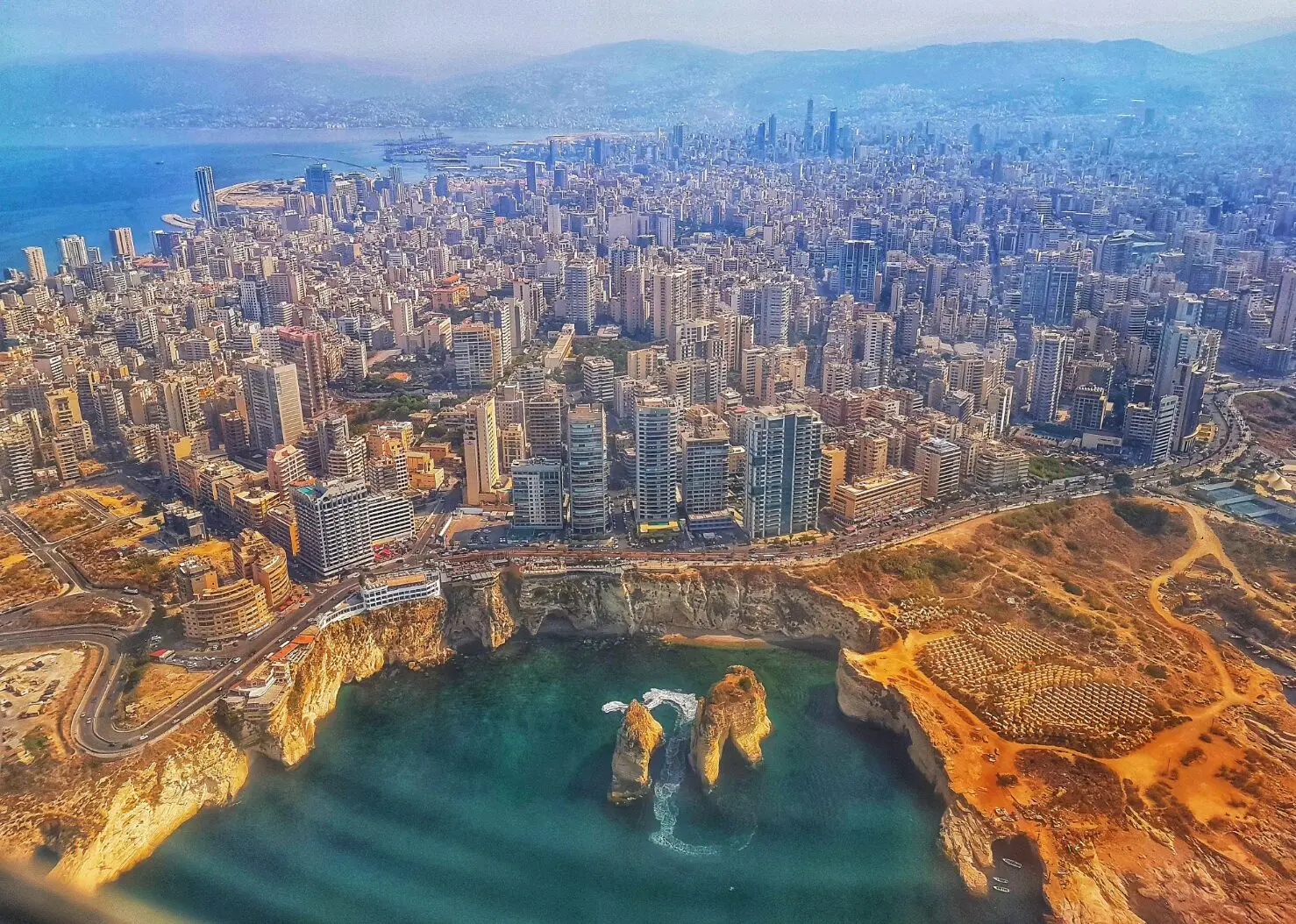
The World Bank now expects Lebanon’s economy to contract by 6.4 percent in 2026, reversing a 4 percent growth forecast published at the beginning of the year as renewed conflict interrupts what had been a tentative economic recovery.
The new projection was released on 21 August in the World Bank’s Lebanon Economic Monitor, Summer 2026: A Conflict-Torn Economy.
The change is substantial. In January, the Bank expected Lebanon’s real GDP to grow by 4 percent in 2026, conditional on continued reforms, modest reconstruction inflows and political stability. Moving from growth of 4 percent to contraction of 6.4 percent represents a 10.4 percentage-point deterioration between the two World Bank forecasts.
Separately, the latest report’s economic-impact modelling produces the same numerical figure from a different comparison: the Bank estimates that the 2026 conflict will reduce GDP growth by 10.4 percentage points relative to a counterfactual in which the conflict had not occurred. The two figures therefore measure different things even though they are numerically identical.
From recovery to renewed contraction
Lebanon entered 2026 on a stronger economic footing than it had occupied for several years. The World Bank now estimates that real GDP expanded by 4.2 percent in 2025, the fastest growth since the onset of Lebanon’s financial crisis in 2019. The rebound was supported by stronger private consumption, investment and tourism, alongside improvement in high-frequency indicators.
The new estimate also represents an upward revision to the Bank’s previous assessment of 2025. In January, the World Bank estimated that Lebanon had grown by 3.5 percent during 2025.
That recovery was sharply interrupted by the renewed escalation of conflict in March 2026. According to the Bank, the shock caused additional damage to housing and infrastructure, displaced communities, disrupted supply chains and weighed heavily on tourism and domestic demand.
The sequence of World Bank forecasts illustrates how rapidly the outlook changed. In January, Lebanon was still expected to expand by 4 percent in 2026. By the June 2026 Global Economic Prospects, the Bank had stopped publishing a numerical forecast for Lebanon beyond 2025 because of what it described as a high degree of uncertainty. The August Lebanon Economic Monitor now restores a numerical projection, at minus 6.4 percent.
Inflation is rising again
The growth shock is being accompanied by renewed price pressure. The World Bank expects inflation to rise to 17.5 percent in 2026, driven by supply disruptions, higher shipping costs and rising oil prices. That interrupts the disinflationary trend anticipated earlier in the year.
In January, the Bank had expected Lebanon’s inflation rate to reach single digits in 2026 for the first time since 2019, following a projected decline to 15.2 percent in 2025.
The Lebanese pound has remained stable, according to the latest report, supported by the use of reserves and tighter local-currency liquidity. But the Bank warns that the exchange rate could come under pressure if foreign inflows decline or conflict-related shocks persist.
That makes tourism and other sources of foreign currency particularly important. A fall in tourism receipts affects domestic activity directly while also weakening one of the channels through which foreign exchange enters the Lebanese economy.
Public finances entered the shock from a stronger position
Lebanon’s near-term fiscal position had improved before the renewed escalation. The government recorded an overall fiscal surplus equivalent to 3.9 percent of GDP in 2025, supported by stronger tax compliance and improved customs and value-added-tax collection. The World Bank says public finances remained relatively strong during the first half of 2026.
Pressure is expected to increase during the remainder of the year. Conflict-related humanitarian and reconstruction requirements are rising, demands for higher public-sector wages are increasing and weaker economic activity is expected to constrain revenue growth.
At the same time, the underlying sovereign-debt problem remains unresolved. The World Bank continues to classify Lebanon’s public debt as unsustainable and says debt-restructuring negotiations have yet to begin. The distinction is important: an improvement in the government’s near-term fiscal cash position does not resolve the country’s accumulated sovereign liabilities.
Banking-sector restructuring remains unfinished
Lebanon’s banking system also remains deeply weakened. The World Bank acknowledges some progress on elements of the restructuring agenda but says the sector has not completed the reforms necessary to restore normal financial intermediation and confidence.
The Bank identifies banking-sector restructuring and stronger fiscal management as critical to rebuilding confidence and mobilising official and concessional financing for reconstruction and recovery.
The economic consequences of the current shock therefore extend beyond the immediate 2026 contraction. The report identifies prolonged displacement, destruction of physical and productive capital, disruption to education and health services and the potential departure of skilled workers as risks to Lebanon’s productive capacity and medium-term growth.
A recovery interrupted
The most striking feature of the World Bank’s latest assessment is the speed with which Lebanon’s outlook has deteriorated. In January, the Bank expected 4 percent growth in 2026. By June, the level of uncertainty had become sufficiently high for it to withdraw a numerical 2026 forecast. In August, it has returned with a projection of a 6.4 percent contraction.
The near-term tests are now clear: whether tourism and private consumption can stabilise, whether inflation remains near the Bank’s 17.5 percent projection, whether exchange-rate stability can be maintained, and whether banking and fiscal reforms advance while reconstruction and humanitarian pressures increase.
Without progress across those channels, the expansion recorded in 2025 risks becoming an interrupted rebound rather than the beginning of a sustained economic recovery.
Sources: World Bank, Lebanon Economic Monitor, Summer 2026: A Conflict-Torn Economy, 21 August 2026 · World Bank, “Renewed Conflict Derails Lebanon’s Fragile Economic Recovery,” 21 August 2026 · World Bank, Lebanon Economic Monitor, Winter 2025: A Fragile Rebound, 22 January 2026 · World Bank, Global Economic Prospects, June 2026. The 10.4-percentage-point change between the January and August headline 2026 forecasts is calculated by The Edge Research Team.