Germany’s Economy Grows 0.3 Percent in the Second Quarter as the Half-Year Deficit Reaches 71.3 Billion Euros
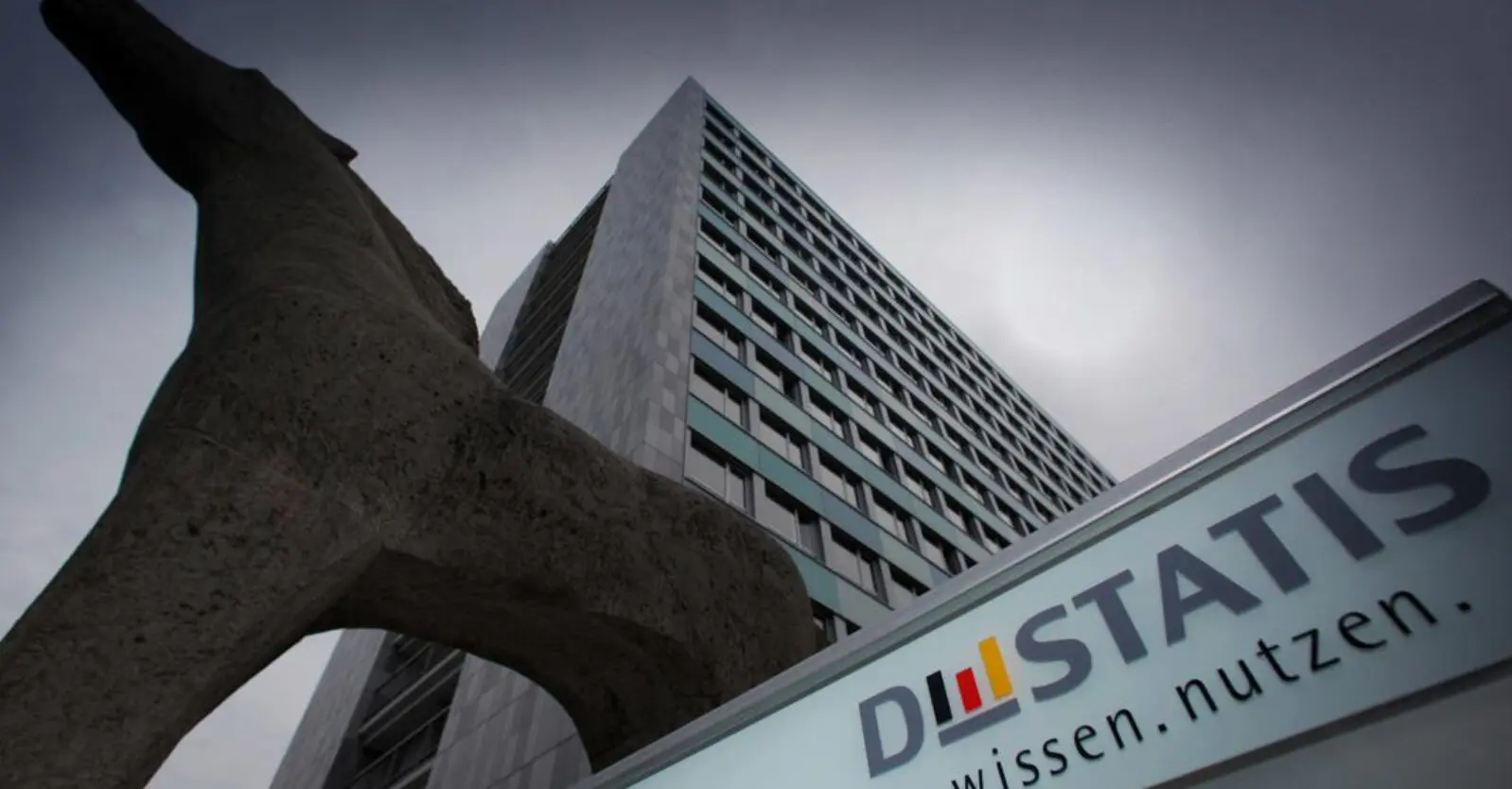
Germany’s gross domestic product grew 0.3 percent in the second quarter of 2026 from the previous quarter, in price, seasonally and calendar adjusted terms, a touch stronger than the 0.2 percent first reported, even as the general government deficit widened to 71.3 billion euros in the first half of the year, the Federal Statistical Office said on Tuesday.
The office revised first-quarter growth up to 0.4 percent. With growth of 0.3 percent in the fourth quarter of 2025 and 0.4 percent in the first quarter of 2026, the economy has now expanded for three consecutive quarters, after the third quarter of 2025 was flat, a clearer break from the stagnation of the previous two years.
Trade led, investment lagged
The quarter’s growth was led by exports, up 2.0 percent, while imports rose 1.5 percent. Household and government consumption each edged up 0.1 percent, and gross fixed capital formation fell 0.2 percent, as investment in machinery and equipment dropped 1.4 percent and investment in construction rose 0.1 percent. Measured against a year earlier, output was 1.0 percent higher, and manufacturing gross value added rose 1.1 percent from a year earlier, its first annual increase since the first quarter of 2023.
Net trade contributed 0.2 percentage points to the quarter’s 0.3 percent growth, so net trade accounted for about two thirds of the expansion, on our calculation, while domestic use added just 0.1 percentage point, leaving the recovery still leaning on exports rather than on a broad pickup at home.
| Component, quarter on quarter | Change |
|---|---|
| Exports | +2.0% |
| Imports | +1.5% |
| Household consumption | +0.1% |
| Government consumption | +0.1% |
| Construction investment | +0.1% |
| Gross fixed capital formation | −0.2% |
| Machinery and equipment investment | −1.4% |
| Gross domestic product | +0.3% |
Destatis, price, seasonally and calendar adjusted. Net exports contributed 0.2 percentage points to quarterly growth.
The half-year deficit reached 3.1 percent of GDP
The general government deficit reached 71.3 billion euros in the first half of 2026, equal to 3.1 percent of gross domestic product, above the 3 percent Maastricht reference value, though the office cautioned that only limited conclusions about the full-year result can be drawn from six months of data, so the half-year ratio does not by itself establish a full-year breach. The shortfall was 36.6 billion euros larger than in the same period of 2025.
Revenue rose 2.8 percent to 1,073.2 billion euros while spending rose 6.1 percent to 1,144.5 billion euros, so expenditure grew 3.3 percentage points faster than revenue, on our calculation, which is the arithmetic behind the widening gap. The fastest-rising spending line was investment grants, up 19.8 percent to 27.5 billion euros, followed by other current transfers at 11.8 percent, interest payments at 11.6 percent to 27.3 billion euros, subsidies at 10.1 percent to 25.8 billion euros and social benefits in kind at 8.2 percent to 222.5 billion euros.
The federal government drove most of the deterioration. Its deficit of 48.1 billion euros was about 67.5 percent of the general government total, on our calculation, and its 29.0 billion euro increase from a year earlier accounted for roughly four fifths of the 36.6 billion euro rise in the overall deficit, on our calculation. The states ran a combined deficit of 6.5 billion euros and municipalities 14.8 billion euros, while the social insurance funds swung to a 1.8 billion euro deficit from a 3.8 billion euro surplus a year earlier, mainly on higher statutory health and long-term care spending.
| Measure, first half 2026 | Value | Change |
|---|---|---|
| Revenue | 1,073.2 billion euros | +2.8% |
| Expenditure | 1,144.5 billion euros | +6.1% |
| Deficit | 71.3 billion euros | 36.6bn wider than H1 2025 |
| Deficit ratio, H1 | 3.1% of GDP | above the 3% reference |
| Investment grants | 27.5 billion euros | +19.8% |
| Interest payments | 27.3 billion euros | +11.6% |
Why it matters: Three consecutive quarters of growth mark a clearer improvement after two broadly flat years, but the composition is thin, with about two thirds of the quarter’s expansion coming from net trade while fixed investment contracted, which leaves the recovery exposed to external demand. The fiscal side is moving the other way: half-year spending grew far faster than revenue, the federal government generated about two thirds of the deficit, and the half-year deficit ratio sits above the 3 percent reference, though the office cautions that the full-year outcome cannot be inferred from six months of data.
Outlook: The detailed third-quarter figures and the autumn tax estimates will show whether domestic investment turns and how the full-year deficit ratio settles, a question that will shape the debate over Germany’s fiscal rules heading into the 2027 budget.
Sources: Federal Statistical Office (Destatis).