5 of 8 Recipients Are Insurers but 77 Percent of China 300 Billion Goes to 3 Banks
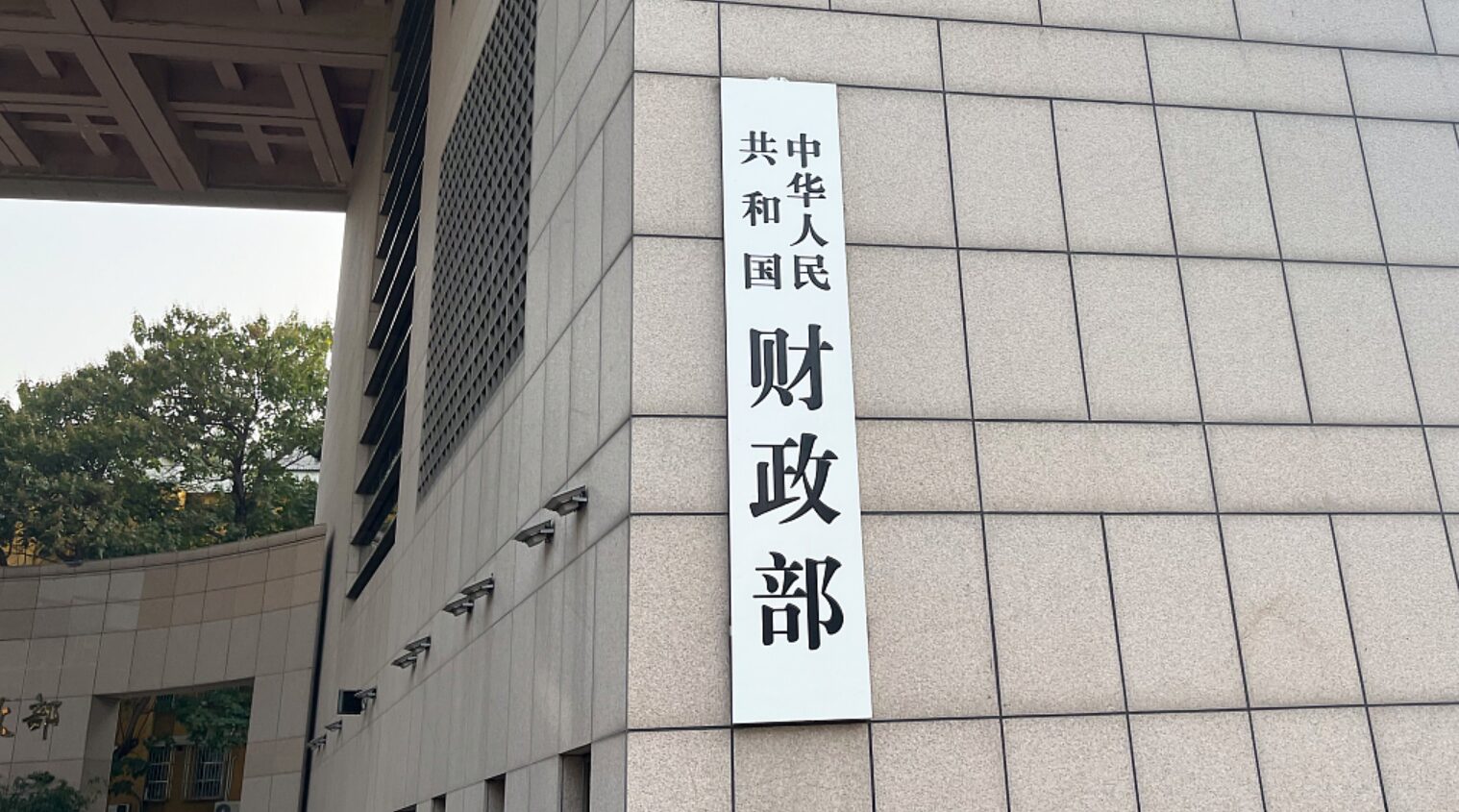
China’s finance ministry will issue 300 billion yuan of special treasury bonds to replenish the core tier one capital of eight state financial institutions, it said on Monday. Five of the eight are insurers. They receive 70 billion yuan between them, 23.3 percent of the money, on our calculation.
The ministry published no split. The institutions did, the day before, and the split is the story.
Five of eight names, a quarter of the capital
| Institution | Type | Ministry subscription, billion yuan |
|---|---|---|
| Agricultural Bank of China | Bank | 130 |
| Industrial and Commercial Bank of China | Bank | 70 |
| China Life Insurance Group | Insurer | 35 |
| Export-Import Bank of China | Bank | 30 |
| PICC Group | Insurer | 15 |
| China Export and Credit Insurance Corporation | Insurer | 10 |
| China Taiping Insurance Group | Insurer | 7 |
| China Reinsurance Group | Insurer | 3 |
| Total | 300 |
Each amount comes from the institution’s own disclosure of 6 September, either an exchange filing or a statement on its own site. They sum to the 300 billion yuan named in the 7 September statement. Ranked by size. The bank and insurer classification is ours; the statement lists the eight without categorising them.
The three banks take 230 billion yuan, or 76.7 percent, on our calculation. Agricultural Bank of China alone takes 130 billion, more than the five insurers combined. So the insurers are the majority of the names and a minority of the money, and the two facts point in opposite directions.
The published rationale covers all eight together and does not distinguish the insurers from the banks: they are described as operating soundly, with stable asset quality and regulatory indicators within a safe range, and the capital is said to strengthen their capacity for sound operation, risk resistance and service to the real economy. The bonds are to be issued shortly. No dollar figure appears in the statement.
Two different routes into the balance sheet
The eight do not all get the money the same way. Four raise it by issuing shares to a named subscriber: Agricultural Bank of China, Industrial and Commercial Bank of China, PICC Group and China Reinsurance Group. The other four, the Export-Import Bank, China Export and Credit Insurance Corporation, China Life Insurance Group and China Taiping Insurance Group, take a direct injection with no shares issued.
The two commercial banks are also raising money beyond the bond proceeds. Industrial and Commercial Bank of China is placing up to 100 billion yuan of A shares, of which the ministry takes 70 billion and five state tobacco entities the remaining 30 billion. Agricultural Bank of China is raising up to 160 billion on the same pattern, 130 billion from the ministry and 30 billion from a different set of tobacco and investment companies. Across all eight the combined raise is 360 billion yuan, of which the bond issue is 300 billion.
Where shares are issued they are locked up for five years.
What the tender offer waiver does and does not show
Industrial and Commercial Bank of China has asked shareholders to exempt the ministry from making a mandatory tender offer. The filing sets out why. The ministry already holds 110,984,806,678 shares, 31.14 percent of the bank, before the placement. Under the takeover rules an acquirer whose interest has reached 30 percent and who keeps acquiring must otherwise make an offer to all shareholders, and the exemption applies where non-connected shareholders approve and the investor commits not to transfer the new shares for three years. The ministry has committed to five.
So the waiver is evidence that an already controlling holding is being increased, not that the state is crossing a threshold for the first time. The bank states the transaction will not change its controlling shareholder.
The statement presents the issuance as a decision of the party leadership and the State Council, to be carried out on market-based and rule-of-law principles. It is not described as a tranche of an existing programme and no programme total is given.
Why it matters: Recapitalising banks with sovereign paper is a familiar instrument. Reaching five insurers in the same programme is a broader use of it, and insurers are where long-dated liabilities meet a low-yield domestic bond market. But the allocation says the balance of concern still sits with the banks, which take more than three quarters of the capital, and with one bank in particular. The insurer count is the novelty; the money is conventional.
Outlook: The bonds are described as imminent, so pricing and timing should surface within days. The open questions are narrower than they were before the filings: whether the three other share issuers seek the same tender offer waiver, which would show the state thickening its holding in more than one institution at once, and whether the four direct injections carry any conditions at all, since no shares change hands and no lock-up applies to them.
Sources: Ministry of Finance of the People’s Republic of China, Industrial and Commercial Bank of China, Agricultural Bank of China, PICC Group, China Reinsurance Group, Export-Import Bank of China, China Life Insurance Group, China Taiping Insurance Group, China Export and Credit Insurance Corporation.