El-Sisi Receives the Saudi Crown Prince in Cairo as Bilateral Trade Reaches 18.1 Billion Dollars
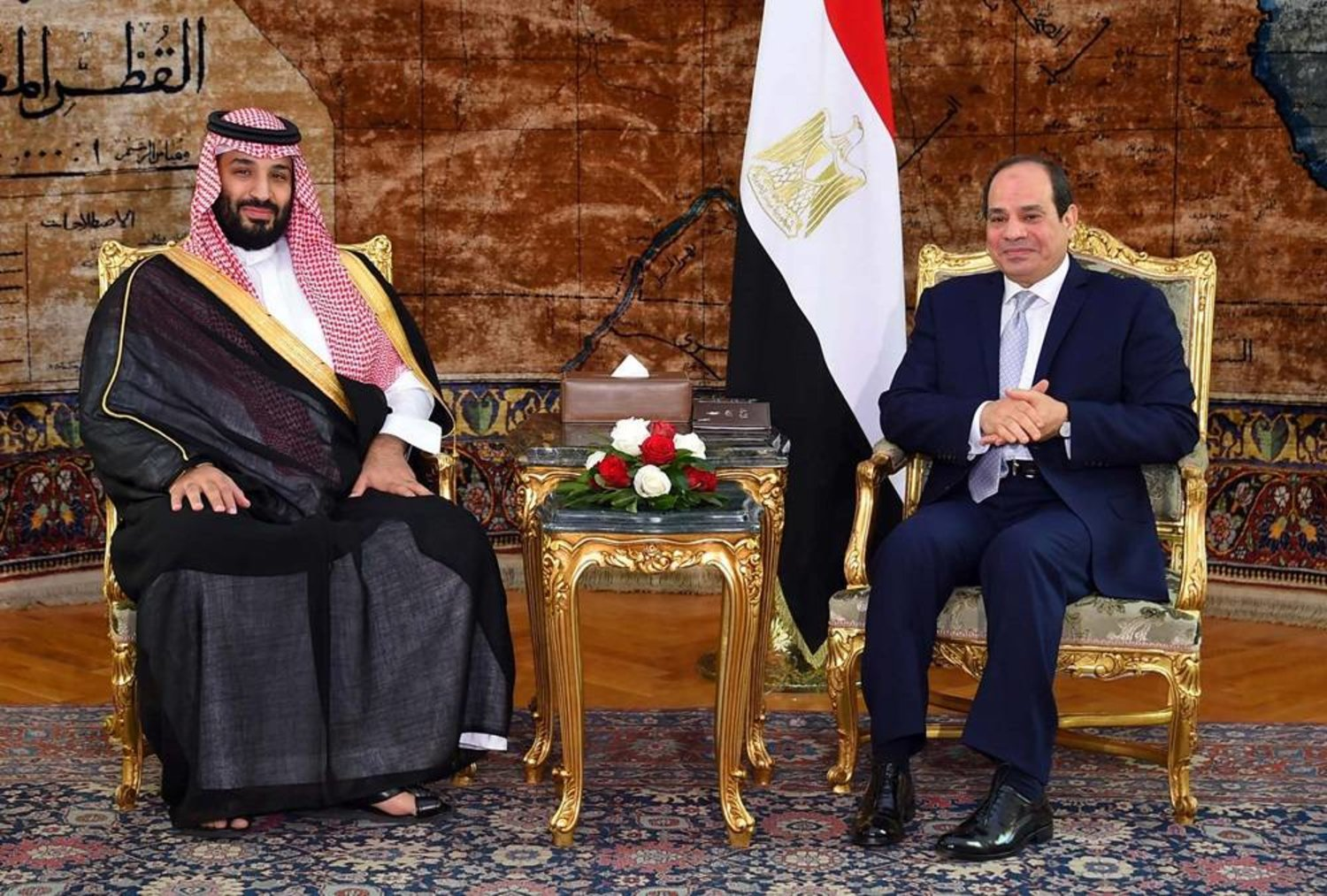
President Abdel Fattah El-Sisi received Crown Prince Mohammed bin Salman in Cairo on Tuesday, and the two leaders held a bilateral meeting followed by an expanded session of talks at Al-Ittihadiya Palace. The Saudi Press Agency reported that they reviewed strategic bilateral relations and ways to develop them further across various fields, and agreed to maintain direct consultation and coordination in the period ahead.
The talks rest on a trade relationship of considerable scale. Saudi Arabia and Egypt exchanged 18.1 billion dollars of goods in 2025, an increase of 11 percent on 2024, and 82.2 billion dollars across the five years from 2021, equivalent to a compound annual growth rate of 5.66 percent. Saudi Arabia is Egypt’s third largest trading partner globally.
Five years of trade at scale
| Saudi and Egyptian trade in goods | Figure |
|---|---|
| Total, 2021 to 2025 | 82.2bn dollars |
| Compound annual growth rate | 5.66% |
| 2025 | 18.1bn dollars |
| Change on 2024 | +11% |
As published by the Saudi Press Agency, drawing on General Authority for Statistics data.
The flows run in both directions and across distinct product groups. Plastics and articles thereof, together with organic chemicals, are among the principal Saudi exports to Egypt. Mineral fuels, oils and waxes, together with copper and articles thereof, are among the leading Egyptian goods sold into the Kingdom.
The institutions around that trade are active on both sides. The Saudi Commercial Attaché in Egypt works to ease access for Saudi exports into the Egyptian market and to attract Egyptian investment into the Kingdom, while the General Authority of Foreign Trade develops the Kingdom’s trade and investment relationships with partner markets and supports private sector access to them.
A council built to carry the relationship
Tuesday’s meeting sits inside a standing structure rather than alongside one. The two countries maintain a Saudi-Egyptian Supreme Coordination Council, and its General Secretariat held its first meeting in Riyadh in August 2025, co-chaired by Mohammed Al-Tuwaijri, Advisor at the Royal Court and Secretary General on the Saudi side, and by Lieutenant General Kamel Al-Wazir, Egypt’s Deputy Prime Minister for Industrial Development and Minister of Industry and Transport, who serves as Secretary General on the Egyptian side.
That secretariat met specifically to review joint plans in preparation for a session of the Supreme Coordination Council to be co-chaired by the Crown Prince and President El-Sisi. Both sides described the council, in the agency’s account, as the main platform for coordinating efforts across all fields, and affirmed their keenness to advance relations toward broader horizons.
The investment channel has its own framework. In March 2022 the two governments signed joint minutes in Cairo agreeing a draft intergovernmental agreement on Public Investment Fund investment in Egypt. It was signed by Dr. Essam bin Saad bin Saeed, Saudi Minister of State and Cabinet member, and Dr. Hala Al-Saeed, then Egypt’s Minister of Planning and Economic Development and chair of The Sovereign Fund of Egypt, in the presence of Prime Minister Mostafa Madbouly and with the Fund’s head of Middle East and North Africa investments in attendance.
Dr. Essam bin Saad bin Saeed was in the room again on Tuesday, as part of the Saudi delegation alongside Minister of Foreign Affairs Prince Faisal bin Farhan and Minister of State and National Security Adviser Dr. Musaed Al-Aiban.
Maritime security is an economic subject for both
The Saudi readout is specific that the leaders addressed regional security and stability, including maritime security and freedom of navigation, and ways to coordinate efforts in that regard. For two trading economies this is commercial ground as much as diplomatic ground.
Much of the goods trade in the table above moves by sea. Reliable access to international shipping routes underpins the Kingdom’s export system and its connection to global markets. Egypt’s position on the Red Sea and at the Suez Canal places it at one of the busiest trade corridors in the world, and secure navigation reinforces its standing as a transit, logistics and transport hub linking Asia, the Gulf, Europe and Africa.
Coordination between Riyadh and Cairo on that subject therefore serves both economies at once. It supports the continuity of Saudi trade flows and it strengthens the corridor on which a substantial part of Egypt’s external earnings and its regional role depend.
Why it matters: the commercial relationship between Saudi Arabia and Egypt is already operating at substantial scale. Eighteen billion dollars of goods in a single year, an 11 percent rise, and 82.2 billion dollars across five years is a partnership with real depth, compounding at 5.66 percent a year over the period. What gives Tuesday its weight is that the two leaders set that commerce alongside coordination on the conditions the region’s trade runs on. For Saudi Arabia that means dependable access to global markets for its exports. For Egypt it means the continued strength of the Red Sea and Suez corridor and the transit economy built around it. With a Supreme Coordination Council co-chaired at leader level, an active secretariat led by senior ministers on both sides, and an established investment framework with the Public Investment Fund, the two countries have the machinery to convert meetings of this kind into projects.
Outlook: the two leaders agreed to keep consulting directly in the period ahead, so the measure of Tuesday is what the existing mechanisms now carry. The Supreme Coordination Council is the principal leader level forum and its secretariat has been preparing a session to be co-chaired by the Crown Prince and President El-Sisi, which makes the timing of that session the clearest thing to watch. The investment framework agreed with the Public Investment Fund in 2022 remains an established route for commercially driven projects, alongside the Council’s broader machinery. On the trade side, the next full year figures will show whether the 11 percent increase recorded in 2025 carries into 2026.
Sources: Saudi Press Agency, Presidency of the Arab Republic of Egypt, General Authority for Statistics via SPA.