Egypt’s Largest Solar-and-Battery Project Could Save US$400 Million a Year in Gas Imports
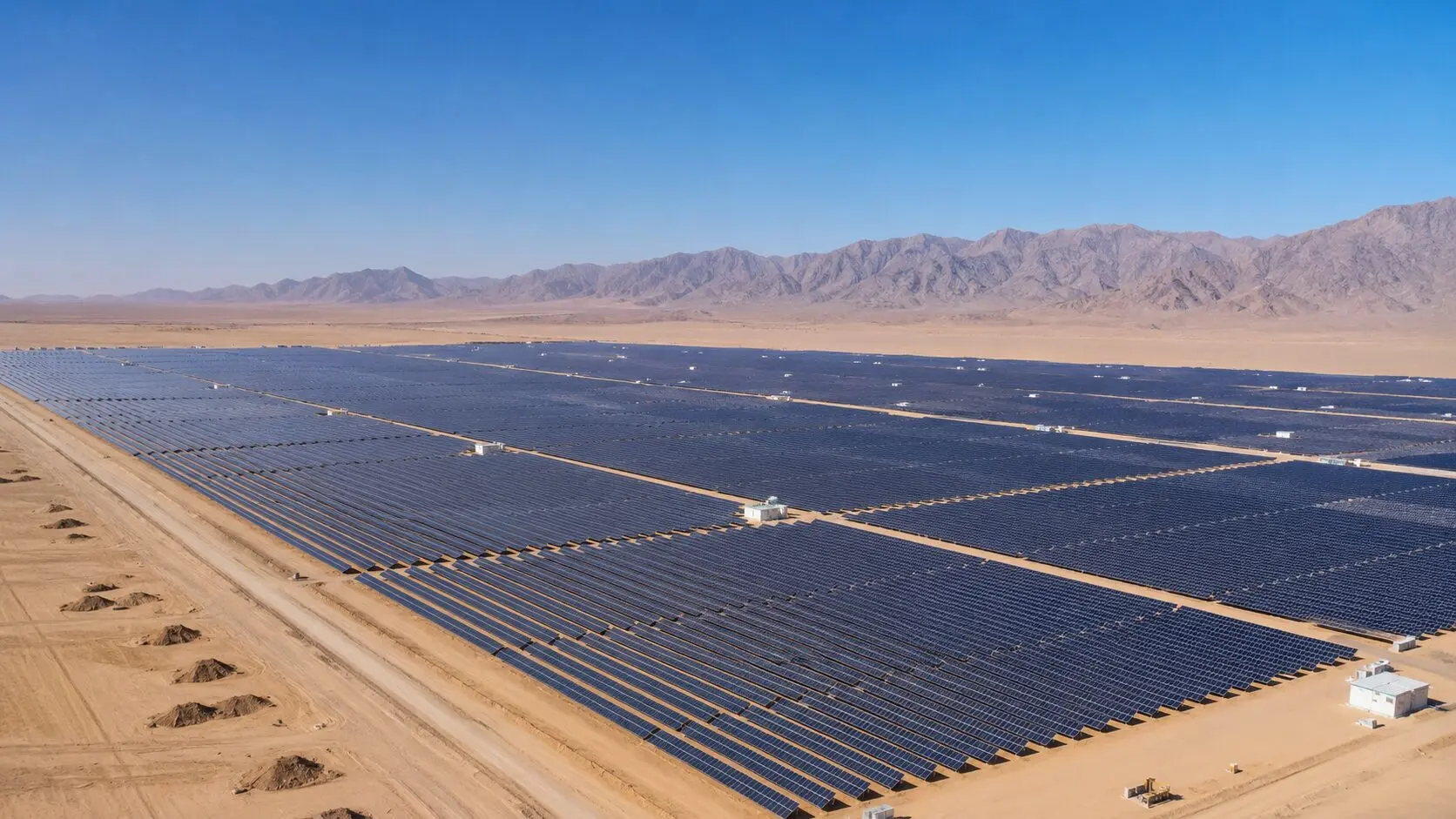
Egypt stands to save as much as US$400 million a year in liquefied natural gas (LNG) imports thanks to its largest solar-and-battery project, the Obelisk plant being built by Norway’s Scatec, the company’s chief executive said. The figure underscores how renewable capacity is becoming a tool of energy security and fiscal relief for Egypt, not just a climate goal.
Speaking on 19 June 2026, Scatec Chief Executive Terje Pilskog framed the roughly US$590 million Obelisk project as a direct substitute for costly imported gas. By generating electricity from the sun and storing it in batteries, the plant displaces fuel that Egypt would otherwise have to buy on volatile international LNG markets — easing pressure on both the import bill and scarce foreign currency.
Africa’s largest hybrid solar-and-battery plant
The Obelisk project, located in Egypt, is set to become Africa’s largest hybrid solar-and-storage installation. It combines about 1.1 gigawatts of solar generation with a 100-megawatt/200-megawatt-hour battery system, and will supply power to the Egyptian Electricity Transmission Company (EETC) under a 25-year power purchase agreement.
The project is being delivered in phases. The first phase — 561 megawatts of solar capacity paired with the full 100-megawatt/200-megawatt-hour battery — reached commercial operation in February 2026. The remaining 564 megawatts of solar capacity is under construction and targeted for completion in the second half of 2026. The battery component is central to the savings: by storing solar power generated during the day and releasing it after sunset, the plant can replace gas-fired generation during evening peak demand, when Egypt’s grid is most stretched.
Why it matters for Egypt
The economics are as important as the megawatts. Egypt has swung between being a gas exporter and an importer in recent years as domestic production has fluctuated and demand has climbed. When local output falls short, the country turns to imported LNG — an expensive, dollar-denominated purchase that weighs on public finances and the balance of payments. A project that could cut that bill by as much as US$400 million a year, according to Scatec, is therefore a fiscal and external-account story as much as an energy one.
It also fits a clear national direction. Egypt has been expanding renewable capacity to diversify its power mix, free up gas for higher-value uses or export, and attract foreign investment into infrastructure. Large international developers committing capital to Egyptian solar — and financing it through development institutions — is a vote of confidence in that strategy at a time when the country is working to stabilise its economy and rebuild investor confidence.
The wider context
The announcement lands against a tense regional energy backdrop. Recent conflict-driven disruption has kept Middle East energy markets volatile and underscored the value, for net importers, of domestic generation that is insulated from international fuel-price swings. For Egypt, every gigawatt of solar that displaces imported gas is a hedge against exactly that kind of volatility, as well as a contribution to its longer-term decarbonisation targets.
Outlook
With the first phase already running and the remainder due by the end of 2026, the Obelisk plant will be a test case for how far solar-plus-storage can reshape Egypt’s power economics. If the projected savings materialise, the model — large-scale solar paired with batteries to replace evening gas burn — is likely to be replicated, accelerating a shift that turns renewable energy into a pillar of Egypt’s energy security and fiscal consolidation, not merely an environmental commitment.
Sources: Bloomberg; Scatec.