Gold Outlook 2026: Base Case Points to US$4,800–5,100 as June Forecasts Show Wider Upside Risk

Gold’s 2026 outlook has become more divided after a series of June updates from major banks and market institutions. While the wider forecast range extends from near-term caution around US$4,000 to US$4,500 per oz to bullish expectations near US$6,000, the most likely scenario appears narrower.
The central institutional cluster points to a base case of roughly US$4,800 to US$5,100 per oz by the end of 2026. This reflects a market where structural demand remains strong, but where higher real yields, a firmer U.S. dollar and delayed Federal Reserve easing continue to limit the speed of upside.
Gold has pulled back from earlier highs, with recent trading around the low US$4,000s per oz. The correction has forced investors to reassess whether the metal is still in a structural bull market or simply repricing around a more difficult rate environment. The answer is likely both. Gold’s long-term demand story remains intact, but the next leg higher will need support from macro conditions.
Key insights
- The base case is US$4,800 to US$5,100 per oz by the end of 2026, supported by the clustering of Goldman Sachs and Barclays forecasts around the high US$4,000s.
- Goldman Sachs cut its end-2026 gold forecast to US$4,900 per oz from US$5,400, reflecting a more hawkish Federal Reserve path and reduced expectations for rate cuts.
- Barclays maintained its 2026 gold forecast at about US$4,791 per oz and its 2027 forecast at US$4,900 per oz, suggesting that the recent correction does not represent a structural breakdown.
- J.P. Morgan remains the bullish outlier among the June views, expecting gold to push toward US$6,000 per oz by year-end 2026, with US$6,300 possible in 2027.
- Citi’s June updates were more cautious and tactical, with public reporting showing a three-month target cut to US$4,000 earlier in June, while later reporting pointed to a near-term forecast around US$4,500 (with a six- to 12-month target near US$5,000).
- The World Gold Council does not provide a price target, but its June central-bank survey reinforces the demand backdrop, with a record share of reserve managers expecting higher official-sector gold holdings over the next 12 months.
The June forecast set shows that the market is being pulled between structural support and cyclical pressure. On the supportive side, gold continues to benefit from official-sector purchases, reserve diversification, fiscal concerns and geopolitical fragmentation. These are slow-moving forces, but they have become central to the long-term gold narrative.
On the restrictive side, gold remains highly sensitive to real interest rates and the U.S. dollar. Because gold does not generate yield, its relative appeal weakens when real rates rise. This explains why recent geopolitical stress has not automatically produced a sustained gold rally. If conflict or energy disruption raises inflation expectations, investors may price tighter monetary policy rather than easier financial conditions.
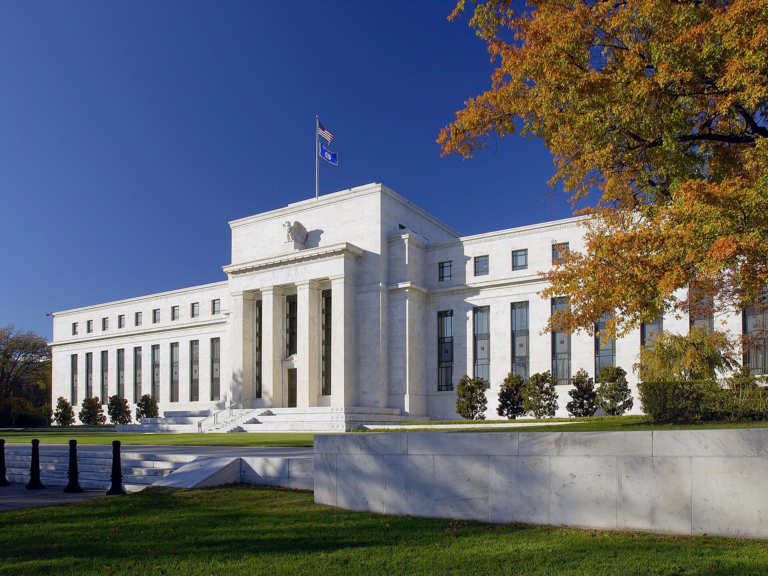
Goldman Sachs’ downgrade reflects this shift clearly. The bank still expects gold to rise from current levels, but the reduction in its end-2026 target shows that a more hawkish Fed outlook can cap the scale of gains. The key macro risk is that stronger inflation or activity keeps policy tighter for longer.
Barclays takes a similar but slightly more balanced view. By maintaining its 2026 forecast near US$4,791 per oz, the bank appears to view the recent selloff as a temporary adjustment rather than the end of the broader gold cycle. This position sits close to Goldman’s revised US$4,900 end-2026 forecast and supports the view that the most likely outcome is closer to US$5,000 than US$6,000.
J.P. Morgan remains the clear upside scenario. Its view that gold could push toward US$6,000 per oz by year-end 2026 implies that investor demand and central-bank buying may reaccelerate in the second half of the year. That outcome would likely require softer real yields, renewed ETF inflows, sustained official-sector accumulation and a weaker dollar.
Citi’s position is better read as a downside or tactical-caution signal. Its public June updates point to near-term pressure, with a three-month target cut to US$4,000 earlier in the month and later reporting around a US$4,500 near-term forecast, while its six- to 12-month target stayed near US$5,000. This does not directly contradict the year-end base case, but it does show that gold could remain volatile before any more durable recovery develops.
The World Gold Council’s June survey supports the structural demand argument rather than the price forecast itself. Central banks continue to view gold as a strategic reserve asset at a time of geopolitical tension, policy uncertainty and shifting confidence in traditional reserve currencies. This supports the idea that official-sector demand may provide a floor for the market, even when investor positioning becomes volatile.
The most likely scenario is therefore constructive but not aggressive. A move toward US$4,800 to US$5,100 by year-end 2026 would be consistent with continued central-bank buying, moderate investor demand and some easing of rate pressure. A move toward US$6,000 would require a stronger bullish catalyst, especially a clear decline in real yields and a weaker U.S. dollar.
Outlook
The June forecast set suggests that gold remains supported, but the market is no longer trading as a simple one-direction safe-haven story. The wider forecast range remains broad, but the probability-weighted base case points closer to US$4,800 to US$5,100 per oz.
A move toward the lower end of the broader range would likely require persistent dollar strength, higher real rates and weak ETF demand. A move toward the upper end would require renewed investor inflows, softer monetary conditions and continued central-bank accumulation.
Overall, the outlook remains constructive but volatile. Gold’s structural demand story is intact, but the next leg higher depends on whether macro conditions begin to support the metal again.
Sources: Goldman Sachs; J.P. Morgan Global Research; Citi Research; Barclays; World Gold Council; Reuters; Bloomberg; CNBC. Verified market reporting as of 20 June 2026.