Egypt Doubles Down on Privatization: Draft State-Ownership Policy Targets a 65% Private-Sector Share and 7% Growth by 2030
Egypt has unveiled the draft of a more ambitious second edition of its State Ownership Policy, the framework that defines where the state will stay invested in the economy and where it will step back for private capital. Presented by the government on 17 June 2026 under the theme “Deepening Reform and Maximizing Impact 2026–2030,” the document sets a headline goal of lifting the private sector’s contribution to economic activity above 65 percent by 2030 and supporting GDP growth of more than 7 percent. Prime Minister Mostafa Madbouly said the final version is expected to be completed before 30 September 2026, after a period of consultation with investors and experts.
The draft is a renewal rather than a new departure. The first State Ownership Policy, launched in 2022, has expired, and its successor arrives after what officials described as an unprecedented drop in private investment between 2023 and 2025, driven largely by external shocks. Re-establishing the private sector as the lead partner in growth — and signalling that intent to both domestic and foreign investors — is the central purpose of the update.
The headline targets
The 65 percent ambition is the figure most likely to travel. Over the past three years, the private sector’s share of total investment has surpassed 56.5 percent, and Madbouly argued that, with the right conditions, the 65 percent threshold could be reached within two years rather than by the 2030 horizon. Pairing that with a stated growth target above 7 percent frames the policy explicitly as a private-sector-led growth strategy, not merely an asset-disposal programme.
What is new in the second edition
The revised document marks a clear evolution in approach. According to Osama El-Gohary, Assistant to the Prime Minister and head of the Information and Decision Support Center (IDSC), the new edition introduces 12 key changes, a dedicated chapter setting out the state’s economic role through seven core functions, and a sharper focus on 13 priority sectors. Crucially, where the first edition judged state involvement mainly sector by sector, the second adopts a portfolio-management approach, taking decisions at the company level while weighing the overall asset mix. State ownership, the draft says, should be confined to activities with a clear strategic, sovereign or social justification, with the remaining assets managed on investment principles.
For the first time, the policy also brings the country’s economic authorities inside its scope — a significant step toward centralising state asset management. The State-Owned Enterprises Unit is to examine restructuring state entities, including these authorities, into joint-stock companies governed by the Companies Law, while commercially viable assets could be transferred to specialised vehicles, foremost the Sovereign Fund of Egypt, to improve governance and oversight. The government also approved an Economic Entities Platform, to be overseen by the Ministry of Investment and Foreign Trade, intended to unify and simplify investor services such as licensing and approvals. In drafting the update, El-Gohary said, Egypt drew on the experience of nine countries, including Norway, Sweden, Germany, Finland, Italy and Switzerland, reflecting an effort to align the framework with international practice on the separation of ownership and regulation, transparency and measurable performance.
The track record so far
The reset comes against a mixed implementation record. By the government’s own account, the first policy generated about US$5.9 billion from 23 divestment transactions; including the large Ras El-Hekma and Alam El-Roum land agreements, El-Gohary put the cumulative total at roughly US$37 billion. The IDSC’s third follow-up report found that 48 percent of the document’s four implementation phases had been completed in 2025, generating US$5.86 billion.
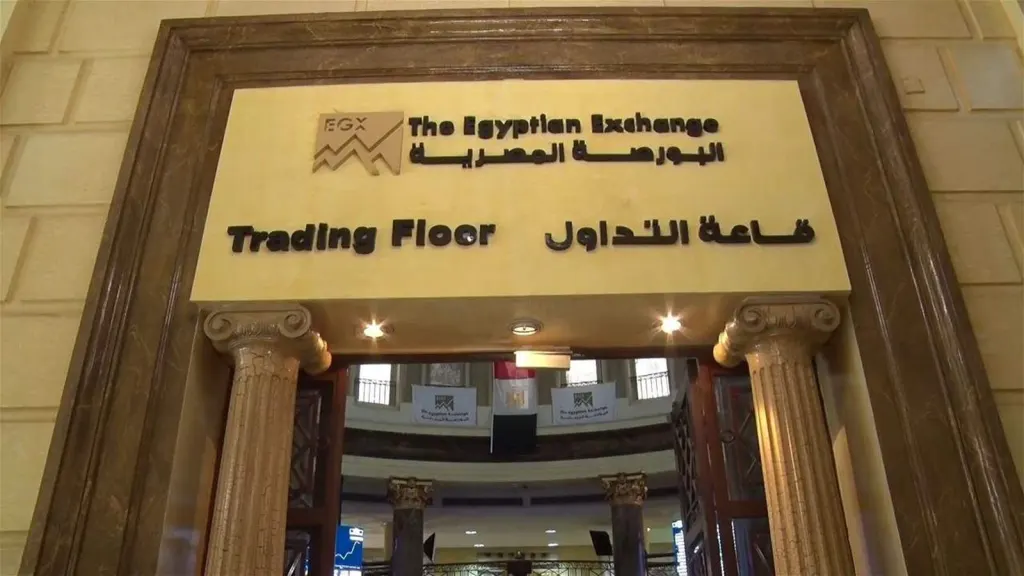
The capital-markets leg has moved more slowly. The state IPO programme, launched in 2023, initially aimed to list 35 government companies on the Egyptian Exchange (EGX), with plans to add around ten more and four military-affiliated firms, targeting some US$5 billion. In practice, while several state firms have been technically listed and a number of stake sales to strategic investors have advanced, full public offerings have yet to materialise — a reflection of the EGX’s absorption capacity amid elevated interest rates and market volatility, and a reminder that selling stakes to strategic investors has often delivered more value than public floats. Banque du Caire is now being prepared for an EGX listing by November 2026, in what would be a notable test of investor appetite.
The IMF dimension
The timing is deliberate. The launch comes as Egypt awaits IMF decisions on the seventh review of its US$8 billion Extended Fund Facility and the second review under the Resilience and Sustainability Facility. An IMF staff mission visited Cairo in May to discuss the reviews, with Executive Board consideration expected over the summer; a successful outcome could unlock about US$1.6 billion in financing. Egypt’s IMF programme is set to conclude in mid-December 2026, while the new ownership policy runs to 2030 — a gap Madbouly leaned on in insisting the framework is “homegrown” and not imposed by the Fund. The updates were nonetheless informed by comments from Fitch Solutions, the World Bank Group and the IMF, all of which had flagged that the first edition leaned toward retaining minority stakes rather than full exits.
Divestment is also fiscally consequential. The most recent published IMF review noted that Egypt’s primary balance had fallen short of target in the absence of programmed divestment proceeds — underscoring that asset sales are not only a structural-reform commitment but a budget line the authorities are counting on. With debt-servicing costs absorbing close to three-quarters of total revenues in the first ten months of FY2025/26 by official figures (Fitch puts interest payments nearer 61 percent of revenue for the year), the fiscal case for accelerating private participation is pressing.
Why it matters
For Egypt, the second edition is a signal of intent at a delicate moment. The economy is navigating the aftermath of regional conflict that has weighed on Suez Canal receipts and external flows, even as inflation eases and the pound has firmed back to just under EGP 50 to the dollar. A credible, well-sequenced withdrawal of the state from competitive sectors would widen the space for private and foreign investment, ease the fiscal burden and support the medium-term growth the government is targeting. For the wider region and for international investors, Egypt is one of the largest reform stories in MENA, and the credibility of its privatization agenda feeds directly into sovereign-risk perceptions and capital flows across frontier markets.
The challenge, as before, is execution. Past editions set out ambitious withdrawal maps that ran into market conditions, valuation concerns and the practical difficulty of floating large state assets on a relatively thin exchange. The portfolio approach, the inclusion of economic authorities and the centralisation of assets under the Sovereign Fund are designed to address some of those frictions. Whether they translate into completed offerings — rather than announced intentions — will determine if the 65 percent target is a credible 2030 destination or another aspirational headline.
Outlook
The next milestone is the final version of the document, due before the end of September. Beyond that, the market will watch the pace of actual transactions, the Banque du Caire listing later in 2026 and the IMF’s forthcoming decisions for confirmation that Egypt’s reform momentum is being sustained. The draft sharpens the ambition; delivery over the coming year will decide how much it changes the shape of the economy.
Sources: Egyptian Cabinet / Information and Decision Support Center (IDSC), via Ahram Online; International Monetary Fund; Fitch; World Bank Group.