EU Names 46 New Strategic Raw Materials Projects as Recycling Moves to the Front
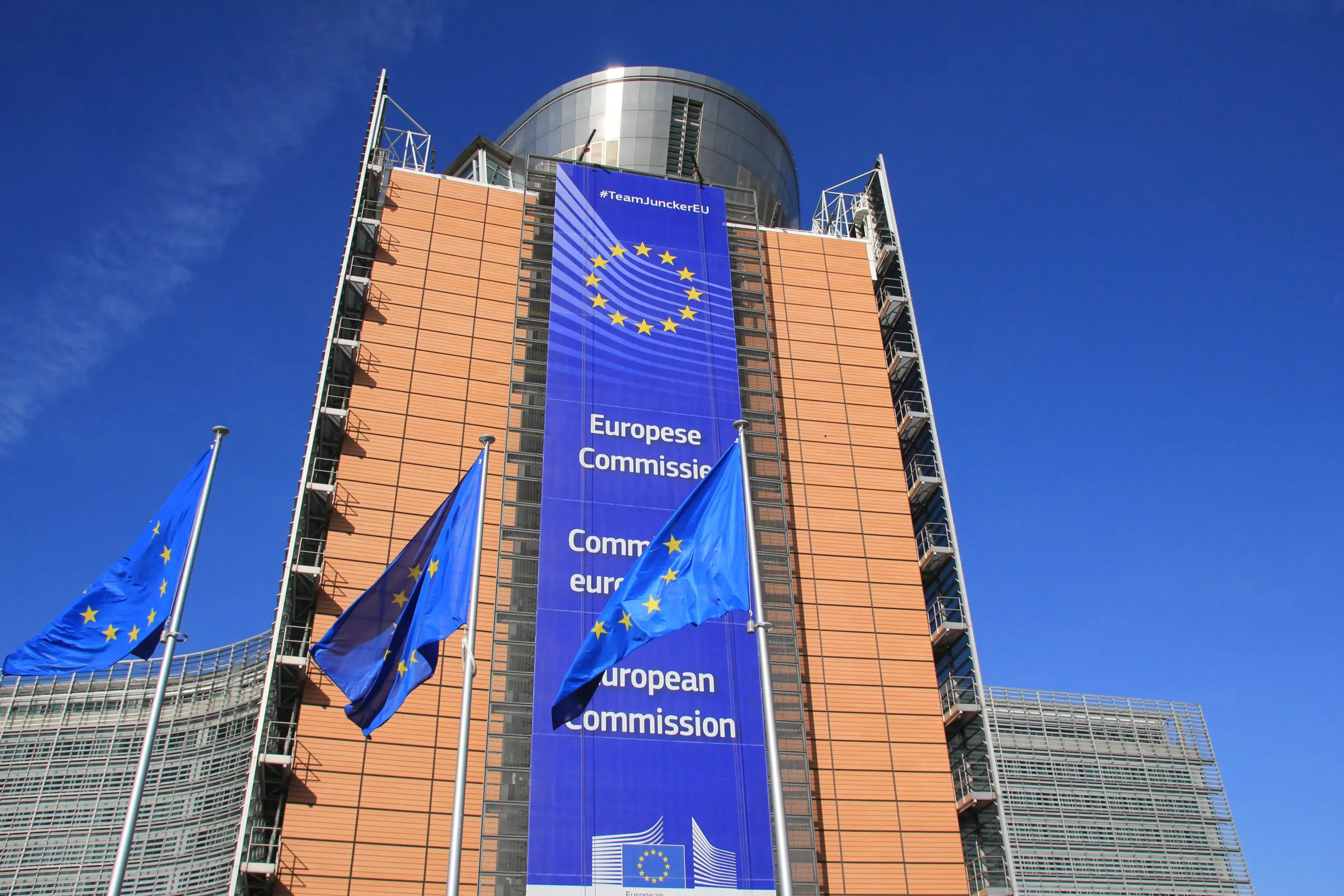
The European Commission selected 46 new strategic projects under the Critical Raw Materials Act on 9 October 2026, spread across 16 member states and chosen from 102 applications, which takes the number of projects designated under the law to 106. The new list leans hard toward recycling: 19 of the 46 are pure recycling projects and 5 more combine processing with recycling, so 24 projects, or 52.2 percent, involve recycling on our calculation, against 10 in the first list of March 2025.
Stéphane Séjourné, Executive Vice-President for Prosperity and Industrial Strategy, summed up the approach as “reduce dependency, increase production in Europe”. The Act sets 2030 benchmarks under which EU capacity should meet at least 10 percent of annual consumption of strategic raw materials at the extraction stage, 40 percent at processing and 25 percent at recycling. It also aims to ensure that no more than 65 percent of annual consumption of any strategic raw material at a relevant stage of processing comes from a single third country.
A second list weighted to recycling and processing
Counting every project that touches a stage, including the 8 integrated projects, 11 involve extraction, 19 involve processing and 24 involve recycling, on our calculation. The first list had 10 recycling projects and 2 substitution projects, so the count of projects with recycling is now 2.4 times the first list’s, while substitution has dropped out altogether.
The 46 new strategic projects by stage
| Stage | Projects | Share of 46 (%) |
|---|---|---|
| Recycling | 19 | 41.3 |
| Processing | 11 | 23.9 |
| Extraction | 8 | 17.4 |
| Integrated, processing and recycling | 5 | 10.9 |
| Integrated, extraction and processing | 3 | 6.5 |
Shares are our calculation on the published split of 9 October 2026.
Selection was tight. Applications came from 18 member states and 92 of the 102 were assessed by the Commission and external experts, so 45.1 percent of all applications and exactly half of those assessed made the list, on our calculation.
The projects cover 15 of the 17 strategic raw materials. Of the materials the release names, battery materials lead: 7 projects on lithium, 12 on nickel, 10 on cobalt, 5 on manganese and 4 on graphite. The 2 magnesium and 3 tungsten projects will contribute to defence and aerospace, and the 4 rare earth projects will support the permanent magnet value chain; titanium and silicon metal also appear. Several projects handle more than one material: on our count from the published project list, the 38 battery-material listings sit in 18 of the 46 projects, or 39.1 percent. Copper appears in 19 projects, more than any other material and one more than the 18 battery-material projects combined: 11 recycling, 2 processing and 6 of the 8 extraction projects. Boron, which featured in the first list, does not appear in the second.
Germany, France and Finland carry the largest share
Germany hosts 8 projects, or 17.4 percent of the list, and none is a stand-alone extraction or processing project: 2 are lithium extraction and processing projects, 3 are processing and recycling hybrids and 3 are recycling projects, giving Germany 5 of the 8 integrated projects. Finland’s 5 projects are 3 extraction and 2 processing, so it hosts 3 of the 8 extraction projects. Together Germany, France and Finland account for 18 projects, or 39.1 percent, on our calculation.
Where the 46 projects sit
| Member state | Projects | Share of 46 (%) |
|---|---|---|
| Germany | 8 | 17.4 |
| France | 5 | 10.9 |
| Finland | 5 | 10.9 |
| Italy | 4 | 8.7 |
| Netherlands | 4 | 8.7 |
| Greece | 3 | 6.5 |
| Poland | 3 | 6.5 |
| Belgium, Romania, Slovakia, Spain | 2 each | 4.3 each |
| Bulgaria, Estonia, Lithuania, Portugal, Sweden | 1 each | 2.2 each |
| Cross-border | 1 | 2.2 |
Counts are our tally of the official project list; shares are our calculation. The cross-border entry is a defence-related recycling project for aluminium, magnesium and titanium spanning Italy, Poland, France and the UK.
Bulgaria, Lithuania, the Netherlands and Slovakia are new hosts; the first list covered 13 member states. Adding Czechia, which hosts first-list projects only, 17 member states now have at least one EU strategic project, on our count.
What 106 projects could deliver against the 2030 benchmarks
The coverage estimates published with the list apply to the full portfolio: the 46 new projects, the 47 EU projects of March 2025 and the 13 projects outside the EU selected in June 2025. Together they could fully meet the extraction benchmarks for lithium, nickel, rare earths, magnesium and tungsten, the processing benchmarks for lithium and rare earths, and the recycling benchmarks for lithium, cobalt and rare earths.
Processing benchmark coverage of all 106 projects
| Material | Potential share of benchmark covered (%) | Implied share of EU consumption (%) |
|---|---|---|
| Lithium | Fully met | 40 or more |
| Rare earths | Fully met | 40 or more |
| Cobalt | 89 | 35.6 |
| Tungsten | 57 | 22.8 |
| Magnesium | 51 | 20.4 |
Coverage is the published estimate of what all 106 projects could deliver. The processing benchmark is 40 percent of annual EU consumption. The implied share is our calculation: coverage multiplied by 40 percent.
On full delivery, cobalt would sit 4.4 percentage points short of the 40 percent processing line, on our calculation, while tungsten and magnesium would sit 17.2 and 19.6 points short. The single-supplier ceiling frames the magnesium gap: the Act’s official page, in figures it does not date, puts China’s share of EU magnesium supply at 97 percent, well above the 65 percent cap.
Money, permits and progress on the 2025 projects
The 46 projects are expected to need 21.1 billion euros of capital investment, an average of 459 million euros a project on our calculation, against 22.5 billion euros, or 479 million euros a project, for the first list. Strategic status does not automatically bring EU funding. Since the launch of RESourceEU, more than 2 billion euros in financial support has been committed to the 2025 projects through the Innovation Fund, State aid and the European Investment Bank.
Of the strategic projects selected in 2025, 25 have completed their environmental impact assessment and 17 hold a construction permit, while 22 have made significant progress towards securing offtake agreements. The Raw Materials Mechanism has generated more than 30 matches for 10 materials. Permits under the Act should take no longer than 27 months for extraction and 15 months for other projects, against the 5 to 10 years cited for permitting in March 2025.
Why it matters: The EU relies on third countries, principally China, for strategic raw materials, and the 2030 benchmarks turn that dependence into measurable targets. The second list is weighted to the later stages: more than half of the new projects involve recycling and more than 4 in 10 involve processing, the stage carrying the largest benchmark at 40 percent. With 106 projects, lithium and rare earths are covered on paper at all three stages, while cobalt, tungsten and magnesium processing still fall short, and the new list is expected to need 21.1 billion euros of capital investment to become operational.
Outlook: Brussels plans a further call for strategic project applications towards the end of 2026 and will announce projects outside the EU later this year. The test for the portfolio is delivery: permits, financing and offtake for the 93 EU projects. The next progress figures on impact assessments and permits will show how much of the projected coverage is on track.
Sources: European Commission, The Edge.