Federal Reserve Holds Rates at 3.50 to 3.75 Percent With Three Hike Votes
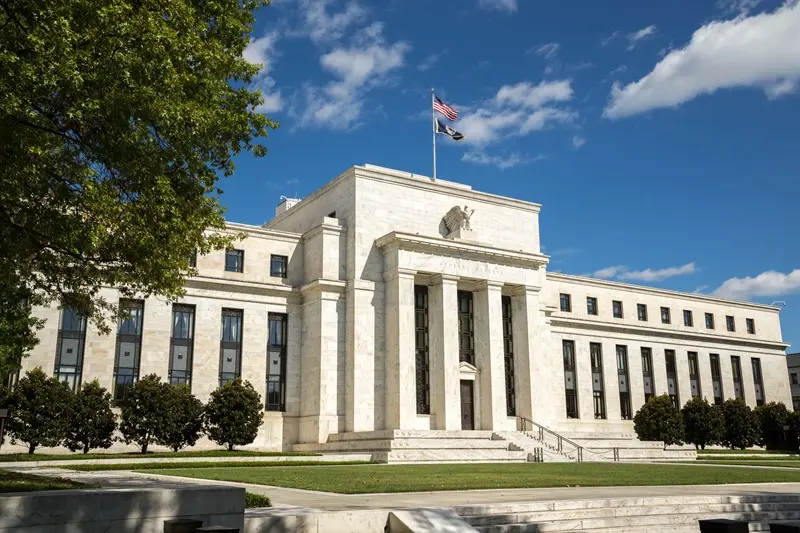
The Federal Reserve left its benchmark interest-rate range unchanged at 3.50 to 3.75 percent on 29 July, extending the pause to a fifth consecutive meeting. The rate itself did not move. The vote did: three officials broke with the majority and voted to raise the target range, the first votes for higher rates at any Federal Open Market Committee meeting this year.
Beth M. Hammack of the Federal Reserve Bank of Cleveland, Neel Kashkari of Minneapolis and Lorie K. Logan of Dallas voted against the decision. All three preferred to raise the target range by a quarter of a percentage point, which would have taken it to 3.75 to 4.00 percent. The action carried 9 to 3.
The range has stood at its present level since 10 December 2025, when the Committee lowered it by a quarter point. It has been maintained at every meeting since — January, March, April, June and now July.
The statement described economic activity as expanding at a solid pace despite elevated uncertainty, said job gains had kept pace with growth in the workforce and the unemployment rate had changed little, and repeated that inflation remains elevated relative to the Committee’s 2 percent goal, in part reflecting supply shocks that have driven price increases in certain sectors, including energy.
| Instrument | Rate or setting | Effective |
|---|---|---|
| Federal funds target range | 3.50 to 3.75 percent | Unchanged |
| Interest on reserve balances | 3.65 percent | 30 July 2026 |
| Primary credit rate | 3.75 percent | Existing level |
| Standing overnight repurchase agreement rate | 3.75 percent | 30 July 2026 |
| Overnight reverse repurchase agreement offering rate | 3.50 percent | 30 July 2026 |
| Reverse repurchase per-counterparty limit | 160 billion dollars a day | Unchanged |
Figures as published in the Committee’s statement and implementation note of 29 July 2026. Attribution: Board of Governors of the Federal Reserve System.
The administered rates that do the work
The interest rate paid on reserve balances is the Federal Reserve’s principal administered rate for holding overnight market rates inside the target range. At 3.65 percent it sits 10 basis points below the upper boundary of the range and 15 basis points above the lower boundary. It was not changed at this meeting.
Balance-sheet policy was also left in place. The Committee reaffirmed its ample-reserves framework and authorised the Open Market Desk to purchase Treasury bills, and if needed Treasury securities with remaining maturities of three years or less, when appropriate to maintain ample reserves. Principal payments from Treasury holdings continue to be rolled over at auction, and principal from agency debt and agency mortgage-backed securities continues to be reinvested in Treasury bills.
How the dissent changed direction during 2026
| Meeting | Decision | Vote | Dissenting position |
|---|---|---|---|
| 27 and 28 January | Hold | 10 to 2 | Two preferred a quarter-point cut |
| 17 and 18 March | Hold | 11 to 1 | One preferred a quarter-point cut |
| 28 and 29 April | Hold | 8 to 4 | One preferred a cut; three backed the hold but opposed an easing bias |
| 16 and 17 June | Hold | 12 to 0 | No dissents |
| 28 and 29 July | Hold | 9 to 3 | Three preferred a quarter-point increase |
The sequence is the story. In January and March the objections came from officials who wanted lower rates. In April, Hammack, Kashkari and Logan supported keeping the rate where it was but declined to endorse language they judged too inclined toward future easing, while Stephen I. Miran dissented separately in favour of a cut. June produced no dissent at all. In July the same three officials moved from objecting to the wording of the statement to voting for an actual increase.
That is an escalation on one flank, not a turn by the Committee. Nine of the twelve voters still supported standing still. The defensible reading is that the hawkish wing has hardened its position while the majority has not moved.
No Summary of Economic Projections was released at this meeting. The next one is due at the meeting on 15 and 16 September, which will carry updated projections and a fresh distribution of officials’ interest-rate expectations.
The data the decision was taken on
| Indicator | Reference period | Released | Reading |
|---|---|---|---|
| All items CPI, 12 months | June 2026 | 14 July | 3.5 percent |
| CPI less food and energy, 12 months | June 2026 | 14 July | 2.6 percent |
| PCE price index, 12 months | May 2026 | 25 June | 4.1 percent |
| Core PCE price index, 12 months | May 2026 | 25 June | 3.4 percent |
| Nonfarm payrolls, change | June 2026 | 2 July | 57,000 |
| Unemployment rate | June 2026 | 2 July | 4.2 percent |
The consumer-price data supported the majority’s decision to wait. The all items index fell 0.4 percent in June after rising 0.5 percent in May, the decline driven by energy, where the index dropped 5.7 percent over the month and gasoline fell 9.7 percent. Over twelve months the all items index was up 3.5 percent and the index excluding food and energy up 2.6 percent.
The measure that actually defines the target was less comfortable. The Committee’s 2 percent objective is stated in terms of the personal consumption expenditures price index, not the consumer price index. That index rose 4.1 percent over twelve months in May, with the core measure at 3.4 percent. The July decision was taken before the June reading was available; it is published on 30 July, alongside the advance estimate of second-quarter gross domestic product.
The labour data also argued against an immediate increase. Payrolls rose by 57,000 in June and the unemployment rate held at 4.2 percent. Modest hiring alongside a headline PCE rate above 4 percent is the tension the Committee is managing, and it is why one set of numbers produced both a nine-vote majority to wait and a three-vote minority to tighten.
What it means for the Gulf
All six Gulf Cooperation Council central banks carried their policy settings into the second half of the year unchanged. Two of them — the Central Bank of the UAE and the Qatar Central Bank — confirmed that formally on 29 July, within hours of the Federal Reserve. The remaining four required no announcement, either because their frameworks track the dollar mechanically or, in Kuwait’s case, because the currency basket removes the obligation to follow.
| Central bank | Instrument | Rate | Official status |
|---|---|---|---|
| Central Bank of the UAE | Base Rate | 3.65 percent | Maintained 29 July 2026 |
| Central Bank of Kuwait | Discount rate | 3.50 percent | Last changed 11 December 2025 |
| Central Bank of Kuwait | Overnight repurchase rate | 3.125 percent | Last changed 11 December 2025 |
| Central Bank of Kuwait | One-week repurchase rate | 3.375 percent | Last changed 11 December 2025 |
| Central Bank of Kuwait | One-month repurchase rate | 3.625 percent | Last changed 11 December 2025 |
| Saudi Central Bank | Repurchase agreement rate | 4.25 percent | Last changed 10 December 2025 |
| Saudi Central Bank | Reverse repurchase agreement rate | 3.75 percent | Last changed 10 December 2025 |
| Qatar Central Bank | QCB deposit rate | 3.85 percent | Maintained 29 July 2026 |
| Qatar Central Bank | QCB lending rate | 4.35 percent | Maintained 29 July 2026 |
| Qatar Central Bank | Repo rate | 4.10 percent | Maintained 29 July 2026 |
| Central Bank of Bahrain | One-week deposit rate | 4.500 percent | Published standing-facility schedule |
| Central Bank of Bahrain | Overnight deposit rate | 4.250 percent | Published standing-facility schedule |
| Central Bank of Bahrain | Overnight repurchase rate | 5.250 percent | Published standing-facility schedule |
| Central Bank of Oman | Policy repo rate for licensed banks | Federal funds upper bound plus 50 basis points | Announced weekly by formula |
The Central Bank of the UAE maintained its Base Rate at 3.65 percent on 29 July, following the Federal Reserve’s decision to keep the interest rate on reserve balances unchanged. It also maintained the rate applicable to borrowing short-term liquidity through all standing credit facilities at 50 basis points above the Base Rate. The Base Rate is anchored to the interest rate on reserve balances and provides an effective floor for overnight money-market rates in the UAE.
Kuwait retains more room for judgement, because the dinar is linked to an undisclosed weighted basket of currencies rather than to the dollar alone. The published indicators of the Central Bank of Kuwait show a discount rate of 3.50 percent and repurchase rates from 3.125 percent overnight to 3.625 percent at one month, all unchanged since 11 December 2025. Those settings remain below the corresponding US administered rates, which illustrates the additional policy latitude the currency-basket framework provides.
The Saudi Central Bank holds its repurchase agreement rate at 4.25 percent and its reverse repurchase agreement rate at 3.75 percent, both set by a quarter-point reduction on 10 December 2025.
The Qatar Central Bank maintained its interest rates on 29 July, the decision reported the same day by the Qatar News Agency. Its published policy rates leave the Qatar Money Market deposit rate at 3.85 percent, the lending rate at 4.35 percent and the repo rate at 4.10 percent, with the required reserve ratio at 3.5 percent. The riyal is fixed at 3.64 to the dollar. The bank’s operating target is the average overnight interbank rate, which it steers within its rate corridor through liquidity-management operations, and its Monetary Policy Committee meets on a six-week cycle rather than to the Federal Reserve’s calendar.
The Central Bank of Bahrain publishes a standing-facility schedule rather than issuing a dated decision alongside each Federal Reserve meeting. That schedule shows a one-week deposit rate of 4.500 percent, which is the bank’s key policy rate, an overnight deposit rate of 4.250 percent, a four-week deposit rate of 5.000 percent and an overnight repurchase rate of 5.250 percent. The dinar is fixed at 0.376 to the dollar.
Oman operates the most mechanical link of the six. The Central Bank of Oman sets its policy repo rate — extended to licensed banks against eligible collateral for periods of up to 26 days — at the upper bound of the federal funds target range plus a spread of 50 basis points, and announces it weekly, with the treasury-bill discount rate a further 50 basis points above that. With the target range unchanged at 3.50 to 3.75 percent, the published formula leaves the repo rate at 4.25 percent. The rial has been fixed at 2.6008 dollars since 1986.
The immediate monetary-policy consequence for the Gulf is therefore limited, and uniformly so. The Federal Reserve changed neither its target range nor its administered rates; the Central Bank of the UAE and the Qatar Central Bank formally maintained their settings on the day; and Saudi Arabia, Bahrain, Oman and Kuwait carried their existing settings forward without needing to act. The more important channel is expectations. Three votes for a higher US policy rate, despite the majority’s decision to hold, widen the range of plausible outcomes for future dollar funding costs. Gulf banks, borrowers and debt issuers may therefore need to plan against a less one-directional US interest-rate outlook.
Why it matters: The unchanged rate was the least informative part of the decision. What changed is the shape of the argument inside the Committee. In January officials dissented because they wanted rates lower; in July they dissented because they wanted them higher. The majority is still waiting, but the meeting establishes that the next move is genuinely two-sided rather than a question of when easing resumes. For Gulf borrowers and banks that price off the dollar curve, a two-sided debate is a materially different planning assumption from a one-way one.
Outlook: Four things to watch. First, the June personal income and outlays report on 30 July, which carries the latest reading of the inflation measure that defines the Committee’s target, and the advance second-quarter gross domestic product estimate released the same day, which will show the strength and composition of growth. Second, whether the three-vote hawkish bloc holds together, grows or dissolves once the August data arrive. Third, the meeting on 15 and 16 September, which carries a Summary of Economic Projections and will express in numbers what the July vote expressed in dissents. Fourth, the Gulf central banks: the Central Bank of the UAE and the Qatar Central Bank have already confirmed their settings for this cycle, Bahrain and Oman follow the dollar by construction, and the basket peg leaves the Central Bank of Kuwait free to hold its own settings, as it has since December.
Sources: Board of Governors of the Federal Reserve System, FOMC statements, implementation notes and meeting calendar; US Bureau of Labor Statistics; US Bureau of Economic Analysis; Central Bank of the UAE; Central Bank of Kuwait; Saudi Central Bank; Qatar Central Bank; Qatar News Agency; Central Bank of Bahrain; Central Bank of Oman.