Market Wrap MENA-Asia 29 July: Oil Surges 8 Percent and Asian Chips Slide Again

The security premium rushed back into oil on Wednesday, and the region’s markets split around it. Brent crude surged nearly 8 percent above 90 dollars a barrel and West Texas Intermediate rose past 84 dollars after a pause in US-Iran hostilities broke down, per CNBC. The Gulf’s response was mixed: Saudi Arabia’s TASI fell 1.25 percent, the region’s heaviest move, while Oman, Jordan, Dubai and Abu Dhabi held firmer and Cairo eased. Asia divided along the semiconductor line, South Korea’s Kospi dropping 5.98 percent and Taiwan’s Taiex 3.76 percent while Hong Kong, mainland China, India and Australia advanced.
Asia’s session divided along the semiconductor fault line rather than the oil one, our reading. South Korea led the losses for a second day: the Kospi closed 5.98 percent lower at 5,663.24 after a circuit breaker halted trading for a second consecutive session, and the Kosdaq fell 6.12 percent to 662.68, as disappointing results from SK Hynix and a broader retreat from artificial-intelligence and memory-chip shares extended the rout, per Bloomberg. Taiwan’s Taiex dropped 3.76 percent to 40,039.18 and Japan’s Nikkei 225 eased 1.49 percent to 61,434.19, though the broader Topix edged up 0.26 percent, showing Japan’s losses were concentrated in technology, per CNBC. The other side of the map rebounded: Hong Kong’s Hang Seng rose 1.96 percent to 25,807.92, Singapore’s Straits Times added 1.73 percent, India’s Nifty 50 and mainland China both gained, with the Shenzhen Component up 1.10 percent and Shanghai up 0.40 percent, and Australia’s ASX 200 rose 1.01 percent to a fresh high near 9,038.
Oil was the day’s pivot. Brent traded near 90.72 dollars, up about 7.9 percent, and WTI near 84.93 dollars, up about 7.2 percent, in late trading after Iran’s Revolutionary Guard fired ballistic missiles at US forces in the region and US and Saudi forces struck Iran-backed sites in eastern Iraq, per CNBC, reversing the de-escalation that had drained the risk premium earlier in the week. Maritime advisories added to the supply worry, with an explosion reported near a tanker in the southern Red Sea and concern over attacks on Saudi oil facilities, per CNBC. Gold eased 0.73 percent to 4,009 dollars while the VIX jumped more than 11 percent to above 20; the softer gold alongside firmer volatility suggested markets were pricing an energy-supply and inflation risk rather than a broad flight from financial assets, our reading.
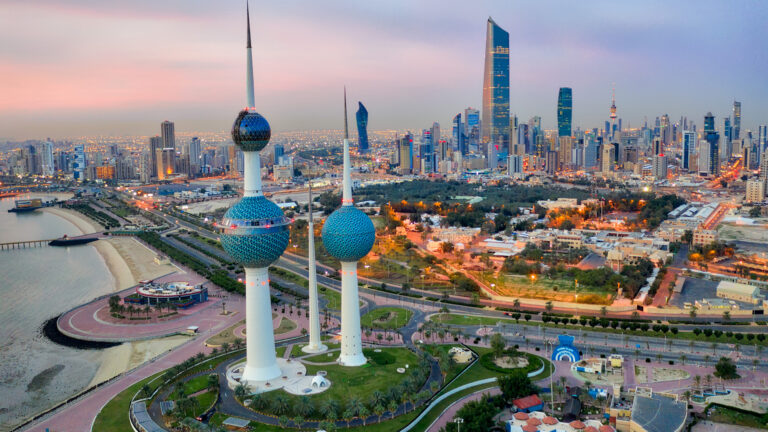
The Gulf’s response was mixed, and the region’s largest market bore the most pressure. Saudi Arabia’s TASI fell 1.25 percent to 10,544.10, the heaviest move among the region’s main indices, and the MSCI Tadawul 30 eased 1.36 percent to 1,412.20, per the Saudi Exchange, as investors weighed renewed attacks on Saudi oil facilities and higher regional risk against a busy earnings session, our reading. Boursa Kuwait softened, its All Share Index down 0.28 percent to 8,741.71 and the Premier Market down 0.38 percent to 9,190.70, and Bahrain’s All Share slipped 0.37 percent to 1,959.77. The tone was steadier elsewhere: Oman’s MSX 30 rose 0.47 percent to 7,281.48, Jordan’s ASE index added 0.53 percent to 3,978.68, Dubai’s DFM General gained 0.12 percent to 5,796.79 and Abu Dhabi’s FADGI edged up 0.05 percent to 9,839.56, leaving most of the region within a fraction of a percent even as the oil bid strengthened, our reading.
Cairo eased and Doha dipped. The EGX30 slipped 0.19 percent to 53,627.32, a modest pullback after its recent record run, while Qatar’s QE Index closed 0.16 percent lower at 10,006.91.
In currencies and crypto, the dollar was firm and the Egyptian pound softened. The euro eased to 1.1378 and sterling held at 1.3281, while the yen traded near 163.87 per dollar, per CNBC. The Kuwaiti dinar held near 0.3078 per dollar and the Egyptian pound eased 0.34 percent to 50.62, staying below the 51 line. Bitcoin rose 0.20 percent to about 63,837 dollars.
Further west, Tuesday’s closes from our US-Europe wrap remain the last full prints: the Dow rose 1.03 percent to 52,747.53, the S&P 500 added 0.22 percent to 7,429.19 and the Nasdaq eased 0.22 percent to 24,876.91, while in Europe the FTSE 100 gained 0.83 percent to 10,871.02, the DAX rose 0.41 percent to 25,464.01 and the CAC 40 added 0.63 percent to 8,458.78. Wednesday’s European session was softer by mid-afternoon, the CAC off about 0.7 percent and the DAX down about 0.3 percent while the FTSE edged up, and US equity futures were mixed ahead of the Federal Reserve’s decision, with S&P futures up about 0.2 percent and Dow futures slightly lower, per CNBC.
Why it matters: The channel that matters for the Gulf is the oil bid, not a single equity session, our reading. A renewed security premium lifts the export-revenue outlook for producers such as Saudi Arabia, Kuwait, the UAE and Qatar, even as the same disruption raises freight and insurance costs; the modest, mixed moves across most Gulf bourses on Wednesday point to the relative resilience of the region’s larger markets, our reading. For Asia’s energy importers the arithmetic runs the other way, and the chip-led falls in Korea and Taiwan show where the pressure concentrates. For Egypt and Jordan, a firmer oil bill is the near-term cost, and the Egyptian pound’s hold below the 51 line is the buffer to watch.
Outlook: The Federal Reserve decides on Wednesday, with the renewed oil shock now in the room, per CNBC. The immediate markers are whether the US-Iran exchange escalates or fades again, whether Brent holds above the 90 dollar line, and whether the Gulf’s larger markets absorb the renewed security premium as the oil bid runs; the Egyptian pound’s hold on the 51 line remains the currency marker.
Table – MENA and Asia equities, 29 July close, ranked by change:
| Market | Close | Change |
| Hang Seng (Hong Kong) | 25,807.92 | +1.96% |
| Straits Times (Singapore) | 5,713.19 | +1.73% |
| Nifty 50 (India) | 24,250.20 | +1.10% |
| Shenzhen Component (China) | 13,658.44 | +1.10% |
| ASX 200 (Australia) | 9,038.60 | +1.01% |
| ASE (Jordan) | 3,978.68 | +0.53% |
| MSX 30 (Oman) | 7,281.48 | +0.47% |
| Shanghai Composite (China) | 3,828.47 | +0.40% |
| Topix (Japan) | 3,974.03 | +0.26% |
| DFM General (Dubai) | 5,796.79 | +0.12% |
| FADGI (Abu Dhabi) | 9,839.56 | +0.05% |
| QE Index (Qatar) | 10,006.91 | -0.16% |
| EGX 30 (Egypt) | 53,627.32 | -0.19% |
| All Share (Kuwait) | 8,741.71 | -0.28% |
| All Share (Bahrain) | 1,959.77 | -0.37% |
| Premier Market (Kuwait) | 9,190.70 | -0.38% |
| TASI (Saudi Arabia) | 10,544.10 | -1.25% |
| MSCI Tadawul 30 (Saudi Arabia) | 1,412.20 | -1.36% |
| Nikkei 225 (Japan) | 61,434.19 | -1.49% |
| Taiex (Taiwan) | 40,039.18 | -3.76% |
| Kospi (South Korea) | 5,663.24 | -5.98% |
| Kosdaq (South Korea) | 662.68 | -6.12% |
Table – US and Europe, Tuesday 28 July closes, for reference, ranked by change:
| Index | Close | Change |
| Dow Jones | 52,747.53 | +1.03% |
| FTSE 100 | 10,871.02 | +0.83% |
| CAC 40 | 8,458.78 | +0.63% |
| DAX | 25,464.01 | +0.41% |
| S&P 500 | 7,429.19 | +0.22% |
| Euro Stoxx 50 | 6,289.51 | +0.12% |
| Nasdaq Composite | 24,876.91 | -0.22% |
Table – Commodities, rates, volatility, FX and crypto, intraday 29 July:
| Instrument | Level | Change |
| Brent crude | $90.72 | +7.88% |
| WTI crude | $84.93 | +7.15% |
| VIX | 20.23 | +11.09% |
| US 10-year Treasury yield | 4.655% | +5.1 bp |
| EUR/USD | 1.1378 | -0.06% |
| USD/KWD | 0.3078 | -0.03% |
| GBP/USD | 1.3281 | -0.03% |
| USD/JPY | 163.87 | +0.03% |
| USD/EGP | 50.62 | +0.34% |
| Gold | $4,009.40 | -0.73% |
| Bitcoin | $63,837 | +0.20% |
Sources: Saudi Exchange; Boursa Kuwait; Dubai Financial Market; Abu Dhabi Securities Exchange; Muscat Stock Exchange; Amman Stock Exchange; Bahrain Bourse; Qatar Stock Exchange; Egyptian Exchange; Bloomberg; Reuters; CNBC.