OPEC Plus Seven Add 188 Thousand Barrels a Day to August Output
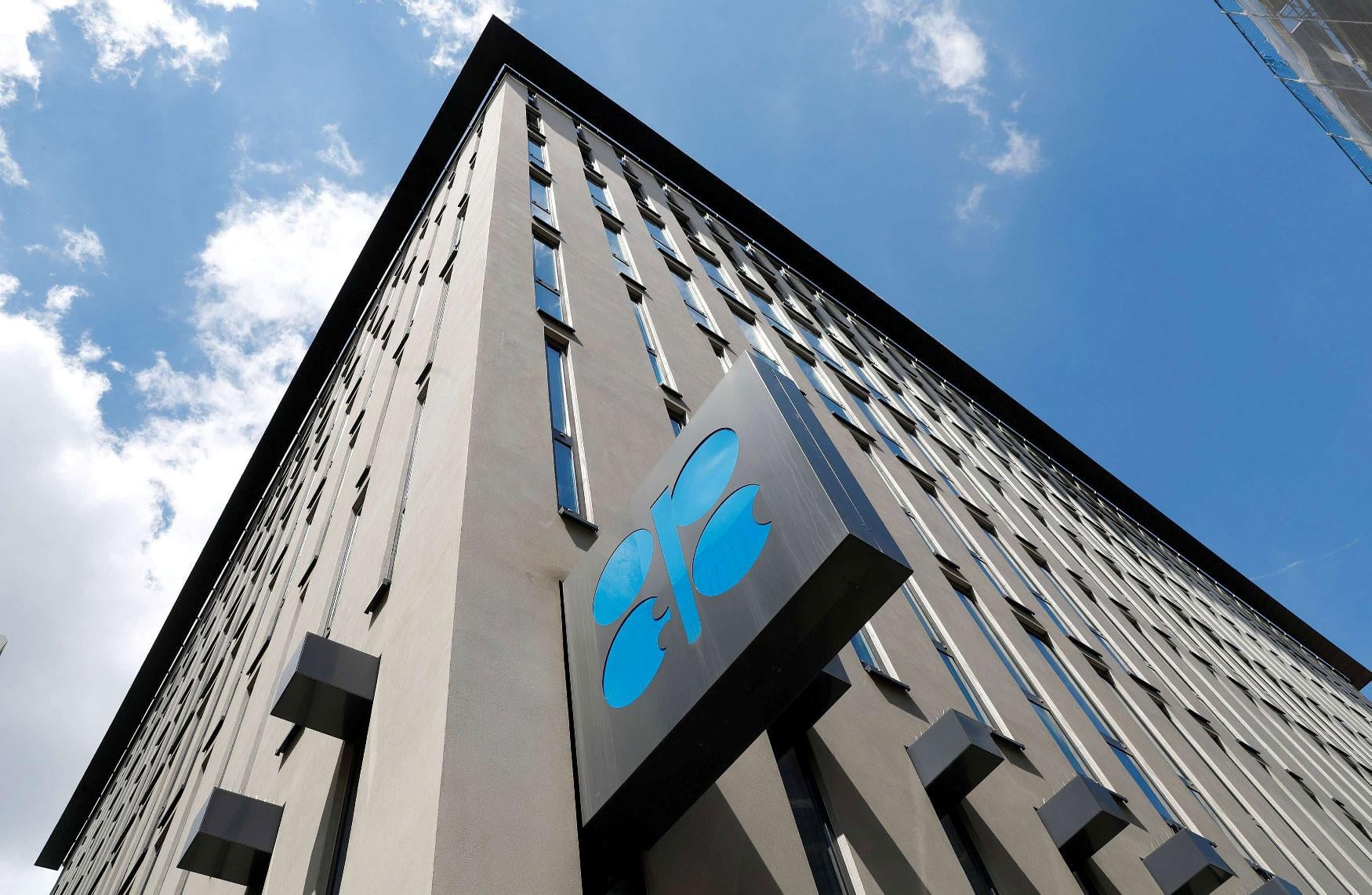
Seven OPEC Plus producers meet again on 2 August, and they arrive at that meeting having raised August output targets by 188 thousand barrels a day at their 5 July session — the third consecutive month at that increment. Nothing published by the group indicates any intention to stop.
The group’s own language has been consistent all year. Each of the last three decisions describes the adjustment as coming “from the additional voluntary adjustments announced in April 2023”, records that the countries retain “full flexibility to increase, pause or reverse the phase out”, and restates their intention to compensate fully for any volumes overproduced since January 2024. The meetings are monthly, and each one reviews market conditions, conformity and compensation.
One structural change sits behind the arithmetic. Through the first four months of 2026 the participating group numbered eight countries. Since the meeting of 3 May it has numbered seven, because the United Arab Emirates left the organisation. The UAE announced on 28 April 2026 that it was leaving OPEC, effective 1 May, and its departure extends to the wider OPEC Plus alliance formed in 2016. The announcement was carried by the Emirates News Agency, and the US Energy Information Administration records it in the same terms.
| Term | What it means |
|---|---|
| Voluntary adjustments | Output restraint undertaken by individual countries beyond the group-wide quota framework, here the tranche announced in April 2023 |
| Phase out | The staged unwinding of those voluntary cuts, returning barrels to the market in monthly increments |
| Compensation | Additional restraint owed by a country that produced above its target in an earlier period |
| Conformity | The degree to which actual production matches agreed targets |
| Implied target | The production level a country’s agreed adjustments imply, as estimated by external agencies rather than published by OPEC |
| Call on OPEC Plus | Global demand less non-OPEC Plus supply; the residual the group is expected to fill |
Meeting decisions, increments and participating-country lists in this article are read from OPEC’s own press releases for each meeting. The UAE’s departure from the organisation is read from the US Energy Information Administration and from Forbes, both reporting the Emirates News Agency announcement. Price levels are from the US Energy Information Administration’s spot series. Supply and demand balances are from the International Energy Agency’s Oil Market Report of 10 July 2026. Figures circulating from OPEC’s own Monthly Oil Market Report are not reproduced, because the report could not be read at OPEC’s own site.
The 2026 decision record
| Meeting | Decision for | Increment | Countries |
|---|---|---|---|
| 4 January | February and March | Paused | Eight |
| 1 February | March, reaffirmed | Paused, cited seasonality | Eight |
| 1 March | April | 206 thousand b/d | Eight |
| 5 April | May | 206 thousand b/d | Eight |
| 3 May | June | 188 thousand b/d | Seven |
| 7 June | July | 188 thousand b/d | Seven |
| 5 July | August | 188 thousand b/d | Seven |
The eight-country releases name Saudi Arabia, Russia, Iraq, the UAE, Kuwait, Kazakhstan, Algeria and Oman. The seven-country releases, from 3 May onward, name Saudi Arabia, Russia, Iraq, Kuwait, Kazakhstan, Algeria and Oman. The increment fell from 206 to 188 thousand barrels a day at the same meeting the list shortened, which is consistent with the UAE’s share of the phase-out schedule coming out of the total. The UAE has cited near-term market volatility and its intention to raise domestic production. OPEC itself has published no statement on the change in composition, and the group’s releases simply carry the shorter list from May onward.
The 5 July decision was separately reported by the Saudi Press Agency at 13:34 local time the same day, carrying the identical 188 thousand barrels a day for August.
The balance the increments are running into
| Measure | Source | Figure |
|---|---|---|
| Global demand, 2026 | International Energy Agency, 10 July | Decline of about 1 million b/d |
| Global demand, 2027 | International Energy Agency, 10 July | Growth of about 2 million b/d |
| Global supply, June 2026 | International Energy Agency, 10 July | Rebounded 4.1 million b/d to 98.8 million b/d |
The Agency has 2026 demand contracting outright, with the annual rate of decline easing from 4.8 million barrels a day in the second quarter to 1.7 million in the third before turning to growth of 1.2 million in the fourth — then a strong 2027 at about 2 million barrels a day of growth. A group adding barrels monthly into a year the Agency describes as contracting is, in effect, positioning for the 2027 half of that profile rather than the 2026 half.
The June supply rebound of 4.1 million barrels a day to 98.8 million is the scale against which a 188 thousand barrel increment should be read: it is a little under 0.2 percent of world supply.
OPEC publishes its own, materially different demand numbers in its Monthly Oil Market Report. Those figures are not printed here. OPEC’s report could not be read at OPEC’s own site — the route responds, but serves stale editions — and the standing rule is that a figure attributed to an institution must be read at that institution.
| Benchmark | Price | As at |
|---|---|---|
| Brent, free on board spot | 86.99 dollars | 20 July 2026, EIA |
| West Texas Intermediate, Cushing spot | 84.38 dollars | 20 July 2026, EIA |
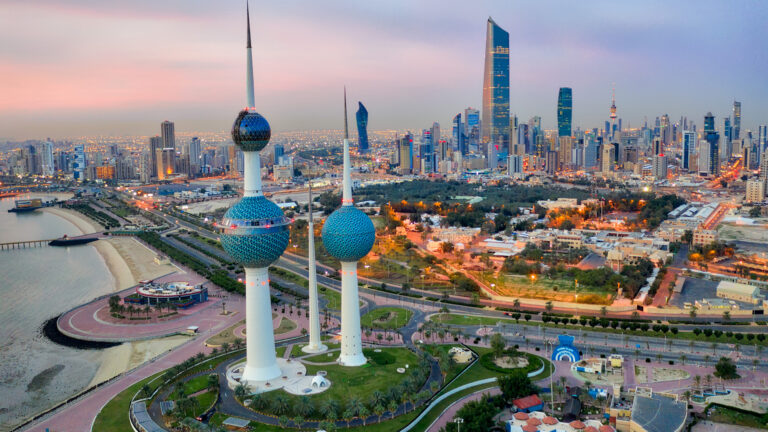
Kuwait’s position
Kuwait’s Minister of Oil, Tariq Al-Roumi, said on 5 July that consultation and coordination among producing countries remains essential amid rapid shifts in global energy markets. The International Energy Agency’s July report puts Kuwait’s June implied target at 2.63 million barrels a day, June supply at 1.37 million barrels a day of crude, and sustainable production capacity at 2.88 million barrels a day — capacity headroom of roughly a quarter of a million barrels a day above target.
In Saudi Arabia, Prince Abdulaziz bin Salman was appointed Minister of Industry and Mineral Resources on 11 July while continuing as Minister of Energy, consolidating the two portfolios under one minister ahead of the August meeting.
Why it matters: The market has spent the year expecting the phase-out to stall, and it has not. Three consecutive months at 188 thousand barrels a day, taken by a group that has lost a member outright, is a policy of steady incremental supply into a year the International Energy Agency expects to contract. The UAE’s exit is the larger structural fact: a founding-era producer with meaningful spare capacity now sets its own output without reference to the group’s schedule, which changes what the remaining seven are managing. For Gulf producers the practical question is not the size of the monthly increment, which is small, but whether the compensation framework holds — because that is what determines how much of each increment actually reaches the market.
Outlook: Four things to watch. First, the 2 August meeting itself and whether the increment holds at 188 thousand barrels a day for September. Second, UAE production now that it sits outside the framework, since it has stated an intention to raise output. Third, the compensation schedules, since agreed restraint owed from earlier overproduction offsets part of each headline increase. Fourth, the International Energy Agency’s next Oil Market Report, which will show whether the 2026 contraction it forecasts is deepening or easing.
Sources: OPEC press releases, 2026; Emirates News Agency via US Energy Information Administration and Forbes; Saudi Press Agency; International Energy Agency, Oil Market Report, 10 July 2026; US Energy Information Administration spot prices; Bloomberg, 14 May 2026.