Japan and US Run First Joint Yen Intervention in 28 Years and Signal More
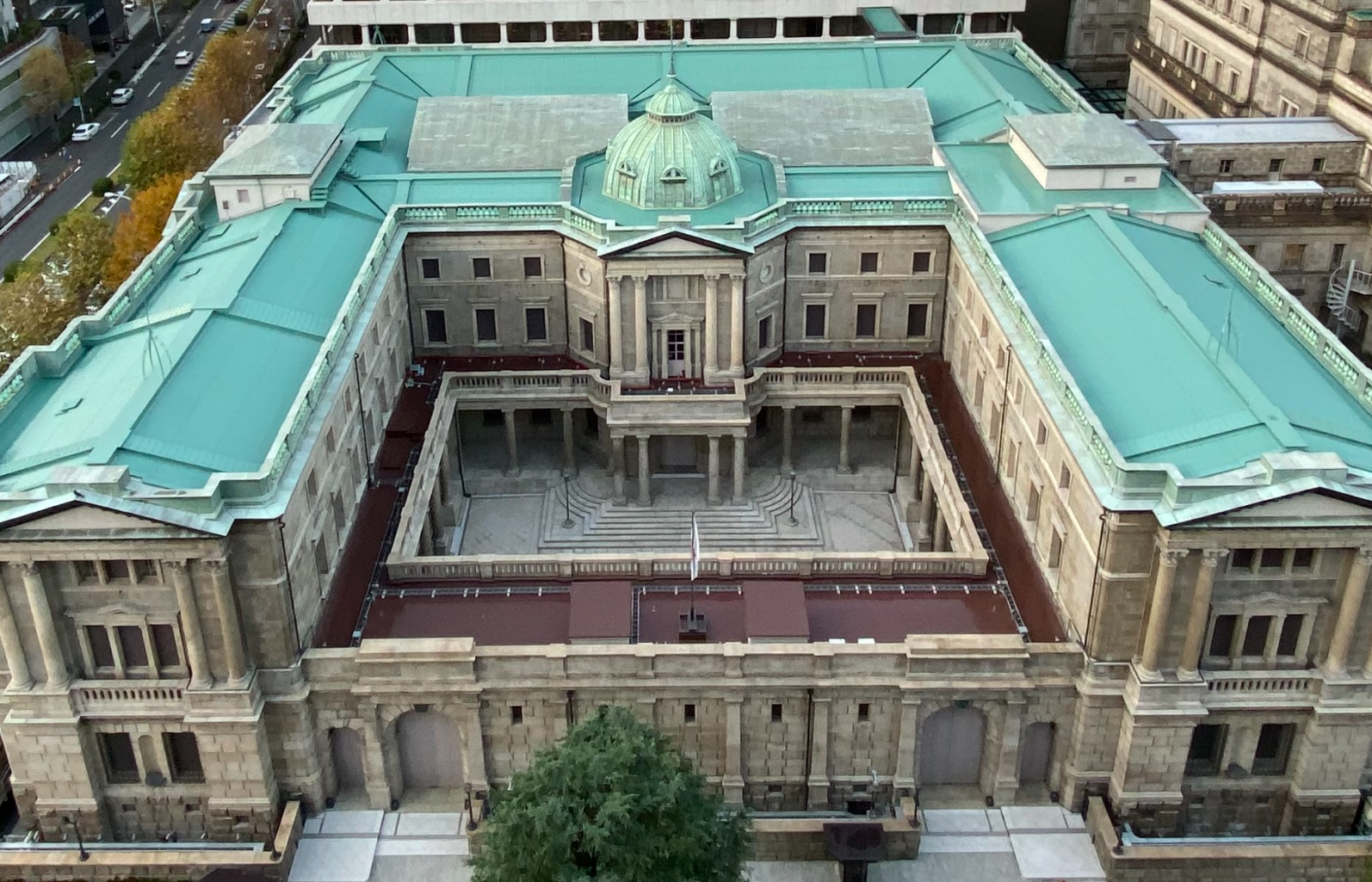
Japan and the United States intervened jointly in the foreign exchange market to support the yen, the first yen-buying intervention by the two authorities in 28 years, according to a statement issued by Japan’s Ministry of Finance.
In a statement issued on 3 August by the Minister of Finance, KATAYAMA Satsuki, the ministry said it purchased Japanese yen on Friday 31 July, United States Eastern Time, in coordination with the United States Department of the Treasury. It described the action as taken pursuant to the United States and Japan Finance Ministers’ Joint Statement of September 2025, and as a response to excessive volatility and disorderly movements in the yen in recent months. It said it will not hesitate to conduct further joint intervention, and that Japan plans to make use of the Federal Reserve’s repurchase agreement facility for foreign and international monetary authorities, the FIMA Repo Facility, in the future.
No corresponding statement was issued in Washington. The Treasury Department’s press-release index and its index of statements by the Secretary carry nothing on the yen, on Japan or on foreign exchange dated 2, 3 or 4 August. The account of United States participation therefore rests entirely on Japan’s ministry, which is the only official document in the public record describing the operation. The plan to use the Federal Reserve facility is likewise stated by Tokyo alone; the Federal Reserve has not commented on it.
The dollar was quoted at 163.73 yen at the 5 p.m. Tokyo fixing on 30 July and at 156.76 at the same fixing on 3 August, per the Bank of Japan’s daily rate series. That is a move of 6.97 yen across four sessions. It did not arrive in one piece.
Dollar-yen, Bank of Japan 5 p.m. Tokyo quotes, and the segments between them. Segment attribution and percentages are our calculation.
| Segment | From | To | Move, yen | Share of total |
|---|---|---|---|---|
| 30 July evening to 31 July morning | 163.73 | 160.17 | -3.56 | 51.1 percent |
| 31 July Tokyo session | 160.17 | 160.20 | +0.03 | -0.4 percent |
| 31 July evening to 3 August morning, spanning the operation | 160.20 | 157.57 | -2.63 | 37.7 percent |
| 3 August Tokyo session | 157.57 | 156.76 | -0.81 | 11.6 percent |
| Total | 163.73 | 156.76 | -6.97 | 100 percent |
The ministry dates the operation to Friday 31 July, United States Eastern Time, which places it after the 31 July Tokyo close. It falls in the third segment, and on our calculation that segment delivered 37.7 percent of the four-session move. The largest single segment came before it. A further 11.6 percent came after it, with no operation claimed. That is the reason this article does not print a single figure described as the level after the intervention.
The size of the move also depends on which currency is asked about. On our calculation, 6.97 yen on a base of 163.73 is a 4.26 percent depreciation of the dollar, and the same 6.97 yen on a base of 156.76 is a 4.45 percent appreciation of the yen. Both are correct and they answer different questions.
The ministry’s monthly release covering 29 June to 29 July reports foreign exchange intervention of zero yen. On our reading, that isolates the operation rather than placing it in a sequence: in the month before it, Japan did not intervene at all.
The policy setting behind the currency has not changed. The Bank of Japan held its policy rate on 31 July. The decision carried one dissent, from TAKATA Hajime, who proposed raising the rate to around 1.25 percent. Six weeks earlier, on 16 June, the single dissent had come from ASADA Toichiro, who pointed to downside risks to production and employment. On our reading, a board whose lone dissenter has moved from the dovish side to the hawkish side inside two meetings is a different signal for the currency than a unanimous hold, and a more supportive one for the yen.
On the other side of the pair, the Federal Reserve held its target range for the federal funds rate at 3.50 to 3.75 percent on 29 July, on a 9 to 3 vote. The effective federal funds rate printed at 3.63 percent on 31 July. The interest rate gap that has driven the pair for three years is still there, and neither meeting narrowed it.
Why it matters: A joint operation is a different instrument from a unilateral one. Unilateral yen buying has to be absorbed by a market that knows only one authority is committed to it. A coordinated operation tells the market that the counterpart authority is not merely tolerating the move but taking part in it, and the ministry’s stated plan to use a standing Federal Reserve facility signals that funding is not the binding constraint. That is why the composition of the move matters more than its size: a market that had already moved the majority of the distance before the confirmed leg is a market that had priced the possibility, not one that was surprised by it.
Looking ahead: The first official observation capable of reflecting the operation is Japan’s international reserves release on 7 August, not the monthly intervention release at the end of August. Reserves are not a clean measure of intervention size, because they also move with valuation effects across currencies and with interest income, so the release will bound the number rather than give it. For scale, end-June reserve assets stood at 1,287,476 million dollars, down 18,398 million on the month, published on 7 July. The end-July figure, published on 7 August, came in at 1,287,099 million dollars, down just 377 million on the month, which on our reading leaves no visible intervention footprint in the reserves data. The first official figure that will carry the operation is the monthly intervention release of 28 August, covering 30 July to 26 August. The Bank of Japan’s next policy meeting is 17 and 18 September.
Sources: Ministry of Finance, Japan; Bank of Japan; Federal Reserve.
Correction, 7 August 2026: this article originally described the operation as the first joint intervention since 2011. Japan’s Minister of Finance told a press conference on 4 August 2026 that it was the first United States and Japan yen-buying intervention in 28 years. The 2011 episode was a Group of Seven coordinated action of a different character. The headline and opening paragraph have been amended, and the reserves paragraph updated with the end-July figure published on 7 August.