Kuwait Electronic Payments Reach KD 27.9 Billion as Instant Transfers Jump 52 Percent
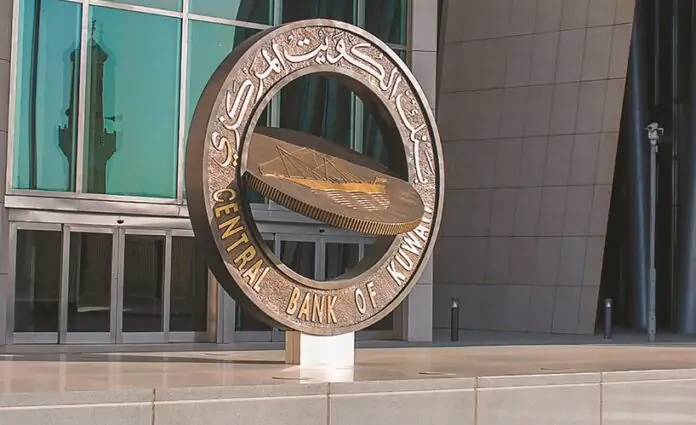
Electronic payments in Kuwait totalled KD 27,922.5 million in the first half of 2026, across 809.6 million transactions, according to the monetary and banking statistics published by the Central Bank of Kuwait for June. That is an increase of 5.0 percent on the KD 26,592.9 million recorded in the same period of 2025.
The headline growth rate is the least interesting part of the release. Every card-based channel shrank over the year. All of the growth, and more, came from instant payments.
Instant payments carried the entire increase
The Wamdh instant payment service handled KD 5,557.7 million in the first half, an increase of 52.3 percent on the same period a year earlier, across 85.6 million transactions, an increase of 78.6 percent by volume. Both growth rates exceed the growth in value, which means average transaction size fell as adoption widened.
Set against that, the value of point-of-sale spending was down 0.5 percent, the value of payment gateway transactions down 3.2 percent and the value of ATM withdrawals down 5.4 percent. Taken together the card-based channels handled KD 22,364.8 million, a decline of 2.5 percent on the first half of 2025.
A payments market in which the headline grows 5 percent while three of its four channels contract is not a market in which spending accelerated. It is a market in which a new rail grew fast enough to lift the aggregate on its own. Whether that growth came at the expense of the card channels or alongside them is not something the aggregate figures separate.
| Channel | H1 2026 value, KD million | Change on H1 2025, percent |
|---|---|---|
| Point of sale | 9,462.1 | &color-mix(in srgb, var(--edge-accent) 13%, transparent);0.5 |
| Payment gateway | 8,533.0 | &color-mix(in srgb, var(--edge-accent) 13%, transparent);3.2 |
| Instant payment, Wamdh | 5,557.7 | +52.3 |
| ATM | 4,369.7 | &color-mix(in srgb, var(--edge-accent) 13%, transparent);5.4 |
| Total | 27,922.5 | +5.0 |
Transactions inside and outside Kuwait. Source: Central Bank of Kuwait, monetary and banking statistics, June 2026.
Credit growth continued through the first half
Total credit facilities extended by local banks stood at KD 64,929.1 million at the end of June, an increase of KD 1,187.0 million on the KD 63,742.1 million recorded at the end of December 2025. Measured against June 2025, when the figure was KD 59,795.6 million, the annual increase is KD 5,133.5 million, or 8.6 percent.
Total assets of local banks reached KD 104,309.2 million at the end of June, up 2.3 percent from KD 101,944.9 million at the end of 2025. Private sector deposits stood at KD 40,991.8 million, of which KD 9,264.1 million was in sight deposits and KD 31,727.8 million in quasi-money. Banks’ own funds were KD 17,900.3 million.
Credit rose 8.6 percent over the twelve months to June while total assets rose 2.3 percent over the six months from December. The two are measured over different periods and are not directly comparable, but on the shorter horizon credit grew faster than the balance sheet that carries it: the KD 1,187.0 million added to credit facilities over the half accounts for half of the KD 2,364.3 million added to total assets. On these figures the banks were lending rather than parking.
Government deposits rose sharply over the half
Government deposits with local banks stood at KD 5,636.9 million at the end of June, against KD 3,742.1 million at the end of December 2025, an increase of 50.6 percent over the six months. Measured against June 2025, when the figure was KD 4,396.6 million, the increase is 28.2 percent.
Deposits of public institutions were KD 9,535.7 million. Currency in circulation stood at KD 2,079.6 million.
Movements of this size in government deposits are typically a placement decision rather than a fiscal one, and they add to the deposit base against which banks lend. The direction over the half was a substantial addition to system liquidity.
Why it matters
Kuwait’s payments infrastructure is in the middle of a transition, and the June data puts a number on it. Instant payments went from a supporting channel to the source of all net growth in a single year, and did so while card channels held roughly flat rather than collapsing. That is the pattern of a market adding a rail rather than one substituting between rails under stress.
For the banking sector the combination is favourable. Credit is growing at close to 9 percent on the year, and the deposit base has been reinforced by both private sector and government balances. For the wider economy, the fall in average instant-payment transaction size points to the service reaching everyday transactions rather than remaining concentrated in large transfers.
The card channel figures also merit a note of caution against over-reading. Declines of 0.5 percent at the point of sale and 3.2 percent through payment gateways are small, and are consistent with substitution toward instant payments rather than with weaker consumption. The 5.4 percent fall in ATM value is the clearest cash-displacement signal in the release.
What to watch
The second-half data will show whether instant payment growth rates in the 50 to 80 percent range are an adoption curve that is still steepening or one that is beginning to flatten. Growth of that order compounds quickly, and a gap of roughly KD 3 billion between Wamdh and the payment gateway channel would close in a matter of quarters if both series held their present rates. Adoption curves rarely hold their rates, so that is an illustration of the arithmetic rather than a forecast.
On the banking side, whether credit growth of 8.6 percent is sustained through the second half, and whether the government deposit build of the first half is retained or drawn down, are the two variables that will determine system liquidity into the fourth quarter. The Central Bank publishes the monthly series on a rolling basis, and the July and August releases will settle both questions.
Sources
Central Bank of Kuwait, monetary and banking statistics, June 2026, including tables on credit facilities, local bank balance sheets, and electronic payment transactions inside and outside Kuwait.