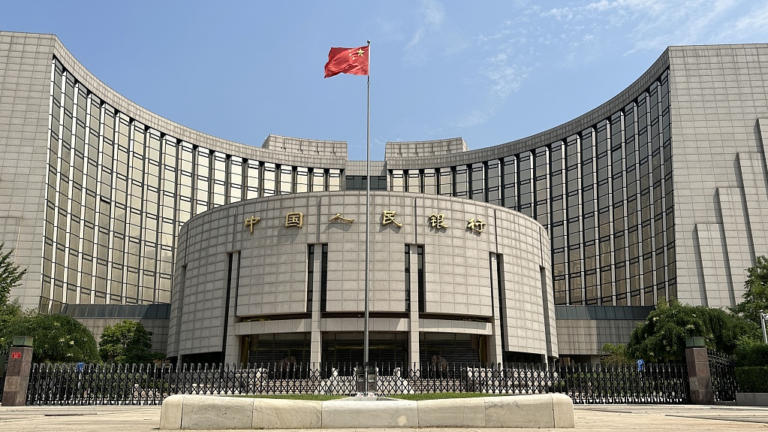
Bank of Japan Holds at 1.0 Percent With One Dissent

The Bank of Japan left its policy rate unchanged on 31 July, keeping the guideline for money market operations at an uncollateralised overnight call rate of around 1.0 percent. The decision was taken by an eight to one majority of the Policy Board at a meeting held over 30 and 31 July.
The hold was widely expected. What makes the decision worth reading closely is the single dissent and the forecast round published alongside it, because both point in the same direction and it is not the direction the headline suggests.
The dissent asked for 1.25 percent
Takata Hajime voted against and proposed instead that the Bank encourage the call rate to remain at around 1.25 percent. His stated reasoning was that the situation had shifted to a new phase in which the Bank needs to adopt a nimble approach in response to upside risks to prices caused by demand shocks stemming from overseas developments and to changes in overseas financial conditions. The proposal was defeated.
That dissent sits in a sequence. On 28 April the Board held at 0.75 percent by six votes to three, with three members voting against. On 16 June it raised the rate to 1.0 percent by seven to one. On 31 July it held at 1.0 percent by eight to one. The complexion of the Board has moved from a majority holding against a substantial hawkish minority, through a hike, to a near-unanimous hold with one member wanting more. A single quarter has taken the tightening argument from contested to settled and left only its pace in dispute.
The FY2026 inflation cut is not straightforwardly dovish
The Outlook for Economic Activity and Prices published the same day cut the Board’s median forecast for consumer price inflation excluding fresh food in fiscal 2026 to 2.5 percent from the 2.8 percent projected in April. Taken alone that looks like a softening. The Bank’s own explanation is that it is not: the revision is attributed to the effects of government measures to reduce the household burden of higher energy prices, specifically electricity and gas charges, over the summer.
Strip that out and the direction reverses. The fiscal 2027 median was raised to 2.4 percent from 2.3 percent. Real growth for fiscal 2026 was revised up to 0.6 percent from 0.5 percent, and for fiscal 2027 to 0.8 percent from 0.7 percent. The Bank expects core inflation to accelerate to a level clearly above 2 percent from the second half of fiscal 2026.
| Fiscal year | Real GDP, July | Real GDP, April | Core CPI, July | Core CPI, April |
|---|---|---|---|---|
| 2026 | +0.6 | +0.5 | +2.5 | +2.8 |
| 2027 | +0.8 | +0.7 | +2.4 | +2.3 |
| 2028 | +0.8 | +0.8 | +2.0 | +2.0 |
Medians of Policy Board members’ forecasts, year-on-year percent change. Core CPI is all items less fresh food. Source: Bank of Japan, Outlook for Economic Activity and Prices, July 2026 and April 2026.
The risk assessment is the clearest signal in the document
The Bank judges risks to economic activity to be generally balanced. On prices it says risks are skewed to the upside, and goes further: there is a risk that underlying inflation will deviate upward to a level above the 2 percent price stability target, given firms’ behaviour shifting more toward raising wages and prices and medium to long-term inflation expectations continuing to rise. It adds that due attention is needed to keep that risk from materialising.
A central bank that describes the principal risk to its own target as an overshoot, in a document published on the day it declines to move, is describing a pause rather than a stopping point.
The Bank expects underlying inflation to reach a level generally consistent with the target between the second half of fiscal 2026 and fiscal 2027. That is the condition it has repeatedly said would justify continued rate increases, and it is now inside the projection horizon rather than beyond it.
Imported inflation pressures meet a domestic wage-price channel
The forces the Bank identifies are largely outside Japan. Higher crude oil prices since early spring are pushing up energy and goods prices while simultaneously weighing on activity. Rising semiconductor and related prices, reflecting the increase in global demand associated with artificial intelligence, are lifting durable goods prices, as is recent yen depreciation. Against that, a persistent sense of labour shortage is expected to sustain the mechanism in which wages and prices rise in interaction with each other.
That combination is awkward for a central bank. Two of the three inflationary impulses are imported and price-level rather than demand effects, and one of them is also a drag on real income. The Bank’s judgement is that the wage channel is strong enough that the imported component will not simply unwind.
Why it matters
For the Gulf the transmission runs through energy and through capital.
Japan remains one of the largest buyers of crude and liquefied natural gas from GCC producers, and the Bank has now twice identified higher crude prices as a material influence on its own forecasts. A tightening cycle driven in part by the cost of energy Japan imports from the Gulf is an unusual configuration, and it means Japanese monetary policy is now partly a function of decisions taken in the region rather than only a headwind to it.
The capital channel is the second. A rising yen policy rate narrows the interest rate differential that has made yen-denominated funding cheap relative to higher-yielding markets. GCC currencies are pegged to the dollar, so the direct exchange rate effect is limited. Where a change would show up is in global funding costs and investor demand at the margin, and the size of any effect on regional issuance is not something the Bank’s statement quantifies. The point is directional rather than measurable: the cost of the funding currency is moving up in 25 basis point steps with one Board member arguing for a faster pace.
Japanese direct investment into the Gulf, which has grown across petrochemicals, mobility and clean energy, is largely a corporate rather than a rate-driven decision, and the growth outlook underpinning it was revised up rather than down.
What to watch
The next meeting is the practical test of whether Takata Hajime’s position attracts company. A hold with two dissenters would say more about the trajectory than the level itself.
On the data, the key series is the path of core inflation once the summer energy support measures roll off. The Bank has told readers that the fiscal 2026 forecast cut is a subsidy effect; the test of that statement arrives when the subsidies end and the published rate steps back up. If it does not, the Bank’s characterisation of the revision will need revisiting.
Finally, the yen. Depreciation is named in the Outlook as a source of upward price pressure on durable goods. A currency that keeps weakening while the Bank holds converts an external price effect into a domestic policy problem, and the Outlook names it among the influences the Board is watching.
Sources
Bank of Japan, Statement on Monetary Policy, 31 July 2026. Bank of Japan, Outlook for Economic Activity and Prices, July 2026, The Bank’s View. Bank of Japan, Change in the Guideline for Money Market Operations, 16 June 2026. Bank of Japan, Statement on Monetary Policy, 28 April 2026.