Saudi Aramco Cuts August Crude Prices to Asia by the Most in Decades as Oversupply Weighs on the Market
Saudi Aramco has cut the official selling price of its flagship Arab Light crude to Asia for August loadings by about 11 dollars a barrel, the sharpest monthly reduction in decades, in a move that underscores how quickly the global oil market has shifted from tightness to surplus. The cut takes Arab Light from a premium of about 9.50 dollars a barrel over the Oman and Dubai benchmark average in July to a discount of about 1.50 dollars for August, according to reporting by Bloomberg, which described the reduction as the largest in at least 26 years.
An important distinction sits behind the headline. Aramco did not cut the flat price of crude by 11 dollars a barrel. It cut the differential, the premium or discount that Asian refiners pay relative to the regional benchmark. That makes the signal more precise: in a single monthly cycle the Arab Light differential to Asia has moved from a 9.50 dollar premium to a 1.50 dollar discount, an 11 dollar swing that wipes out the premium and pushes the grade below the benchmark for the first time in a run of firm pricing.
The scale of the adjustment is the story. Aramco reviews its official selling prices, known as OSPs, every month, and the size of each change is closely watched because it signals how the world’s largest crude exporter reads demand in its most important market. A swing of roughly 11 dollars a barrel in a single month, moving Arab Light from a clear premium to an outright discount against the regional benchmark, is not a routine recalibration. It is a decisive response to a market that has weakened sharply over the past several weeks.
The pricing decision follows a run of bearish signals for crude. Brent settled at about 71.57 dollars a barrel on 1 July, down roughly 1.9 percent on the day and around 21 percent lower over the month of June, the largest monthly fall since March 2020, according to CNBC. That slide reflected a combination of rising supply and softening demand expectations, and it set the backdrop for a lower set of August prices from Gulf producers.
Supply is the clearest pressure. On 5 July, eight members of the OPEC Plus group agreed to raise August output by about 188,000 barrels a day, extending a series of increases that have steadily returned barrels to the market, according to CNBC. Adding supply into a period of uncertain demand growth widens the gap between what the market can absorb and what producers are willing to sell, and that gap shows up directly in the differentials that Aramco and its Gulf peers offer refiners.
Demand is the second factor. Asian buyers, who take the bulk of Gulf crude, have shown more caution as refining margins have come under pressure and as economic signals from the region have stayed mixed. When Asian refiners are less willing to compete for cargoes, producers must make their barrels more attractive on price, and a discount to the Oman and Dubai average is the mechanism for doing so. The move to a 1.50 dollar discount is Aramco’s way of ensuring its crude clears in a crowded market.
A third element is the normalisation of shipping flows. Crude tanker traffic through the Strait of Hormuz recovered through late June, easing an earlier premium that had been built into pricing when regional shipping risk was elevated. As those flows returned to more normal levels, one of the supports under recent prices faded, reinforcing the case for lower official differentials.
The size of the cut also exceeded what the market had expected. A Reuters survey of Asian refiners conducted before the announcement had pointed to a likely August reduction of about 6.50 to 8.00 dollars a barrel, which would have left Arab Light at a smaller premium to the Oman and Dubai average. The actual 11 dollar cut was therefore roughly 3 to 4.50 dollars deeper than the expected range and turned the grade into an outright discount. The same survey anticipated that the medium and heavier grades would be reduced in line with Arab Light, though the full grade by grade schedule for August, covering Arab Extra Light, Arab Medium and Arab Heavy, was still being confirmed at the time of writing. The direction, however, is unambiguous: Aramco is lowering the cost of its crude to Asia across the board.
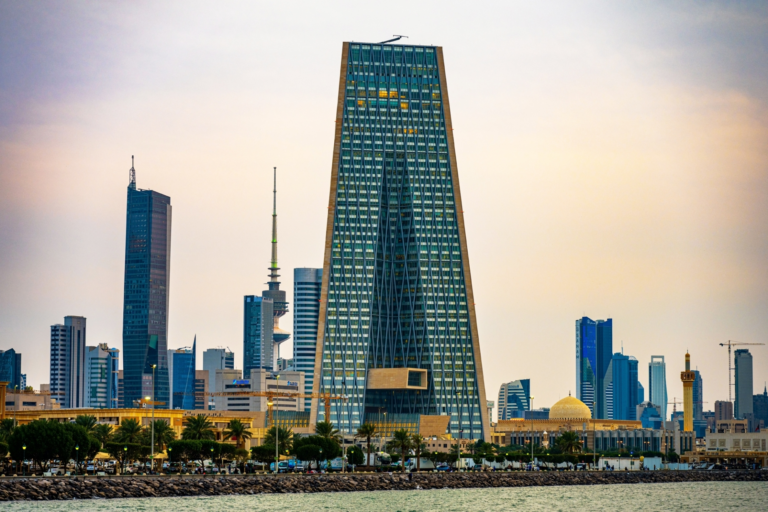
For Kuwait, the significance is direct rather than symbolic. Kuwait Petroleum Corporation prices its Kuwait Export Crude to Asian customers off the same Oman and Dubai benchmark that anchors Aramco’s Arab Light, and Kuwait has historically followed the direction set by the larger Saudi producer when it publishes its own monthly OSPs. A cut of the magnitude Aramco has just made therefore points to lower Kuwaiti differentials for August as well, once Kuwait finalises its own schedule, and it signals softer realised prices for the crude that underpins the bulk of state revenue.
That matters for the public finances. Kuwait built its budget for the 2026 and 2027 fiscal year on a conservative oil price assumption of about 57 dollars a barrel, while the International Monetary Fund has estimated the country’s fiscal break even, the price needed to balance the budget, at close to 90.5 dollars a barrel, according to the Fund’s most recent Article IV assessment concluded on 23 February 2026. With Brent already near 72 dollars and Gulf differentials now turning negative to the regional benchmark, realised export prices are moving further below that break even level, and the IMF has projected the central government deficit widening toward around 9.4 percent of gross domestic product in the coming fiscal year.
None of this points to immediate fiscal stress. Kuwait retains one of the strongest sovereign balance sheets in the world, backed by very large external assets managed for future generations, and it can comfortably absorb a period of softer prices. The point is directional: a large monthly OSP cut from the region’s benchmark setter confirms that the pricing environment for Gulf crude has turned, and it tightens the arithmetic for every producer in the region whose budget was framed around a firmer market. For Kuwait and its Gulf neighbours, the discipline of spending reform and revenue diversification becomes more relevant, not less, when the benchmark exporter is cutting prices at the fastest pace in a generation.
Why it matters: Aramco’s OSP is the single most important reference point for the price of Gulf crude sold into Asia, and a cut of this size is a clear statement that the world’s largest exporter sees a market in surplus. Because Kuwait and other Gulf producers price off the same Oman and Dubai benchmark and tend to follow Aramco’s lead, the decision effectively resets the revenue expectation for the region’s most important export at a lower level, at a time when budgets were already built on prices above the market.
Outlook: The next markers are Kuwait’s own August OSP announcement, which typically follows Aramco within days, the path of Brent after the 5 July OPEC Plus increase, and the group’s next meeting on 2 August, which will set September output. If supply keeps rising while Asian demand stays cautious, the pressure on Gulf differentials is likely to persist into the autumn, keeping realised export prices below the levels around which regional budgets were framed.
Sources: Bloomberg; Reuters; CNBC; International Monetary Fund.