Kuwait Restructures Boursa Kuwait Trading Commissions: One Rate of 15 Basis Points and Fixed Settlement Fees Scrapped
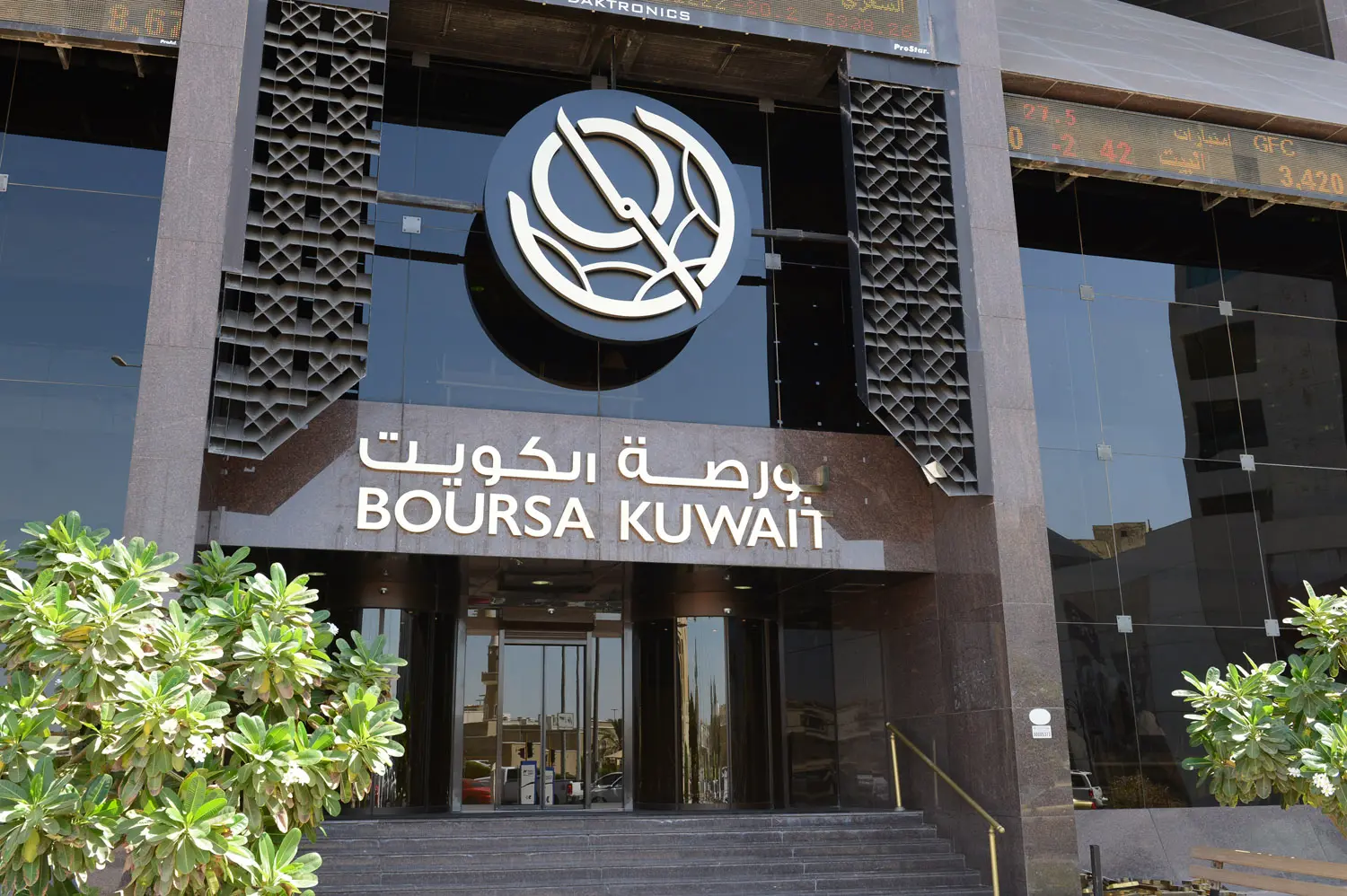
Kuwait’s Capital Markets Authority has approved a restructuring of trading commissions on Boursa Kuwait that unifies the rate across the Premier and Main markets at 15 basis points and abolishes the exchange’s fixed settlement fees, a significant change to the cost structure for trading Kuwaiti equities under the market development program. The authority, which announced the decision in an official statement in late June, has set 1 October 2026 as the target date for the new structure to take effect, subject to extended market wide technical testing.
The change matters because commission structures shape how a market trades, and Kuwait’s is being redesigned from the ground up. Under the new structure, the 15 basis point commission is unbundled into two published components: 0.066 percent for the exchange together with clearing and settlement, and 0.084 percent for brokerage. Brokers will be allowed to compete below the 8.4 basis point brokerage component by offering discounted commissions, within a ceiling the authority will set later. At the same time, two fixed charges disappear entirely, the 5 dinar settlement fee applied to each executed trade for custodian clients and the 500 fils settlement fee on trades above 50 dinars, while the minimum commission per trade doubles from 250 fils to 500 fils.
The arithmetic of the redistribution is worth setting out, because it is more significant than the headline suggests. For the Premier Market, home to Kuwait’s most liquid blue chips, the headline commission rises by half, from 10 basis points to 15, bringing it into line with the Main Market for the first time. Inside the unified rate, the split between the market’s institutions also shifts. Under the current structure, brokers keep 70 percent of the commission, Boursa Kuwait takes 29 percent and Kuwait Clearing Company 1 percent, which on a Main Market trade gives the broker about 10.5 basis points and the exchange and clearing functions about 4.5. The new structure moves the exchange and clearing share up to 6.6 basis points and sets the broker base at 8.4, with competitive discounting expected to compress the broker take further. The winners and losers are therefore not uniform: large institutional and custodian trades gain from the removal of the flat 5 dinar fee, which weighed most heavily on big tickets, while the smallest retail trades face a doubled minimum charge.
The authority framed the redesign as a transparency and competitiveness measure. It said unbundling the commission components follows global practice, that simulations and benchmarking against other markets were run before approval, and that the new structure keeps Kuwait within the lowest fee range among regional markets while giving brokers room to compete on price without undermining their revenues.
The timing is not incidental. Traded value on Boursa Kuwait reached about 9.82 billion dinars, roughly 30.2 billion dollars, across 116 sessions in the first half of 2026, according to the weekly report of Al-Shall Consulting, but the daily average of about 84.7 million dinars was down 22 percent from the same period last year, and the Premier Market carried 64.8 percent of all liquidity. A market whose activity is concentrated in one segment and running a fifth below last year’s pace has a direct interest in making its trading costs cleaner and more competitive.
In a parallel step, the authority issued Decision 85 of 2026 on additional financial services, which for the first time allows qualified brokers to place clients’ trading funds in income yielding accounts at commercial banks. The service is optional for brokers, returns may be shared with clients only with their consent, and the decision builds on the earlier transfer of trader funds from Kuwait Clearing Company custody to qualified brokers under the market development program. Client cash that earns a return inside the market is one more reason for money to stay there.
Why it matters: Transparent, unbundled trading costs are one of the structural markers that international investors and index providers use to judge emerging markets, and Kuwait is adopting them at a moment when its liquidity needs the support. This is not just a fee adjustment but a market microstructure change, aimed at making trading costs visible, reducing friction for institutional flow and giving brokers a defined space to compete on price. The package continues the market development program that carried Boursa Kuwait into the MSCI Emerging Markets index, and its design is deliberate: a higher headline rate on the Premier Market funds the removal of opaque fixed fees and creates space for brokers to discount, shifting Kuwait toward the cleaner cost model of larger markets while keeping it at the low end of regional fee ranges. For the Gulf’s exchanges, which compete for the same regional and international flows, Kuwait’s move adds pressure to modernise fee structures across the board.
Outlook: The 1 October target depends on market wide systems testing across the exchange, the clearing company and the brokers, and the authority has yet to publish the ceiling that will govern brokerage discounts, which will determine how much competition actually compresses costs. The markers to watch are the formal exchange announcement confirming the switchover, the fourth quarter daily traded average against the 84.7 million dinar first half run rate, and whether institutional flows respond to the removal of fixed settlement charges.
Sources: Capital Markets Authority; Boursa Kuwait.