South Korea and China Substantially Conclude Services, Investment FTA Talks After 8 Years

The Takeaway: South Korea says China has agreed to open more of its film, games, tourism, retail and construction markets under the second phase of their free trade agreement, but the text has yet to pass legal review and nothing is signed. Beijing confirms the outcome and the chapters covered, without itemizing sector commitments. The stakes sit in services: in the annual data cited below, China accounted for 12.4% of South Korea’s services trade, against 20.7% of its goods trade.
Talks begun in March 2018 to open services and investment between South Korea and China were declared substantially concluded on Wednesday, at the presidents’ meeting in Shenzhen.
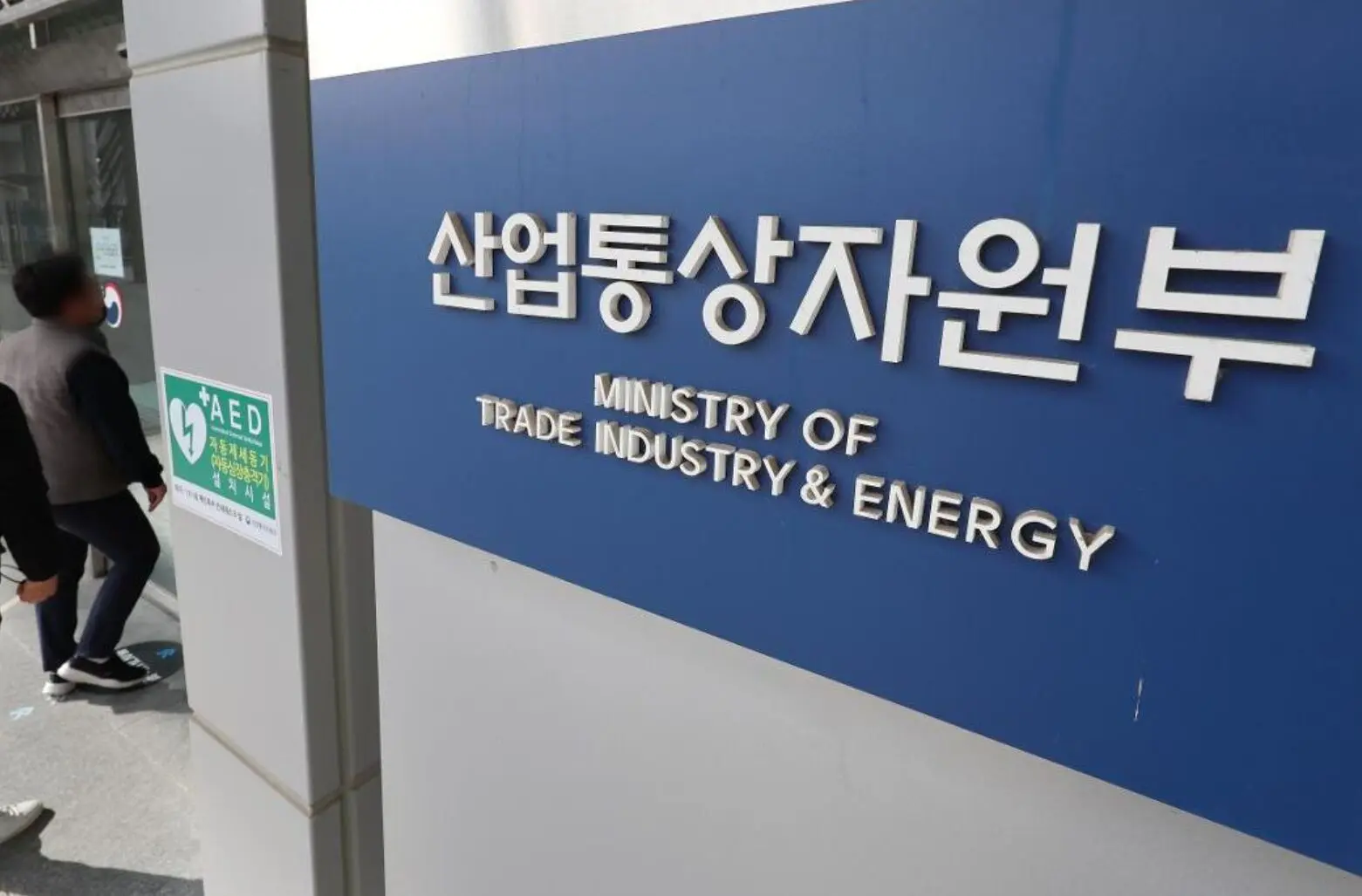
South Korea’s Ministry of Trade, Industry and Resources defines the term narrowly: negotiations have ended, while some technical wording remains for working-level officials to finish. A legal review of the text comes next, followed by formal signature and entry into force. The ministry gave no date for either step.
Both governments confirm the outcome, and Seoul supplies the detail
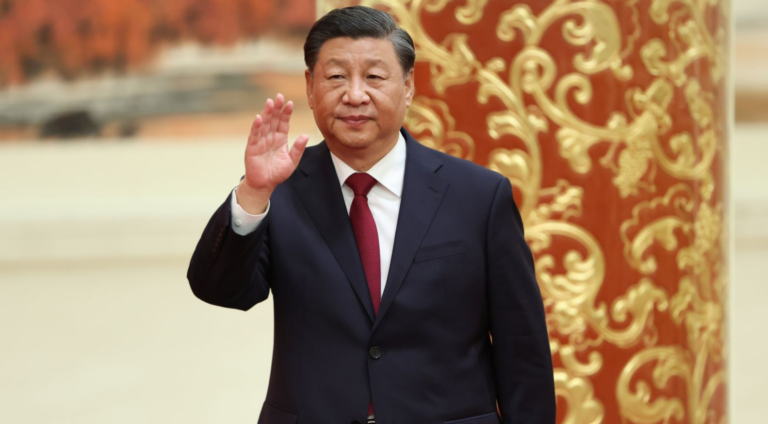
China’s Foreign Ministry readout has President Xi Jinping telling President Lee Jae Myung that the two countries “have substantively concluded” negotiations on the second phase of their free trade agreement, a result it said would consolidate mutually beneficial ties. Xinhua’s report of the meeting says they “have substantially concluded” that phase.
Xi urged both sides to make full use of the arrangement, coordinate macroeconomic policy more closely and build cooperation in emerging technologies such as artificial intelligence.
Cheong Wa Dae, South Korea’s presidential office, said Lee wanted the declaration to bring more companies from each country into the other’s market. By its account, Xi said the conclusion should widen mutually beneficial economic cooperation.
China’s Commerce Ministry said on Wednesday that the second phase upgrades the original agreement’s chapters on investment, trade in services, financial services and economic cooperation, with their annexes. The second phase also sets out cooperation arrangements that include traditional medicine services, culture and online services.
Beijing lists the next steps as confirming the technical details of the final text and completing translation and legal review, ahead of signature. It gave no date, and said it will publish the text on its free trade agreement website in due course after signing.
The terms below are Seoul’s description. China’s published accounts do not itemize them, and the text has yet to pass legal review.
Seoul says China will open content, tourism and retail further
For Korean film and game companies, South Korea’s trade ministry says China has promised most-favored-nation treatment, meaning terms no worse than those given to any other country. China also accepted non-discrimination in advance review, the approval online games and films need before release. The ministry says Beijing has not previously written these commitments into a trade agreement.
That claim is Seoul’s, and China’s statement on the second phase mentions neither film nor games. Xi said China stands ready to “gradually carry out sound and beneficial cultural exchanges”, according to the Chinese readout.
Cheong Wa Dae said Lee proposed widening cultural and content exchanges in stages, given regional differences and sensitivities by sector in China. The two leaders agreed to cooperate on film co-production, among other steps, it added.
Korean travel agencies set up in 23 Chinese areas could sell overseas trips to Chinese and foreign residents of China, recruiting tour groups directly. The areas comprise 11 pilot zones, among them Beijing, Shanghai, Chongqing and Hainan, and free trade zones in 12 regions, among them Guangdong, Henan, Hubei and Sichuan. The ministry sees room for packages tied to Korean pop music, beauty and food, and for linking trips to other destinations such as Japan and Southeast Asia.
China was South Korea’s largest source of visitors in 2025, at 5.48 million people. Each spent $1,504 on average, which implies $8.2 billion in all.
Lee told Xi that two-way travel is expected to pass 10 million people this year, and proposed keeping easier entry rules in place to get back to the 13 million recorded in 2016.
Minister Kim Jung-kwan said the outcome gives Korean content, tourism, finance and retail companies a stable institutional footing in China. In construction, removing limits on eligible projects widens Korean builders’ access to a market the ministry sizes at $4 trillion a year.
What Seoul says the second phase changes
| Sector | Commitment |
|---|---|
| Film and games | Most-favored-nation treatment from China, and equal treatment in advance content review |
| Co-production | Widened from film to drama, animation, variety shows and documentaries |
| Outbound travel | Korean agencies in 23 Chinese areas may sell overseas trips |
| Law | Korean firms in the Tianjin and Qianhai free trade zones and Hainan, as well as the Shanghai zone, may form alliances with Chinese firms |
| Retail | No Chinese joint-venture partner needed to run 30 or more stores |
| Construction | Limits on eligible project types removed |
| Finance | Financial opening China grants others in future trade agreements extends to South Korea |
Commitments as described by South Korea’s trade ministry; the text remains subject to legal review.
Under the original agreement, Korean builders were limited to 5 kinds of project, such as those wholly funded by foreign investment or aid and those financed by international lenders and awarded by international tender. In legal services, allied firms can serve clients across China, the ministry says, so the gain is a wider choice of base, since being near clients also matters.
South Korea made commitments of its own, within its existing laws and regulations. It accepted alliances between Korean and Chinese law firms, and brought construction equipment rental and film screening, which the original agreement left out, into the pact at current rules.
Investment rules shift to a negative list
Market opening moves, the ministry says, from the original agreement’s positive list, which names only the sectors opened, to a negative list, under which every sector is open unless named as an exception. Each side lists its current restrictions by sector and in principle will not introduce new ones it has not listed. A ratchet clause adds that a rule eased by voluntary legislative amendment cannot be tightened again.
Beijing’s account confirms the negative-list approach for areas including investment, cross-border services and financial services, and says the talks on investment and services were held on that basis.
Seoul says neither side may demand technology transfer as a condition of investment.
Investor-state dispute settlement, which lets a company bring a claim against a government, will now reach the stage before an investment is made. Seoul gives the example of an investor shut out by an arbitrary permit refusal at the feasibility study or preliminary contract stage of a private power project. Unfounded claims can be dismissed early, and duplicate suits are restricted.
Services trade trails goods by a wide margin
Services were worth 14.2% of South Korea’s goods trade with China in 2024, compared with 23.8% for its trade with the world.
South Korea’s trade in 2024 (in $ billions)
| Trade | World | China | Share |
|---|---|---|---|
| Goods | 1,315.4 | 272.9 | 20.7% |
| Services | 313.5 | 38.8 | 12.4% |
Share is China’s portion of South Korea’s total, as the trade ministry prints it.
As an illustration, on The Edge’s calculation and not a forecast, matching the 20.7% goods share would put services trade with China at $65 billion. That is $26 billion above the 2024 level.
The ministry expects services to follow the path goods took after the original agreement entered into force in December 2015. Its own series shows goods trade of $228.9 billion in 2013 and $272.7 billion in 2025.
That is a rise of 19.1%, or 1.5% a year compounded. The 2025 total also sat just below the $272.9 billion of 2024.
Goods trade this year is already far above 2025
Figures from China’s General Administration of Customs put two-way trade with South Korea in the first 10 months already 33.1% above the whole of 2025. Trade in 2025 had grown 1.2%, on Beijing’s figures. Among individual economies, only the United States and Hong Kong traded more with China from January to October this year.
China’s goods trade with South Korea, January to October 2026 (value in $ billions)
| Flow | Value | Change |
|---|---|---|
| Total trade | 440.9 | 63.7% |
| China’s imports | 270.7 | 79.1% |
| China’s exports | 170.2 | 43.9% |
Preliminary customs figures; change is against the same period of 2025. The full-year 2025 total used in the text is $331.2 billion.
Imports outpaced exports, leaving China with a $100.5 billion deficit over the 10 months. The deficit for all of 2025 was $42.8 billion.
Semiconductors dominate the trade ministry’s October release. South Korean exports to China rose 133.6% in October to $26.98 billion.
Chips alone accounted for $14.8 billion in the first 25 days of the month. The second phase covers services and investment, so it does not address this flow.
The two governments’ goods totals differ. For 2025, Chinese customs recorded $331.2 billion and Seoul’s series $272.7 billion. The $58.5 billion difference means the two sets should not be combined.
Formal rounds resumed in January 2025 after a gap of more than 4 years
The declaration closed 8 years and 8 months of talks, on the South Korean trade ministry’s count. Differences between the two sides kept formal negotiations from meeting for more than 4 years, it says.
The ministry’s chronology puts the ninth round, by video, in October 2020 and the tenth, in Seoul, in January 2025. Chief negotiators still met in 5 separate months of that gap, and between-round meetings continued.
The pace changed after the leaders agreed at their January 2026 summit to seek meaningful progress within the year. Beijing’s account dates the push to the presidents’ meetings of November 2025 and January 2026.
Second-phase negotiating rounds in 2026
| Round | Dates | City |
|---|---|---|
| 13 | 19 to 23 Jan | Beijing |
| 14 | 6 to 10 Apr | Seoul |
| 15 | 22 to 26 Jun | Beijing |
| 16 | 31 Aug to 4 Sep | Beijing |
| 17 | 12 to 16 Oct | Seoul |
Dates and cities from China’s Ministry of Commerce.
This year’s sessions make up 5 of the 17 rounds.
Formal rounds of the second-phase talks, by year
| Year | Rounds | Where |
|---|---|---|
| 2018 | 2 | Seoul, Beijing |
| 2019 | 4 | Busan, Beijing, Seoul, Beijing |
| 2020 | 3 | By video |
| 2025 | 3 | Seoul, Beijing, Seoul |
| 2026 | 5 | Beijing, Seoul, Beijing, Beijing, Seoul |
Chronology published by Seoul. No formal round met from 2021 to 2024.
The wait between opening days shortened from 77 days early this year to 42 before the last round. Beijing said the final two rounds centered on cross-border services and market access under the negative list. The two commerce ministers met in Shanghai on 4 November. The declaration came 33 days after the last round closed.
Content companies pressed for clearer approvals
On 30 October, South Korean film, streaming, performance, games and tourism companies told the country’s trade negotiator that strong Chinese demand for Korean content was not turning into revenue and exports. They asked the negotiators to address discriminatory rules, policy uncertainty and the transparency and speed of content approvals.
In The Edge’s reading, how Chinese regulators apply the advance review commitment is the nearest test of the deal for these companies, because content approvals are among the difficulties they raised.
Correction, 18 November 2026: An earlier version implied that the five rounds of 2026 directly followed the gap of more than four years; three further rounds were held in 2025. It also called the trade ministry’s October release Seoul’s latest figures, although Korea Customs has since published newer data.
Method: primary documents are the statement by South Korea’s Ministry of Trade, Industry and Resources on the services and investment talks and its chronology of the rounds, the Cheong Wa Dae briefing on the presidents’ meeting and China’s Foreign Ministry readout, all of 18 November 2026, the trade ministry’s statement of 30 October 2026 and its October trade release of 1 November 2026, China’s Commerce Ministry statement of 18 November 2026 on the second-phase talks and its notices on the 2026 negotiating rounds, and China’s customs tables by country for January to October 2026 (preliminary, 10 November 2026) and for 2025. Ratios, differences, intervals, compound growth and the visitor spending total not attributed to a source are The Edge’s calculations.
Sources: Ministry of Trade, Industry and Resources of South Korea, Cheong Wa Dae, General Administration of Customs of China, Ministry of Foreign Affairs of China, Ministry of Commerce of China, Xinhua, The Edge.