US–Iran Deal Could Help Egypt Recover Suez Canal Revenues, But US$10 Billion Will Not Return Overnight
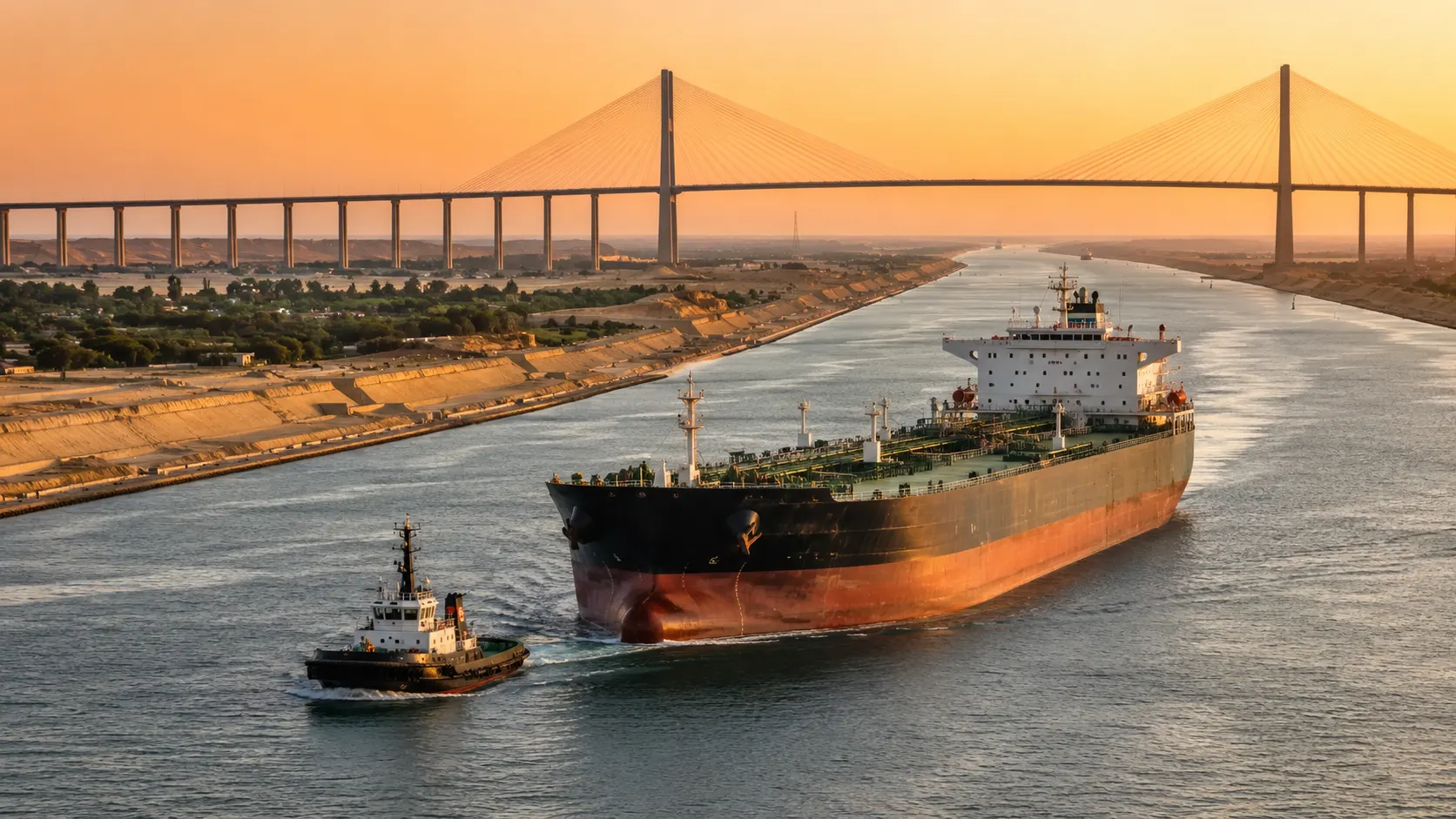
A reported interim agreement between Washington and Tehran to reopen the Strait of Hormuz could improve sentiment toward regional maritime routes, but for Egypt the decisive issue remains security in Bab al-Mandab and the Red Sea, not Hormuz alone.
The agreement should therefore be treated as a potential confidence catalyst for shipping lines, insurers and charterers, rather than an immediate revenue event. Bloomberg and other outlets reported that the United States and Iran had agreed to reopen the Strait of Hormuz, while analysts cautioned that even with a deal, full oil and shipping flows could take weeks or months to normalise.
The US$10 Billion Figure Is a Loss Estimate, Not Immediate Cash
The US$10 billion figure has an official basis, but it needs careful interpretation. Egypt’s Presidency said in May 2026 that President Abdel Fattah El-Sisi told the OECD Secretary-General that Egypt had lost approximately US$10 billion in Suez Canal revenues as a result of attacks on vessels in Bab al-Mandab amid the regional conflict.
That means the figure refers to a cumulative revenue shortfall or recovery potential. It does not mean US$10 billion will flow into Egypt immediately after a diplomatic announcement. The recovery depends on whether shipping lines return to the Suez route, insurance premiums fall, and Red Sea security remains stable.
The Verified Revenue Gap Is About US$6.26 Billion Per Year
Official Suez Canal Authority data show how large the shock has been. Canal revenue reached a record US$10.250 billion in 2023, before falling to US$3.991 billion in 2024. The difference is US$6.259 billion, equal to a decline of about 61.1%.
Traffic fell at a similar pace. The number of ships transiting the canal dropped from 26,434 vessels in 2023 to 13,213 in 2024, a 50% decline. Net tonnage fell from 1.568 billion tons to about 524.5 million tons, a decline of roughly 66.6%.
The monthly arithmetic is straightforward. In 2023, the Suez Canal generated an average of about US$854 million per month. In 2024, it generated about US$333 million per month. The implied monthly gap was therefore about US$522 million.
On that basis, a full return to the 2023 revenue run-rate would add around US$6.26 billion per year compared with the 2024 crisis level. Recovering a cumulative US$10 billion shortfall at that pace would take about 19 months, not a single quarter.
Latest Annual Traffic Data Still Show an Incomplete Recovery
The latest full-year traffic data confirm that normalisation has not yet been achieved. In 2025, the Suez Canal recorded 12,758 vessel transits, down from 13,213 in 2024. Net tonnage also slipped slightly to 522.084 million tons from 524.527 million tons.
This means the canal’s full-year 2025 traffic level remained broadly stuck near the depressed 2024 base, even though conditions started to improve later in the year.
There are signs of a more recent rebound. The Suez Canal Authority said revenues rose 18.5% in the first half of fiscal year 2025/2026, while transiting vessels increased 5.8% and net tonnage rose 16% compared with the same period a year earlier.
The improvement is encouraging, but it remains a recovery from a low base. A double-digit rebound does not by itself restore the canal to the record levels recorded before the Red Sea crisis.
Container Shipping Remains the Main Test
The strongest indicator to watch is container shipping. This segment carries high-value trade and is highly sensitive to route risk, insurance costs and schedule reliability.
Suez Canal Authority data show container ships fell from 5,847 vessels in 2023 to 1,748 in 2024, a decline of 70.1%. Container net tonnage plunged from 657.033 million tons to 74.803 million tons, an 88.6% drop.
The 2025 data show only limited improvement. Container ship transits rose to 1,840 vessels, but container net tonnage slipped further to 72.453 million tons. Compared with 2023, container vessel traffic was still about 68.5% lower, while container net tonnage remained roughly 89% below the pre-crisis level.
This is why the canal’s recovery cannot be judged only by headline vessel numbers. A return of tankers or smaller cargo ships would help, but a full revenue recovery requires large container carriers and major shipping alliances to resume regular Suez routings.
Scenario Analysis: What Egypt Could Recover
Using the official 2023–2024 revenue gap of US$6.259 billion, three recovery scenarios are useful.
A 50% recovery of the lost gap would add about US$3.13 billion per year, lifting annual revenue from the 2024 base to roughly US$7.12 billion. A 75% recovery would add about US$4.69 billion per year, taking annual revenue to around US$8.68 billion. A full recovery would add about US$6.26 billion per year, returning revenue close to the 2023 record of US$10.25 billion.
This makes the US$10 billion headline plausible only as a cumulative recovery target or as a reference to lost revenue over time. The verified annual upside, measured against the 2024 crisis year, is closer to US$6.3 billion.
Why It Matters for Egypt’s External Position
The Suez Canal is one of Egypt’s core hard-currency sources, alongside remittances, tourism, exports and foreign investment. Any sustained recovery would therefore support the balance of payments and foreign-exchange liquidity.
Egypt’s net international reserves reached US$53.13 billion at the end of May 2026, according to data released by the Central Bank of Egypt. Against that reserve base, a US$10 billion cumulative recovery would equal about 18.8% of reserves. The official 2024 revenue gap of US$6.259 billion would equal about 11.8% of reserves. That makes the canal’s recovery macroeconomically significant, even if the timing remains uncertain.
Outlook
The reported Washington–Tehran agreement could improve regional risk appetite, especially if it reduces pressure on energy routes and lowers broader maritime uncertainty. But Egypt’s Suez Canal recovery will be determined mainly by whether Bab al-Mandab and the Red Sea remain secure enough for major shipping lines to return at scale.
The key indicators to monitor are not only diplomatic statements, but monthly Suez Canal revenue, container ship transits, net tonnage, war-risk insurance premiums and the routing decisions of major carriers.
The bottom line is clear: the deal could help Egypt rebuild a revenue stream that once exceeded US$10 billion annually. But the US$10 billion will not return overnight. Based on verified Suez Canal data, every month of full normalisation could restore roughly half a billion dollars compared with the 2024 crisis run-rate. Sustained stability, not the announcement alone, will determine how much of that money actually returns.
Sources: Suez Canal Authority, Central Bank of Egypt, Egyptian Presidency, Bloomberg, and Ahram Online.