UN Cuts Western Asia Growth to 0.8 Percent as World Forecast Edges Up to 2.6 Percent
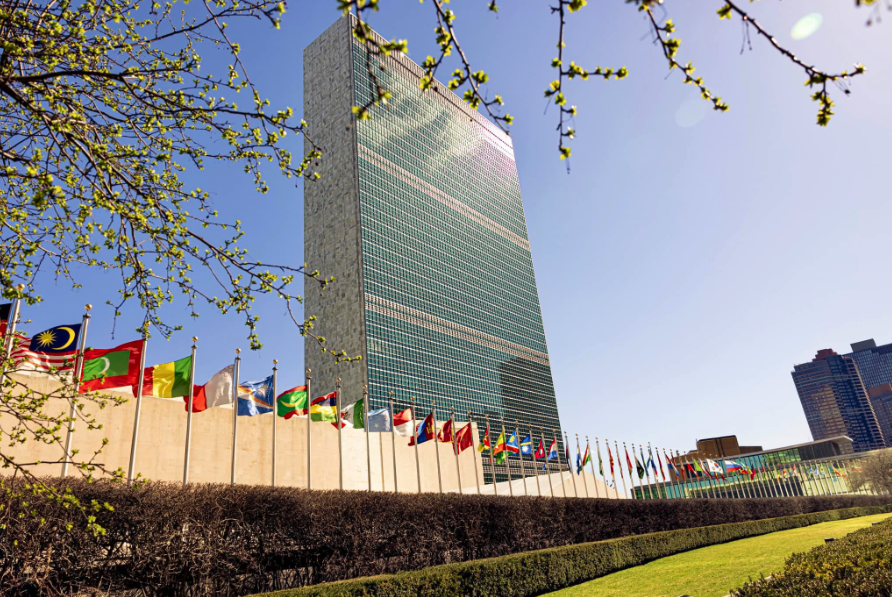
The world economy is projected to grow 2.6 percent in 2026 and 2.9 percent in 2027, the UN Department of Economic and Social Affairs said in the September update of its World Economic Situation and Prospects. Both figures are 0.1 percentage points above its May forecasts. They remain below expectations at the start of the year and well below the pre-pandemic average of 3.2 percent in 2010 to 2019.
The update cut its forecast for Western Asia, where growth is now projected at 0.8 percent in 2026, 0.6 percentage points below the May forecast. It forecasts a rebound to 5.1 percent in 2027, supported by an expected recovery in energy production.
A deep dip and a sharp rebound for Western Asia
On our calculation, Western Asia’s growth is 1.8 percentage points below the world rate this year and 2.2 percentage points above it next year. Its forecast moves by 4.3 percentage points between 2026 and 2027, the widest move among the regions for which the update gives both years, on our reading. The report attributes the weakness to disruption of energy production, maritime transport and trade, and to pressure on non-oil activities such as tourism.
For Saudi Arabia, it projects growth of 0.5 percent in 2026 and notes that non-oil activity grew 0.6 percent year on year in the second quarter, down from 2.9 percent in the first.
The update puts daily ship transits through the Strait of Hormuz at an average of 85 in 2025. They fell to low single digits in April and May, partially recovered to around 25 in late June and early July, fell back to around 10 by mid-July and stood at 5 in early September. On our calculation, early September traffic was about 94 percent below the 2025 average.
| Economy or region | 2026 | 2027 | Change from May, 2026 |
|---|---|---|---|
| World | 2.6% | 2.9% | +0.1 points |
| Western Asia | 0.8% | 5.1% | -0.6 points |
| Saudi Arabia | 0.5% | n/a | n/a |
| Africa | 4.0% | 4.2% | slightly higher |
| Egypt (fiscal year) | 4.6% | n/a | revised up |
| South Asia | 5.6% | 6.0% | n/a |
| East Asia | 4.6% | 4.4% | revised up |
| China | 4.6% | n/a | unchanged |
| United States | 2.0% | 2.0% | unchanged |
| Germany | 1.2% | n/a | revised up |
| United Kingdom | 1.2% | 1.1% | revised up |
| Republic of Korea | 3.2% | n/a | revised up |
| Latin America and the Caribbean | 2.2% | 2.5% | -0.1 points |
UN DESA, World Economic Situation and Prospects 2026, September update. The update says Korea’s forecast was revised up from 1.5 percent to 3.2 percent. Egypt’s figure is for fiscal year 2026, as the update labels it; its revision is as stated, and the prior figure is not given.
Stocks and the Americas offset part of the oil loss
The update cites International Energy Agency estimates that Middle East oil supply losses averaged around 10.7 million barrels a day between March and July. Global oil inventories fell by 410 million barrels between the start of the conflict and the end of July, an average draw of 2.7 million barrels a day, leaving observed stocks just below 7.9 billion barrels. Supply growth from the Americas, forecast at 1.4 million barrels a day in 2026, provided a partial offset.
On our calculation, the average inventory draw was equal to roughly a quarter of the Middle East supply loss, although inventories reflect the whole global supply and demand balance rather than the outage alone. The Americas’ forecast supply increase of 1.4 million barrels a day for 2026 is about 13 percent of the March to July loss rate on the same basis, though the periods differ. In refined products, global refinery runs were an estimated 4.7 million barrels a day lower year on year in the second quarter, and Atlantic Basin diesel refining margins exceeded 100 dollars a barrel in August, which the report calls an all-time high. Brent traded around 100 dollars a barrel in early September, about 40 percent above its level before the conflict.
In gas, the report notes that despite a near-complete halt in Qatari liquefied natural gas (LNG) exports, global gas prices remain significantly below their 2022 peaks. United States LNG exports rose 23 percent year on year in the first half of 2026.
Trade and public finances
Merchandise trade grew 5.4 percent year on year in real terms between January and May, above the 4.3 percent recorded in 2025. The report says the growth was driven primarily by demand for artificial intelligence infrastructure.
Global public debt reached nearly 94 percent of GDP in 2025, up from 82 percent in 2019, a rise of about 12 percentage points on our calculation. The 30-year United States Treasury yield rose to 5.31 percent in September, its highest since 2007. By the end of July about 110 governments had introduced support measures against higher energy costs.
Why it matters: the update raises its world forecast while cutting Western Asia’s, and still puts 2026 growth 0.6 percentage points below the 2010 to 2019 average, on our calculation. For Western Asia, the report says the rebound to 5.1 percent in 2027 is supported by an expected recovery in energy production, which leaves this year’s 0.8 percent as the low point of its forecast.
Outlook: the report’s 2027 rebound for Western Asia depends on an expected recovery in energy production. Daily transits through the Strait of Hormuz stood at 5 in early September, against an average of 85 in 2025. Within the Gulf, the next Saudi quarterly GDP release will show whether non-oil growth has moved from the 0.6 percent recorded in the second quarter.
Sources: UN Department of Economic and Social Affairs.